
NYC LPC Permits, Landmark Alterations and Compliance Resource Center
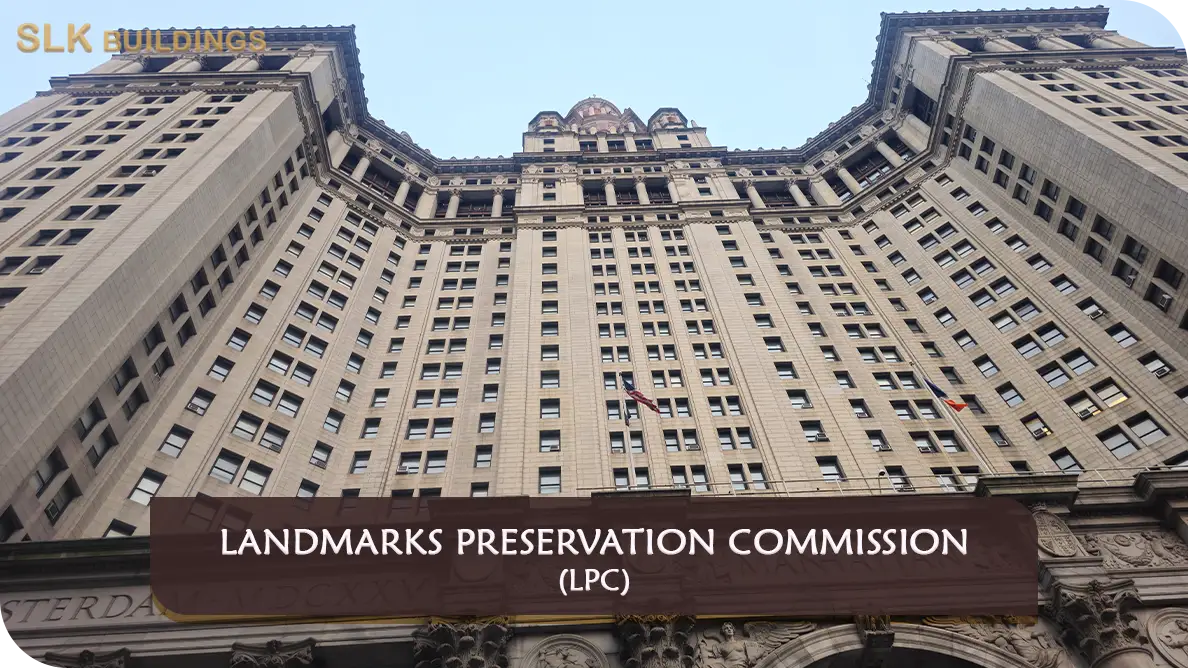
This NYC LPC resource center helps property owners and project teams understand how landmark designation affects building work, what LPC permits actually authorize, and where to find the correct guide. The New York City Landmarks Preservation Commission (LPC) protects designated buildings, historic districts, and certain interiors and scenic sites. Its rules can apply even where a project also needs an ordinary construction permit from the Department of Buildings (DOB).
A landmark designation does not mean that all changes are forbidden. It means the property’s protected features and historic character must be considered before regulated work is approved. For a person new to LPC, this page organizes the starting questions, technical words, application types, common alterations, and violation issues into separate readable topics, rather than expecting the reader to already know agency terminology.
For a broad introduction to why landmark regulation applies, start with the NYC Landmarks Preservation Commission Landing Page. This Parent Page is the complete directory of LPC topics that SLK Buildings can help coordinate.
SLK Buildings assists with NYC LPC permits, filings, records, violations, and compliance.
How LPC Fits into a Property or Construction Project
- LPC controls permission for qualifying changes to designated landmark buildings, protected interiors, historic districts, and scenic landmark sites. Some work may proceed through a staff-issued permit, and other proposals require Commission review.
- DOB separately regulates building and construction permits, building-code compliance, professional drawings, inspections, and structural or public-safety requirements. An LPC permit does not substitute for DOB authorization.
- DCP and zoning rules may affect permitted building bulk, use, additions, or other land-use matters. Landmark approval does not override zoning or a separate DCP determination.
- DOT may regulate excavation, sidewalk protection, scaffolding, or street activities. FDNY, Parks, HPD, and other agencies may have their own responsibilities, depending on the project.
- OATH handles many LPC enforcement summonses, but OATH does not issue LPC alteration permits. An LPC application public hearing before Commissioners is a different process.
- Registered Architects, Professional Engineers, qualified preservation specialists, contractors, and other professionals may be needed to prepare documents or perform regulated work. SLK coordinates work but does not replace their required professional licenses.
Key NYC LPC Terms to Understand First
- Landmark designation ~ The City’s formal legal protection for an individual property, a historic district, an interior, or a scenic site. It can affect whether proposed changes need advance LPC review.
- Historic district ~ A mapped group of buildings and sites whose combined historic character is protected. Exterior alterations can require LPC review even on non-historic buildings within the boundary.
- Designation report ~ LPC’s official account of a landmark or district’s history, architectural significance, and appearance at designation. It is an important reference for evaluating alterations.
- Significant architectural feature ~ A building element that contributes to its protected character, such as a historic window pattern, stoop, cornice, storefront, or facade detail.
- Portico ~ LPC’s current online portal for new permit applications, supporting documents, post-approval actions, and issued permits.
- Staff-level approval ~ An LPC permit that an assigned staff preservationist can issue when proposed work meets current rules and applicable review standards.
- Certificate of Appropriateness ~ An LPC approval for proposed work that requires review by the Commissioners, generally including a public hearing.
- Notice of Compliance ~ A post-approval or violation-related LPC sign-off confirming that specified approved or corrective work has been satisfactorily documented.
NYC LPC Designation, Research, and Application Topics
Landmark Status and Historic Districts
Start here when you are unsure whether an address is protected. The guide explains how to search LPC’s official maps, verify district boundaries, understand individual versus district designation, and use designation reports. This is often the first step before purchasing replacement windows or commissioning alteration drawings. Detailed guide: Landmark Status and Historic Districts.
LPC Permit Applications
Once the regulated scope is understood, new applications are submitted through Portico, not by emailing an older paper form. Learn how descriptions, existing photographs, plans, specifications, applicant information, and agency comments fit into the process and how Portico assigns the review path. Detailed guide: LPC Permit Applications.
Certificate of No Effect
For qualifying work requiring a DOB permit that does not adversely affect protected features, LPC staff may issue a Certificate of No Effect (CNE). It is particularly relevant to certain interior renovations, plumbing and mechanical changes, and projects that also need DOB authorization. Detailed guide: Certificate of No Effect.
Permit for Minor Work
For appropriate exterior work that does not require a DOB permit, LPC staff may issue a Permit for Minor Work (PMW). Common examples involve qualifying repairs, replacements, or restorative work on protected building exteriors. Detailed guide: Permit for Minor Work.
Certificate of Appropriateness
Some proposals need the full Commissioners to decide whether the planned changes are acceptable to a designated property or historic district. A Certificate of Appropriateness (C of A) can involve community board review, a Commission public hearing, a decision, and then final materials for permit issuance. Detailed guide: Certificate of Appropriateness.
Public Hearings
LPC public hearings allow applicants to present proposals requiring Commission review and the public to give testimony. The process is different from an enforcement summons hearing at OATH. Learn what is commonly presented, what the community board does, and why a favorable Commission decision may still require final filing documents. Detailed guide: Public Hearings.
Expedited Reviews
LPC uses specialized accelerated services for qualifying applications, including FasTrack and the Expedited Certificate of No Effect (XCNE). Eligibility is evaluated through Portico and depends on the actual work and required materials. These programs are not blanket waivers of landmark review. Detailed guide: Expedited Reviews.
LPC Business Express
Restaurants, stores, offices, and other eligible businesses in landmarked street-level spaces may use LPC Business Express for consultation and focused review. Owners still need an appropriate permit for regulated storefront or other exterior changes. Detailed guide: LPC Business Express.

Common LPC Alteration and Restoration Topics
Storefronts and Signage
Storefront replacements, display windows, signage, awnings, doors, lighting, and facade attachments can affect historic commercial character. The guide explains evidence of existing conditions, dimensions, design compatibility, and the distinction between LPC approval and separate DOB sign or construction permits. Detailed guide: Storefronts and Signage.
Windows and Doors
Window and door work may involve repairing a component, replacing a full unit, altering an opening, or changing a visible frame profile. LPC can consider historic design, materials, sightlines, dimensions, and which facades are involved. Learn why ordinary glass repair is not the same as a new window system. Detailed guide: Windows and Doors.
Facade Restoration and Masonry
Masonry cleaning, repointing, replacement stone or brick, cornice work, brownstone repair, and deteriorated architectural details can require a preservation-appropriate method. LPC concerns are distinct from DOB facade safety and construction permitting. Detailed guide: Facade Restoration and Masonry.
Rooftop and Rear Yard Additions
An additional story, rooftop structure, rear extension, roof deck, or terrace can change the scale and appearance of a landmark property or historic district. LPC review may examine visibility, setback, design and material compatibility while DOB and zoning separately review technical legality. Detailed guide: Rooftop and Rear Yard Additions.
Rooftop Equipment and HVAC
Condenser units, ducts, louvers, rooftop mechanical equipment, vents, screens, and other installations may affect a landmarked exterior even when they are not easily seen from the sidewalk. A coordinated proposal can require equipment details, location plans, elevations, and related DOB mechanical filings. Detailed guide: Rooftop Equipment and HVAC.
Accessibility Alterations
An accessible entry may require an altered step, ramp, lift, door, railing, or related construction. LPC evaluates protected features while DOB and other applicable rules address accessibility and building safety. The guide focuses on coordinating both responsibilities without presenting preservation approval as an exemption from accessibility law. Detailed guide: Accessibility Alterations.
LPC Violations, Post-Approval Actions, and Records
LPC Violations and Legalization
Unapproved work or failure to maintain a protected condition may lead to an LPC Warning Letter or Summons, formerly called a Notice of Violation. Corrective options can involve removal, restoration, modification, or a retroactive LPC permit when appropriate. OATH may adjudicate a summons, but payment of a fine does not itself clear the condition. Detailed guide: LPC Violations and Legalization.
Permit Amendments and Extensions
An owner may need to change an approved material or design, add or delete a permitted scope item, or extend a permit before its expiration. The eligible process is a Portico Post-Approval Action, and some changes may return to Commission review. Detailed guide: Permit Amendments and Extensions.
Notices of Compliance
A Notice of Compliance (NOC) confirms certain completed work or corrected violation conditions after LPC review. LPC does not require an NOC for every project, but one can be mandatory for certain circumstances and may also be requested by DOB for final closeout. Detailed guide: Notices of Compliance.
Landmark Records and Permit Search
Owners may need old approved drawings, LPC decisions, permit status, prior building photographs, or historic research before proposing new work or evaluating a transaction. LPC has a permit search for applications and permits since 2016, a map with additional project data, and records access procedures for older files. Detailed guide: Landmark Records and Permit Search.
LPC Master Plans
A Master Plan sets standards for repeat work, such as window or storefront replacements across an entire building. It can reduce repeat design decisions for later compliant work, although an appropriate subsequent LPC permit may still be needed. Master Plans can be reviewed at staff or Commission level depending on scope. Detailed guide: LPC Master Plans.
How SLK Buildings Helps
- Identify the likely LPC designation, regulated work, existing permit history, and related agency requirements based on the property address and actual project scope.
- Organize Portico filing information, application descriptions, photographs, drawings, project documentation, agency requests, revisions, and progress tracking within the SLK service scope.
- Coordinate with architects, engineers, qualified preservation professionals, contractors, owners, and other project participants whose services, signatures, certifications, or responsibilities may be required.
- Support the coordination of staff-level applications, public hearing preparation, post-approval requests, records research, violation response, and closeout documentation where applicable.
- Identify connected DOB, DCP, DOT, OATH, Parks, FDNY, or other agency processes without treating those agencies as divisions of LPC.
- Track which application is pending, which documents remain outstanding, who is responsible, and what next action is necessary.

Important LPC Coordination Issues
- Start by checking whether the address is actually within an LPC designation. Buildings near a historic district may be outside its boundaries; all buildings within a district remain subject to applicable landmark review.
- Determine whether a proposed change is ordinary maintenance, staff-level regulated work, or a more substantial proposal requiring Commission review. The final classification belongs to LPC.
- Do not assume an interior renovation is automatically exempt. A DOB-permitted interior alteration can still need LPC documentation, and a designated interior landmark has additional protections.
- Coordinate drawings and product information across LPC and DOB. Material changes during construction can trigger an LPC amendment or other agency revision.
- A Commission public hearing and an OATH summons hearing address different legal questions and should never be combined in application instructions.
- Check open violation records, prior approvals, issued permit conditions, and any required NOC or DOB closeout items before deciding that work is complete.
Contact SLK Buildings About NYC LPC Permits and Approvals
SLK Buildings assists property owners, building managers, developers, business operators, architects, engineers, contractors, and project teams with LPC designation research, Portico application coordination, staff-level and Commission review support, property alterations, records, violations, and related approval processes. Share the property address, desired work, available photographs, plans, and any known LPC or DOB notices so the filing and coordination path can be assessed.
Disclaimer: SLK Buildings is a private consulting and construction-management firm and is not affiliated with the New York City Landmarks Preservation Commission or any government agency. This information is provided for general educational purposes and does not constitute legal, architectural, engineering, historic preservation, or other licensed professional advice. Applicable LPC approvals, permit requirements, hearings, and compliance obligations depend on the property, proposed work, and current agency rules. Where licensed or qualified professionals are required, those services must be performed by appropriately licensed or qualified providers.
🚧 Seeking Professional Guidance on NYC LPC Permits, Filings, and Landmark Compliance
New York City Landmarks Preservation Commission (LPC) requirements can affect a proposed alteration even when the project appears minor. Owners and project teams may need to confirm landmark designation, identify protected features, gather existing-condition photographs, prepare drawings and material information, and obtain LPC approval before starting regulated work.
LPC requirements may intersect with DOB construction permits, DCP zoning or land-use approvals, DOT sidewalk and street permissions, and OATH enforcement proceedings. The correct path depends on the designated property, the proposed scope, the applicable permit category, and whether staff review or a Commission hearing is necessary.
SLK Buildings assists with LPC application coordination, permit expediting, Portico submissions, records research, related professional coordination, agency comments, alteration approvals, landmark violations, and associated multi-agency filings within its confirmed scope of services.
Whether a project is at the research stage, awaiting an LPC response, being revised for a preservation concern, or addressing unauthorized work, maintaining consistent records and clear next actions can help the team coordinate the required approvals.
SLK Buildings Assists with NYC LPC Requirements
- Identify landmark status and historic district requirements before a project is designed or filed.
- Coordinate LPC Permit Applications in Portico and supporting project information, photographs, plans, and professional submissions.
- Coordinate appropriate Certificate of No Effect, Permit for Minor Work, or Certificate of Appropriateness application paths as determined by LPC.
- Organize storefront and signage work, window and door changes, facade restoration, and other protected-property alterations.
- Support LPC Violations and Legalization coordination, necessary corrections, and qualifying Notices of Compliance.
SLK Buildings provides free educational content to help property owners, business operators, developers, architects, contractors, and project teams understand LPC designation, current permit categories, Portico filing, historic-district alterations, hearings, violations, professional roles, and related DOB and other agency requirements.
For those who prefer professional assistance, SLK Buildings is available to coordinate LPC records review, filing-path research, application preparation, Portico submissions, agency comments and follow-up, design-professional coordination, permit and violation tracking, and connected NYC agency obligations. Final determinations and applicable professional work remain with the appropriate agency and qualified providers.
Disclaimer: SLK Buildings is a private consulting and construction-management firm and is not affiliated with the New York City Landmarks Preservation Commission or any government agency. This information is provided for general educational purposes and does not constitute legal, architectural, engineering, historic preservation, or other licensed professional advice. Applicable LPC approvals, permit requirements, hearings, and compliance obligations depend on the property, proposed work, and current agency rules. Where licensed or qualified professionals are required, those services must be performed by appropriately licensed or qualified providers.
Frequently Asked Questions
Where should I start if I know nothing about LPC?
Begin with the official designation map or the Landmark Status and Historic Districts guide. Confirm what is protected before asking whether proposed work needs a permit.
Is there one LPC permit that covers every kind of work?
No. LPC reviews the proposed scope through Portico and determines whether a Certificate of No Effect, Permit for Minor Work, Certificate of Appropriateness, or another specific route applies.
Does a staff-level permit require a community board appearance?
No, generally staff-level CNE and PMW approvals do not require a Commission public hearing or community board presentation. Commission-level Certificates of Appropriateness follow a different review procedure.
Can ordinary maintenance be performed without an LPC permit?
Certain repairs such as replacing broken glass or touching up paint in the same color are listed as exempt examples. Replacement of an entire window, work on significant features, and changes in material or design may require approval.
Can a contractor start after LPC Commissioners vote yes?
Not necessarily. A favorable vote or Status Update Letter is not the issued Certificate of Appropriateness permit. Required LPC and DOB authorizations must be obtained before regulated construction begins.
Is LPC the same as DOB or DCP?
No. LPC focuses on protected historic character, DOB administers building and construction requirements, and DCP has distinct City Planning functions. A project can require approval from more than one agency.
What if a previous owner installed unauthorized work?
The current property team should research the existing condition and any open violation, contact LPC as appropriate, and determine the permitted corrective or legalization path. A past installation does not itself establish legal approval.
Related Resources
- NYC Landmarks Preservation Commission Landing Page ~ Broad introduction to landmark regulation and SLK assistance.
- NYC DOB Permits ~ Separate construction permit and building-code review resources.
- NYC Violations ~ SLK’s general multi-agency enforcement overview.
- OATH Hearings Representation ~ Separate enforcement adjudication and related hearing guidance.
- NYC DOB Facade Violations ~ DOB facade safety matters that can overlap historic building repairs.
- NYC Agencies Index ~ Additional agency guides for construction and property matters.
Official Government References
- NYC LPC ~ Landmark Designation ~ Official explanation of designation status and owner obligations.
- NYC LPC ~ Discover NYC Landmarks Maps ~ Official property and historic district research maps.
- NYC LPC ~ Permit Types ~ Current LPC permit and approval categories.
- NYC LPC ~ Apply on Portico ~ Current new-application and post-approval filing workflow.
- NYC LPC ~ Permit Application Search ~ Current applications and permits from January 1, 2016 onward.
- NYC LPC ~ For Applicants ~ Community board presentations and public hearing procedures.
- NYC LPC ~ Rules and Resources ~ Rules and technical resources for protected-property work.
- NYC LPC ~ Violations ~ Current procedures for warnings, summonses and correction.
- NYC LPC ~ Notices of Compliance ~ Current NOC eligibility, documentation, and Portico filing.