
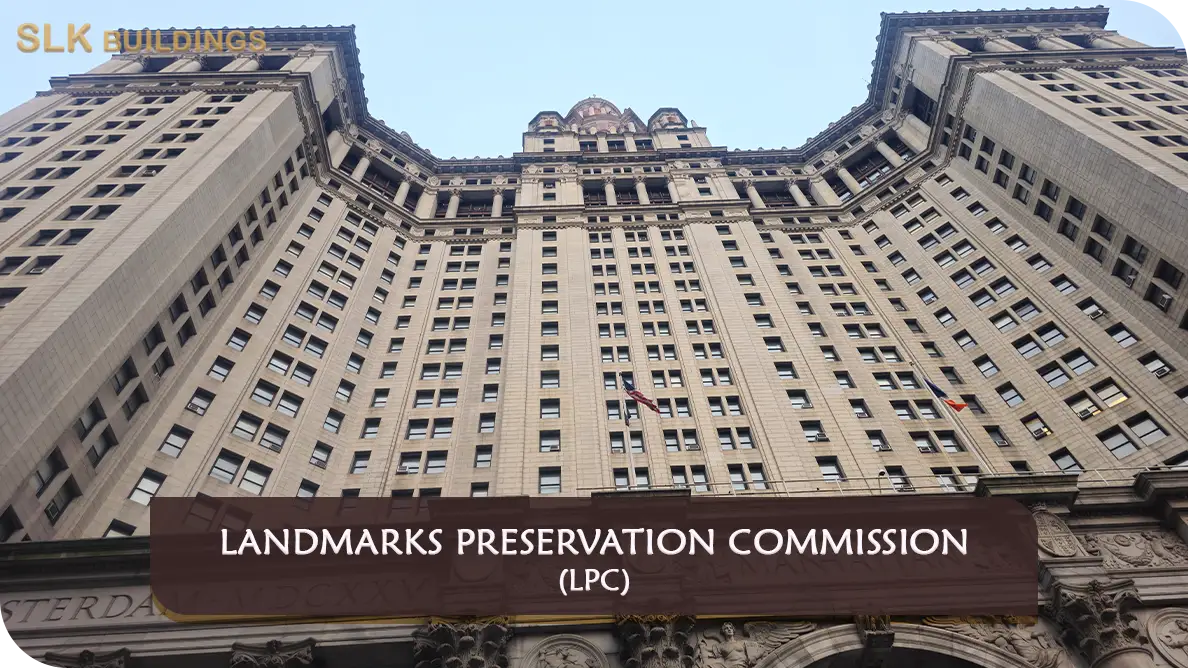
Rooftop equipment and HVAC installations can affect historic properties even when their main purpose is mechanical performance rather than architectural change. At a designated New York City building, the Landmarks Preservation Commission (LPC) can review condensers, air handlers, ducts, louvers, exhaust outlets, vents, pipe runs and related screening when they affect protected exterior features.
Heating, ventilation and air conditioning (HVAC) systems often involve interior equipment with an exterior connection. An owner should distinguish the mechanical system’s code requirements, administered through the appropriate construction agencies, from the LPC review of placement, visibility and physical impact on historic building fabric.
For the full NYC LPC topic directory, including related permits, historic building alterations, research and compliance, visit the NYC LPC Permits and Historic Property Approvals resource center. The NYC Landmarks Preservation Commission Landing Page provides a broader introduction.
Rooftop equipment can include packaged units, heat pumps, chillers, condensers, solar-related devices, antennas or other mechanical installations. Through-wall work creates penetrations that may disturb brick, stone, historic windows or other protected surfaces; through-window systems can raise different review issues.
LPC standards consider location, visibility, screening, mounting, sound or utility elements as relevant to the historic property. A unit concealed from the street is not automatically exempt. The installation’s full physical impact must be included in the application.
An effective Portico application shows the location of all proposed mechanical components, their dimensions, material, finish, penetrations and relationship to existing architectural features. For rooftop equipment, LPC may require sightline views or visibility information and details of screening or other mitigating design.
Depending on the scope, the proposed installation may qualify for a staff-level Certificate of No Effect, Permit for Minor Work or another approval. Certain non-visible installations may meet FasTrack rules; eligibility must be confirmed through Portico rather than assumed.

Mechanical design must also satisfy applicable DOB, energy, fire-safety and other technical requirements. LPC approval of the external appearance does not certify the equipment’s performance or engineering safety. Qualified design professionals and licensed trades remain responsible for their regulated work.
Roof replacement, solar installation or a rear-yard enlargement can overlap the equipment design. The team should file the combined scope consistently to avoid a later change that invalidates assumptions used in earlier LPC approval.

At the early design stage, the architect and mechanical designer should confirm where equipment can be located without unnecessarily damaging significant features. A preservation-compatible location may influence mechanical feasibility and costs.
A single coordinated equipment schedule can list model, size, footprint, height, location, attachment method, visibility and the status of each LPC/DOB approval. This also makes later substitutions easier to evaluate.
SLK Buildings assists property owners, building managers, developers, business operators and project teams with equipment location, screening, historic visibility documentation and mechanical filing coordination. For an initial conversation, share the property address, available photographs, proposed work, existing LPC or DOB permit numbers, and any relevant agency correspondence. SLK can help organize the filing, coordination and next actions, while LPC and the other responsible agencies make their own determinations and licensed professionals carry out the work legally reserved to them.
Disclaimer: SLK Buildings is a private consulting and construction-management firm and is not affiliated with the New York City Landmarks Preservation Commission or any government agency. This information is provided for general educational purposes and does not constitute legal, architectural, engineering, historic preservation, or other licensed professional advice. Applicable LPC approvals, permit requirements, hearings, and compliance obligations depend on the property, proposed work, and current agency rules. Where licensed or qualified professionals are required, those services must be performed by appropriately licensed or qualified providers.
New York City Landmarks Preservation Commission (LPC) requirements can affect a proposed alteration even when the project appears minor. Owners and project teams may need to confirm landmark designation, identify protected features, gather existing-condition photographs, prepare drawings and material information, and obtain LPC approval before starting regulated work.
LPC requirements may intersect with DOB construction permits, DCP zoning or land-use approvals, DOT sidewalk and street permissions, and OATH enforcement proceedings. The correct path depends on the designated property, the proposed scope, the applicable permit category, and whether staff review or a Commission hearing is necessary.
SLK Buildings assists with LPC application coordination, permit expediting, Portico submissions, records research, related professional coordination, agency comments, alteration approvals, landmark violations, and associated multi-agency filings within its confirmed scope of services.
Whether a project is at the research stage, awaiting an LPC response, being revised for a preservation concern, or addressing unauthorized work, maintaining consistent records and clear next actions can help the team coordinate the required approvals.
SLK Buildings provides free educational content to help property owners, business operators, developers, architects, contractors, and project teams understand LPC designation, current permit categories, Portico filing, historic-district alterations, hearings, violations, professional roles, and related DOB and other agency requirements.
For those who prefer professional assistance, SLK Buildings is available to coordinate LPC records review, filing-path research, application preparation, Portico submissions, agency comments and follow-up, design-professional coordination, permit and violation tracking, and connected NYC agency obligations. Final determinations and applicable professional work remain with the appropriate agency and qualified providers.
Disclaimer: SLK Buildings is a private consulting and construction-management firm and is not affiliated with the New York City Landmarks Preservation Commission or any government agency. This information is provided for general educational purposes and does not constitute legal, architectural, engineering, historic preservation, or other licensed professional advice. Applicable LPC approvals, permit requirements, hearings, and compliance obligations depend on the property, proposed work, and current agency rules. Where licensed or qualified professionals are required, those services must be performed by appropriately licensed or qualified providers.
They may when installed on a designated property. LPC evaluates equipment location and effects on the building.
Non-visibility may affect the review route but does not by itself remove LPC jurisdiction.
Certain qualifying installations can use FasTrack if they meet all current eligibility and document requirements.
No. DOB and other authorities separately administer the applicable construction or mechanical approvals.
Useful submissions include product sizes, roof or wall locations, mounting and penetration details, and current photographs.