
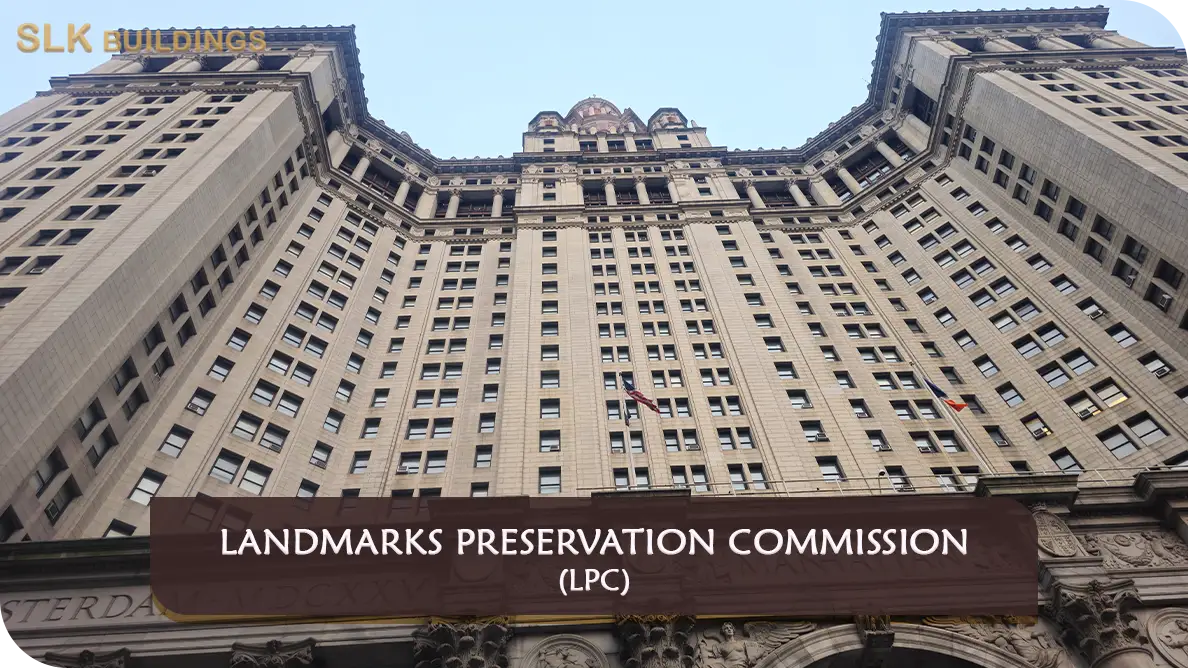
Landmark status and historic districts are the starting point for determining whether the New York City Landmarks Preservation Commission (LPC) must review proposed work at an address. A building does not have to be individually famous or visibly old to fall under LPC protection. For example, a relatively modern storefront inside a mapped historic district may still need landmark approval before its exterior is changed.
Checking the legal designation before designing or filing can prevent avoidable revisions, purchasing the wrong windows or doors, and construction without the required permission. The key is to rely on official City records, confirm the exact parcel and district boundary, and understand what the designation report actually tells you. This page explains the research in a practical order for a property owner, tenant, business operator, or project team.
For the full agency topic directory and next-stage permit guidance, visit the NYC LPC Permits and Historic Property Approvals resource center. The broader introduction is on the NYC Landmarks Preservation Commission Landing Page.
Landmark status is a legal designation granted under the New York City Landmarks Law. When a property is protected, LPC can review qualifying changes so important historic, architectural, and cultural features are not unnecessarily lost or damaged. The designation establishes a preservation review requirement; it does not automatically prohibit renovation, prohibit new tenants, or transfer ownership of the building to the government.
A historic district protects a group of buildings and streets that together create a distinctive historic setting. Individual landmarks protect specific sites or structures. A property can fall within more than one designation, and special interior or scenic designations can also exist. The official designation record and the physical location of the proposed work matter more than a general label such as “old building.”
An individual landmark is a specific building, structure, or site officially designated for its importance. The exterior is usually the central focus of protection. A landmark designation report may identify significant architectural details such as the facade, windows, stoop, roofline, cornice, or decorative materials. A designated individual landmark can also sit inside a historic district.
A historic district is a defined area, not necessarily a group of individually designated buildings. The LPC rules generally apply to buildings throughout the mapped boundary, including buildings that do not themselves have individual designation. A modern replacement building inside the district can still need LPC review for exterior work. Rear facades, roofs, courtyards, and other portions that are not visible from the street are not automatically outside LPC jurisdiction.
A designated interior landmark protects certain interiors of special significance. Ordinary private interior work is not automatically an interior landmark, but renovations involving a protected lobby, hall, or other formally designated space should be assessed against that interior designation. Separately, some interior work needing a DOB permit may require LPC review even when the space itself is not designated.
A scenic landmark protects a particular landscape or open-air site recognized for historic or aesthetic significance. This is a specific LPC designation and should not be confused with general park maintenance or ordinary environmental permitting. Look at the designation map and report to understand what site is protected.
A responsible check uses multiple official sources when necessary. The steps below are genuinely sequential, because the property must be identified before its boundary and designation documents can be evaluated.
LPC also offers an enhanced Discover NYC Landmarks beta map. The agency advises continued use of its original map for official purposes while the beta version is being improved. The best research practice is to use LPC’s current official Maps page and follow its own guidance rather than assume every online map has equal authority.

The map is an official geographic research tool. It helps show whether the address is inside a designated district and may provide links to individual or district information. A map can be especially valuable when a parcel lies near the edge of a historic district, when one building has several street addresses, or when a property is part of a larger complex.
A designation report is the agency’s written explanation of a landmark’s or historic district’s historical and architectural importance. It may describe the original construction, historical changes, architectural style, noteworthy details, and the condition or appearance of buildings at the time of designation. In a historic district, the report may discuss individual buildings and their contribution to the larger streetscape.
For a property owner replacing windows, a designation report may explain why the original openings, proportions, or historic facade are important. For a storefront project, it may provide background on the building’s period, materials, and commercial character. The report is evidence for preservation review, not a substitute for project-specific LPC instructions or an issued permit.
Use the official LPC Designation Reports collection when researching a specific landmark or district. It can be helpful to compare historic photographs and descriptions against the building’s current condition before an architect or preservation professional develops drawings.
One of the most common misunderstandings is that only a building individually named as a landmark needs LPC review. That is incorrect. A building within the legal boundary of a historic district is protected by the Landmarks Law even when it has never received its own individual landmark designation. The historical contribution of an individual building can influence the design review, but the district regulation still applies.
Another misunderstanding is that a newer building is exempt because it does not look historic. LPC reviews exterior alterations to buildings within designated districts, including many later buildings. The relevant questions include what the proposed change does to that building and its relationship to the surrounding district.
Some ordinary interior work does not require LPC review. However, the current LPC guidance identifies three important circumstances where interior work can require LPC approval: the work requires a DOB permit; it affects the exterior of the building, such as through a vent or louver; or it affects a designated interior landmark. An owner should not decide that LPC is irrelevant merely because contractors will be working behind closed doors.
For example, replacing kitchen finishes without construction-permit implications and without affecting protected features may be different from a DOB-permitted layout change, new mechanical equipment, or an alteration in a designated historic lobby. The application path may lead to a Certificate of No Effect if LPC determines the proposal will not adversely affect significant features. Review the Certificate of No Effect guide for that separate application topic.
Designation does not mean every small maintenance activity is an LPC filing. LPC identifies several examples of ordinary exterior work that generally do not need a permit, such as replacing broken window glass, renewing window or door caulk, and repainting an already painted surface in the same color. The distinction is between preserving an existing condition through ordinary maintenance and changing the appearance, materials, or design of protected features.
Replacing an entire window unit, modifying the opening, introducing a different profile, changing storefront materials, or replacing masonry with an inappropriate substitute may require review even if the work is described as a “repair.” The applicable review depends on the scope and current rules. For qualifying exterior work without a DOB permit, LPC may issue a Permit for Minor Work.
Before ordering windows, repairing a stoop, replacing a cornice, renovating a DOB-permitted interior, or planning a rear addition, the owner should establish designation status. The information can change what materials, dimensions, drawings, photographs, and professional coordination the project requires. A larger alteration can also need separate DOB review and possibly zoning analysis.
For a new business or tenant buildout, the existing storefront and signage may be regulated even if the business is simply changing occupants. Work involving awnings, illuminated signs, new doors, or an exterior HVAC opening can require LPC review. Qualifying commercial projects may be directed to LPC Business Express; they still need the underlying applicable approval.
Masonry, decorative features, cornices, stoops, and facade restoration can raise both safety and historic-design questions. DOB may regulate unsafe conditions or facade inspection requirements while LPC separately evaluates appropriate repairs to protected elements. A contractor’s ordinary construction method may not be suitable for all historic materials.
A rooftop condenser, rear addition, roof structure, or mechanical screen can affect the appearance of a protected property even when it is not highly visible. Designation status should be researched before placing equipment or advancing architectural plans. LPC, DOB, zoning, and other agency requirements may all apply.
The LPC Permit Application Search provides status and issuance information for permits from January 1, 2016 onward. Older applications may require an agency records request. The Permit Application Finder adds mapping and certain violation data. Learn how to interpret these separate records in Landmark Records and Permit Search.
LPC decides whether proposed regulated work is compatible with the protected landmark or historic district. DOB separately addresses whether construction is permitted under applicable building and construction codes, and DOB may require different drawings or professional certifications. The Department of City Planning (DCP) and zoning requirements can affect allowable size, use, setbacks, or additions. An LPC map is not a zoning map, and landmark status does not by itself authorize a change of use or building enlargement.
DOT can control activity in the street or on the sidewalk, and other agencies may become involved depending on project conditions. For project research, keep each approval in its correct agency category. If an owner receives an LPC Summons for unauthorized work, OATH may hear the enforcement case; that is separate from LPC reviewing a proposed alteration at a Commission public hearing.

SLK Buildings assists property owners, prospective buyers, building managers, commercial tenants, developers, designers, and project teams with landmark designation research, available records, permit-path coordination, and related LPC and DOB approvals. For an initial review, provide the full property address and borough, available photos, the proposed scope, any earlier LPC permit number, and any known agency notice or historic district information. SLK can help identify the next research or coordination item without assuming that an official agency decision has already been made.
Disclaimer: SLK Buildings is a private consulting and construction-management firm and is not affiliated with the New York City Landmarks Preservation Commission or any government agency. This information is provided for general educational purposes and does not constitute legal, architectural, engineering, historic preservation, or other licensed professional advice. Applicable LPC approvals, permit requirements, hearings, and compliance obligations depend on the property, proposed work, and current agency rules. Where licensed or qualified professionals are required, those services must be performed by appropriately licensed or qualified providers.
New York City Landmarks Preservation Commission (LPC) requirements can affect a proposed alteration even when the project appears minor. Owners and project teams may need to confirm landmark designation, identify protected features, gather existing-condition photographs, prepare drawings and material information, and obtain LPC approval before starting regulated work.
LPC requirements may intersect with DOB construction permits, DCP zoning or land-use approvals, DOT sidewalk and street permissions, and OATH enforcement proceedings. The correct path depends on the designated property, the proposed scope, the applicable permit category, and whether staff review or a Commission hearing is necessary.
SLK Buildings assists with LPC application coordination, permit expediting, Portico submissions, records research, related professional coordination, agency comments, alteration approvals, landmark violations, and associated multi-agency filings within its confirmed scope of services.
Whether a project is at the research stage, awaiting an LPC response, being revised for a preservation concern, or addressing unauthorized work, maintaining consistent records and clear next actions can help the team coordinate the required approvals.
SLK Buildings provides free educational content to help property owners, business operators, developers, architects, contractors, and project teams understand LPC designation, current permit categories, Portico filing, historic-district alterations, hearings, violations, professional roles, and related DOB and other agency requirements.
For those who prefer professional assistance, SLK Buildings is available to coordinate LPC records review, filing-path research, application preparation, Portico submissions, agency comments and follow-up, design-professional coordination, permit and violation tracking, and connected NYC agency obligations. Final determinations and applicable professional work remain with the appropriate agency and qualified providers.
Disclaimer: SLK Buildings is a private consulting and construction-management firm and is not affiliated with the New York City Landmarks Preservation Commission or any government agency. This information is provided for general educational purposes and does not constitute legal, architectural, engineering, historic preservation, or other licensed professional advice. Applicable LPC approvals, permit requirements, hearings, and compliance obligations depend on the property, proposed work, and current agency rules. Where licensed or qualified professionals are required, those services must be performed by appropriately licensed or qualified providers.
Search its address in LPC’s official Discover NYC Landmarks map and check the type of designation shown. Review the designation report and mapped district boundary when applicable.
No. The legal district boundary matters. A nearby protected building does not automatically place every surrounding parcel under LPC review, although special site-specific considerations should be confirmed if the location is unclear.
Yes, the City regulates applicable exterior work on buildings within historic districts, including newer buildings. The proposed design and the building’s contribution to the district can affect the review.
An individual landmark is a specifically designated property; a historic district is an entire officially mapped area with protected buildings and streetscapes. A property may fall into both categories.
Not always. Review may apply when the work requires a DOB permit, affects an exterior feature, or involves a designated interior landmark. Other private interior maintenance may be outside LPC approval requirements.
Not by itself. State and National Register listings are separate programs. Check the local LPC designation and the proposed work independently.
LPC’s public application search covers records from January 1, 2016 onward. For older material, an LPC records request may be appropriate. Existing search records do not replace an owner’s broader legal or title due diligence.
The owner should check LPC permit and violation history and discuss a corrective or legalization path with the agency. Some work may qualify for retroactive approval, while other work may need modification or removal.