
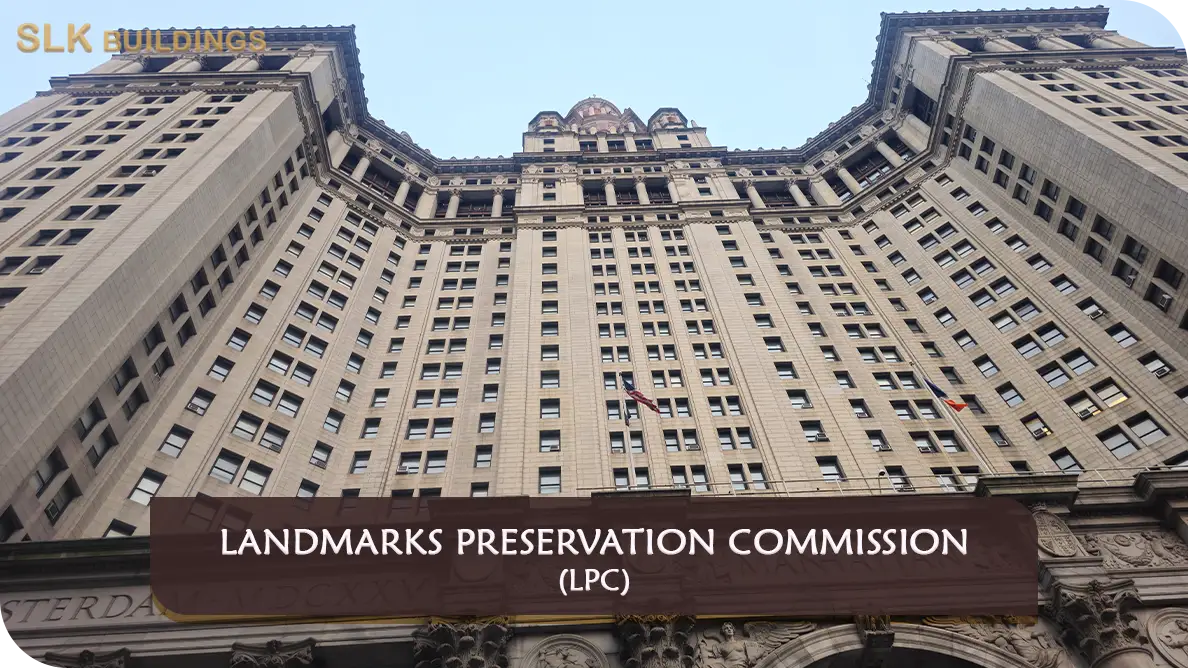
Notices of compliance are written sign-offs the New York City Landmarks Preservation Commission (LPC) may issue to document that approved work or corrective work has been completed in accordance with the required conditions. A Notice of Compliance (NOC) is especially important when an LPC violation must be closed or the Department of Buildings (DOB) requires sign-off to complete its own process.
Owners should not assume every LPC permit needs an NOC. LPC states that it generally does not require a sign-off except for open violations and permits associated with certain Department of City Planning (DCP) approvals, although DOB often asks for an NOC before closing out construction matters.
For the full NYC LPC topic directory, including related permits, historic building alterations, research and compliance, visit the NYC LPC Permits and Historic Property Approvals resource center. The NYC Landmarks Preservation Commission Landing Page provides a broader introduction.
A permit authorizes proposed regulated work before construction. A Notice of Compliance concerns what has been completed afterward. It compares the resulting condition with the approved LPC work or permitted corrective action. These are two different agency decisions.
An NOC is requested through Portico as a Post-Approval Action, including when the original permit predates Portico. The request may require photographs of all approved exterior work, including work not visible from a public thoroughfare, and a list of differences from the original approval.
Start by collecting the issued LPC permit and approved drawings. Conduct a thorough field comparison of approved versus completed conditions. If changes were made, document them clearly and determine whether an LPC amendment is required before requesting a sign-off.
Submit a Post-Approval Action for the NOC through Portico and upload the required photographs and any as-built differences. LPC reviews the documentation and may request more information or a correction. For violation closeout, ensure the NOC is properly reflected in the relevant enforcement record.

LPC determines preservation compliance. DOB separately determines whether its own filings and construction process can close. An NOC does not automatically close every DOB objection or replace other required inspections or certifications.
For LPC violations, track the correction permit, completion evidence, NOC and any separate OATH enforcement disposition. Do not represent payment of a fine or physical work alone as sufficient proof that the entire record is closed.

As construction proceeds, save progress and completion photographs by approved scope item. At final review, a labeled photo set tied to the permit drawings can be much easier for the agency to evaluate than an unorganized phone-photo collection.
The NOC stage is also a useful moment to confirm that every project participant has the correct final permit, any amendments and the required separate DOB closeout items.
SLK Buildings assists property owners, building managers, developers, business operators and project teams with LPC permit closeout records, completion photographs, NOC requests and related DOB follow-up. For an initial conversation, share the property address, available photographs, proposed work, existing LPC or DOB permit numbers, and any relevant agency correspondence. SLK can help organize the filing, coordination and next actions, while LPC and the other responsible agencies make their own determinations and licensed professionals carry out the work legally reserved to them.
Disclaimer: SLK Buildings is a private consulting and construction-management firm and is not affiliated with the New York City Landmarks Preservation Commission or any government agency. This information is provided for general educational purposes and does not constitute legal, architectural, engineering, historic preservation, or other licensed professional advice. Applicable LPC approvals, permit requirements, hearings, and compliance obligations depend on the property, proposed work, and current agency rules. Where licensed or qualified professionals are required, those services must be performed by appropriately licensed or qualified providers.
New York City Landmarks Preservation Commission (LPC) requirements can affect a proposed alteration even when the project appears minor. Owners and project teams may need to confirm landmark designation, identify protected features, gather existing-condition photographs, prepare drawings and material information, and obtain LPC approval before starting regulated work.
LPC requirements may intersect with DOB construction permits, DCP zoning or land-use approvals, DOT sidewalk and street permissions, and OATH enforcement proceedings. The correct path depends on the designated property, the proposed scope, the applicable permit category, and whether staff review or a Commission hearing is necessary.
SLK Buildings assists with LPC application coordination, permit expediting, Portico submissions, records research, related professional coordination, agency comments, alteration approvals, landmark violations, and associated multi-agency filings within its confirmed scope of services.
Whether a project is at the research stage, awaiting an LPC response, being revised for a preservation concern, or addressing unauthorized work, maintaining consistent records and clear next actions can help the team coordinate the required approvals.
SLK Buildings provides free educational content to help property owners, business operators, developers, architects, contractors, and project teams understand LPC designation, current permit categories, Portico filing, historic-district alterations, hearings, violations, professional roles, and related DOB and other agency requirements.
For those who prefer professional assistance, SLK Buildings is available to coordinate LPC records review, filing-path research, application preparation, Portico submissions, agency comments and follow-up, design-professional coordination, permit and violation tracking, and connected NYC agency obligations. Final determinations and applicable professional work remain with the appropriate agency and qualified providers.
Disclaimer: SLK Buildings is a private consulting and construction-management firm and is not affiliated with the New York City Landmarks Preservation Commission or any government agency. This information is provided for general educational purposes and does not constitute legal, architectural, engineering, historic preservation, or other licensed professional advice. Applicable LPC approvals, permit requirements, hearings, and compliance obligations depend on the property, proposed work, and current agency rules. Where licensed or qualified professionals are required, those services must be performed by appropriately licensed or qualified providers.
No. LPC expressly states narrower requirements, while DOB may independently request an NOC for its own closeout.
Through the Portico Post-Approval Action filing process.
After properly permitted correction, an NOC is typically needed to document LPC compliance and close the violation.
Disclose the as-built differences and determine whether LPC needs an amendment or other corrective action.
Not necessarily. DOB has separate sign-off, inspection and closeout obligations.