
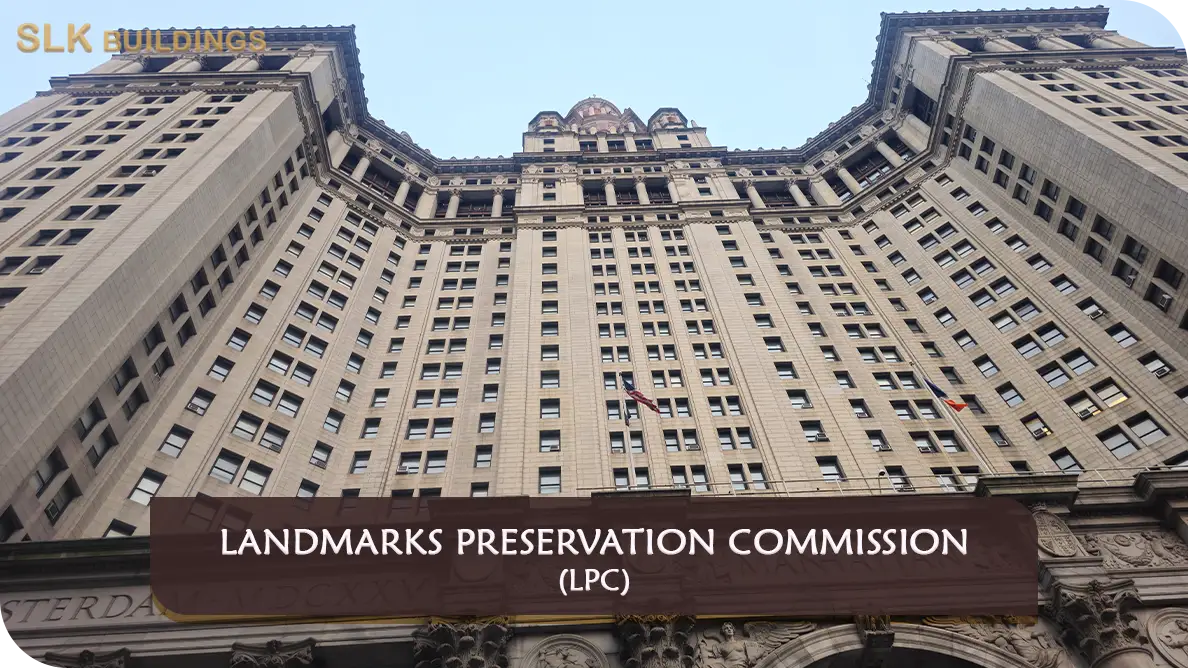
Facade restoration and masonry work can preserve a landmark building while addressing water infiltration, deteriorated stone, failing mortar, unsafe cornices or damaged architectural detail. On a designated New York City property, the Landmarks Preservation Commission (LPC) may review the repair materials and methods. Separate Department of Buildings (DOB) requirements may also apply.
Historic masonry is not interchangeable with a modern wall finish. Brick, brownstone, limestone, terracotta, stone carving, mortar, coating and decorative details can react differently to cleaning and repair. A poorly selected technique can cause permanent damage, so approvals and professional methods matter before the work begins.
For the full NYC LPC topic directory, including related permits, historic building alterations, research and compliance, visit the NYC LPC Permits and Historic Property Approvals resource center. The NYC Landmarks Preservation Commission Landing Page provides a broader introduction.
Restoration usually aims to retain, repair, or accurately re-create documented historic material and appearance rather than unnecessarily replace it. Repointing means removing deteriorated mortar at masonry joints and installing appropriate new mortar; mismatched hardness or color can damage adjoining units or alter the facade.
DOB facade inspection and safety obligations, including applicable Facade Inspection & Safety Program (FISP) requirements, are distinct from LPC preservation approvals. An unsafe facade can create urgent public-safety obligations that must be managed alongside protection of significant architectural fabric.
Begin with a conditions survey and careful photographic record. The filing should distinguish what will be retained, repaired, cleaned, repointed, replicated or replaced. LPC may request mortar or patch specifications, sample panels, mockups, treatment methods and documentation of original historic details.
Appropriate restorative work without DOB permits may qualify for a Permit for Minor Work. Repairs involving structural changes, DOB filing or significant modifications may require a CNE, Commission review, or other coordinated path. Emergency measures to protect the public do not automatically approve permanent reconstruction.

An engineer or architect may need to evaluate unsafe conditions, load paths, facade anchorage or repair design. SLK can coordinate agency filings and document status but cannot substitute for licensed professional judgments about structural safety.
DOT may separately control sidewalk sheds, street occupancy and other work in the public right of way. The facade project should identify the independent DOT, DOB and LPC approvals so a safety obligation is not confused with automatic permission to modify historic fabric.

For emergency hazards, immediate temporary protection may be permissible or required for safety, but permanent repairs should be coordinated with LPC and DOB as applicable. The LPC permit-types guidance distinguishes emergency measures from later permanent restoration.
Owners benefit from a condition-by-condition repair schedule. It gives contractors an understandable scope and allows LPC and the qualified professional to distinguish conservation, repair and replacement.
SLK Buildings assists property owners, building managers, developers, business operators and project teams with facade restoration application documentation, historic repair descriptions and DOB/FISP coordination. For an initial conversation, share the property address, available photographs, proposed work, existing LPC or DOB permit numbers, and any relevant agency correspondence. SLK can help organize the filing, coordination and next actions, while LPC and the other responsible agencies make their own determinations and licensed professionals carry out the work legally reserved to them.
Disclaimer: SLK Buildings is a private consulting and construction-management firm and is not affiliated with the New York City Landmarks Preservation Commission or any government agency. This information is provided for general educational purposes and does not constitute legal, architectural, engineering, historic preservation, or other licensed professional advice. Applicable LPC approvals, permit requirements, hearings, and compliance obligations depend on the property, proposed work, and current agency rules. Where licensed or qualified professionals are required, those services must be performed by appropriately licensed or qualified providers.
New York City Landmarks Preservation Commission (LPC) requirements can affect a proposed alteration even when the project appears minor. Owners and project teams may need to confirm landmark designation, identify protected features, gather existing-condition photographs, prepare drawings and material information, and obtain LPC approval before starting regulated work.
LPC requirements may intersect with DOB construction permits, DCP zoning or land-use approvals, DOT sidewalk and street permissions, and OATH enforcement proceedings. The correct path depends on the designated property, the proposed scope, the applicable permit category, and whether staff review or a Commission hearing is necessary.
SLK Buildings assists with LPC application coordination, permit expediting, Portico submissions, records research, related professional coordination, agency comments, alteration approvals, landmark violations, and associated multi-agency filings within its confirmed scope of services.
Whether a project is at the research stage, awaiting an LPC response, being revised for a preservation concern, or addressing unauthorized work, maintaining consistent records and clear next actions can help the team coordinate the required approvals.
SLK Buildings provides free educational content to help property owners, business operators, developers, architects, contractors, and project teams understand LPC designation, current permit categories, Portico filing, historic-district alterations, hearings, violations, professional roles, and related DOB and other agency requirements.
For those who prefer professional assistance, SLK Buildings is available to coordinate LPC records review, filing-path research, application preparation, Portico submissions, agency comments and follow-up, design-professional coordination, permit and violation tracking, and connected NYC agency obligations. Final determinations and applicable professional work remain with the appropriate agency and qualified providers.
Disclaimer: SLK Buildings is a private consulting and construction-management firm and is not affiliated with the New York City Landmarks Preservation Commission or any government agency. This information is provided for general educational purposes and does not constitute legal, architectural, engineering, historic preservation, or other licensed professional advice. Applicable LPC approvals, permit requirements, hearings, and compliance obligations depend on the property, proposed work, and current agency rules. Where licensed or qualified professionals are required, those services must be performed by appropriately licensed or qualified providers.
It can. LPC evaluates restorative exterior work, even where a separate DOB permit is not required.
No. DOB administers applicable facade inspection and safety obligations; LPC reviews preservation-sensitive changes at designated properties.
The method must be suitable for the historic material and comply with applicable LPC requirements. Aggressive cleaning can be damaging.
Address immediate public safety with the appropriate qualified professionals and agencies, then coordinate permanent LPC and DOB repair authorizations.
No. A sidewalk shed or street authorization is a separate process from the preservation approval for the actual repair work.