
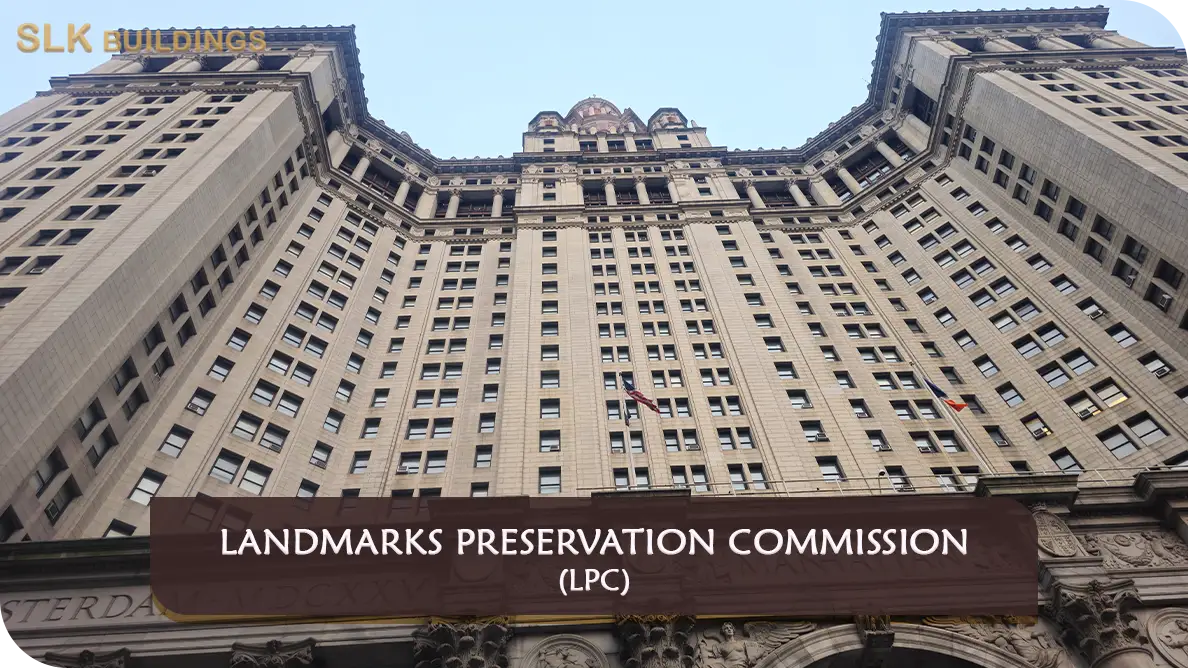
A certificate of no effect is an LPC approval used for qualifying work at a designated landmark property when the proposed work requires a Department of Buildings (DOB) permit and does not adversely affect significant protected architectural features. The New York City Landmarks Preservation Commission (LPC) issues a Certificate of No Effect (CNE) through Portico after reviewing an adequate application.
A typical example is interior renovation requiring a DOB permit. A CNE may also apply to certain plumbing, heating, rooftop equipment, or accessibility work. However, not every interior renovation is exempt from review, and not every alteration qualifies for a CNE. The effect on the protected building is what matters.
For the full NYC LPC topic directory, including related permits, historic building alterations, research and compliance, visit the NYC LPC Permits and Historic Property Approvals resource center. The NYC Landmarks Preservation Commission Landing Page provides a broader introduction.
The phrase “no effect” means LPC has concluded the proposed project will not have an adverse effect on significant protected features under its review. It does not mean that no construction will occur, that DOB has granted permission, or that the project is automatically outside landmark regulation.
CNEs are staff-level permits, so an eligible CNE usually does not need a public hearing or community board presentation. If the proposal would harm a significant feature, LPC staff may suggest revisions or a different review route.
The applicant files a New Application in Portico with the property address, written work scope, photographs and any plans needed to assess the proposed change. LPC staff evaluates the relationship between the work and protected elements. If the case qualifies and the application is complete, a CNE is issued through the portal.
LPC notes that complete applications meeting its rules can often be approved more quickly, while the applicable decision requirement is 30 working days from completeness. These are not guaranteed calendar-day turnaround promises; missing materials or more complex review can extend the practical process.

DOB independently reviews construction safety and permits. A CNE is an LPC approval, not a DOB construction permit. Project teams should compare the CNE-approved work to DOB filing sheets so a change in layout, ventilation, equipment or exterior treatment does not create inconsistent approvals.
If the work qualifies as a narrowly defined interior-only expedited category, a separate XCNE service may apply. It requires its own eligibility tests, including a qualifying professional of record and signed and sealed DOB filing drawings. Do not assume all CNEs qualify for XCNE.

Prepare two versions of the project description where necessary: one understandable to a lay owner, and one technically complete for the professional filing team. Both should describe the same work and significant building impacts.
If drawings include demolition, new openings or visibly different exterior details, ask the architect and LPC reviewer whether those changes can genuinely be approved as a CNE before relying on that pathway.
SLK Buildings assists property owners, building managers, developers, business operators and project teams with CNE filing-path assessment, interior and exterior impact documentation, and related DOB plan coordination. For an initial conversation, share the property address, available photographs, proposed work, existing LPC or DOB permit numbers, and any relevant agency correspondence. SLK can help organize the filing, coordination and next actions, while LPC and the other responsible agencies make their own determinations and licensed professionals carry out the work legally reserved to them.
Disclaimer: SLK Buildings is a private consulting and construction-management firm and is not affiliated with the New York City Landmarks Preservation Commission or any government agency. This information is provided for general educational purposes and does not constitute legal, architectural, engineering, historic preservation, or other licensed professional advice. Applicable LPC approvals, permit requirements, hearings, and compliance obligations depend on the property, proposed work, and current agency rules. Where licensed or qualified professionals are required, those services must be performed by appropriately licensed or qualified providers.
New York City Landmarks Preservation Commission (LPC) requirements can affect a proposed alteration even when the project appears minor. Owners and project teams may need to confirm landmark designation, identify protected features, gather existing-condition photographs, prepare drawings and material information, and obtain LPC approval before starting regulated work.
LPC requirements may intersect with DOB construction permits, DCP zoning or land-use approvals, DOT sidewalk and street permissions, and OATH enforcement proceedings. The correct path depends on the designated property, the proposed scope, the applicable permit category, and whether staff review or a Commission hearing is necessary.
SLK Buildings assists with LPC application coordination, permit expediting, Portico submissions, records research, related professional coordination, agency comments, alteration approvals, landmark violations, and associated multi-agency filings within its confirmed scope of services.
Whether a project is at the research stage, awaiting an LPC response, being revised for a preservation concern, or addressing unauthorized work, maintaining consistent records and clear next actions can help the team coordinate the required approvals.
SLK Buildings provides free educational content to help property owners, business operators, developers, architects, contractors, and project teams understand LPC designation, current permit categories, Portico filing, historic-district alterations, hearings, violations, professional roles, and related DOB and other agency requirements.
For those who prefer professional assistance, SLK Buildings is available to coordinate LPC records review, filing-path research, application preparation, Portico submissions, agency comments and follow-up, design-professional coordination, permit and violation tracking, and connected NYC agency obligations. Final determinations and applicable professional work remain with the appropriate agency and qualified providers.
Disclaimer: SLK Buildings is a private consulting and construction-management firm and is not affiliated with the New York City Landmarks Preservation Commission or any government agency. This information is provided for general educational purposes and does not constitute legal, architectural, engineering, historic preservation, or other licensed professional advice. Applicable LPC approvals, permit requirements, hearings, and compliance obligations depend on the property, proposed work, and current agency rules. Where licensed or qualified professionals are required, those services must be performed by appropriately licensed or qualified providers.
No. LPC protects the landmark property; DOB administers relevant construction requirements. Both may apply.
No. The answer depends on the actual scope and whether the work requires a DOB permit or affects a designated interior or protected exterior element.
Normally not. A CNE is a staff-level permit issued after LPC review, rather than a Commission-level Certificate of Appropriateness.
Certain installations may qualify. LPC reviews the location, visibility, mounting, and effect on historic building fabric as applicable.
No. Regulated work must await the issued LPC permit and all other required approvals.