
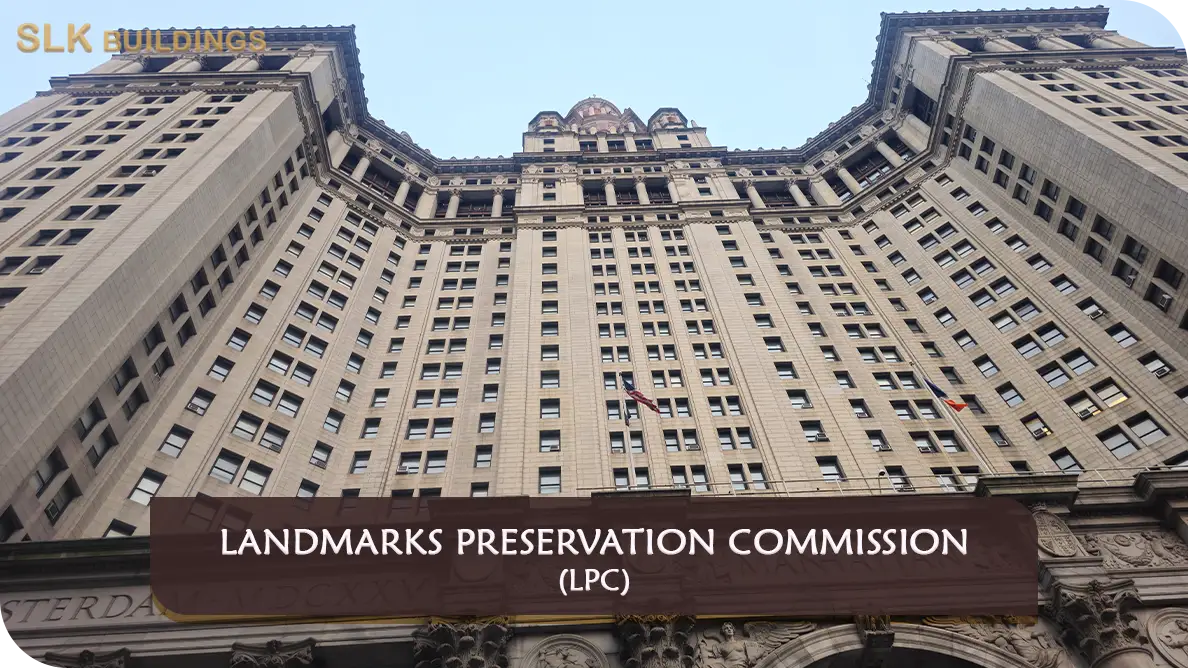
A permit for minor work is a staff-level approval from the New York City Landmarks Preservation Commission (LPC) for qualifying exterior work at designated properties that does not require a Department of Buildings (DOB) permit. A Permit for Minor Work (PMW) is common for historically compatible repairs and certain changes that still need landmark review.
The word “minor” does not mean the owner can proceed without permission. Replacing an entire window or resurfacing brownstone may look routine, but on a protected building the material, profile, appearance and installation method can matter. LPC evaluates the details before issuing the permit through Portico.
For the full NYC LPC topic directory, including related permits, historic building alterations, research and compliance, visit the NYC LPC Permits and Historic Property Approvals resource center. The NYC Landmarks Preservation Commission Landing Page provides a broader introduction.
The core PMW distinction is that the proposed exterior work does not require a DOB permit and is appropriate or restorative under LPC rules. It is not a smaller version of a Certificate of Appropriateness, and staff cannot use a PMW to authorize every change simply because it has a low contract value.
An eligible PMW is reviewed by LPC preservation staff without a full Commission hearing or community board presentation. Where the work requires a DOB permit, a Certificate of No Effect or another LPC review category may instead be appropriate.
The applicant documents the existing building features, describes the intended repair or replacement, and submits clear color photographs and appropriate specifications through Portico. LPC staff compares the proposal to the building and historic district context and may request more detailed profiles, mockups, finish descriptions or revised materials.
For complete PMW applications that meet LPC rules, approvals can often be quicker than the maximum statutory period of 20 business days after completeness. This is not a universal turnaround guarantee; review time depends on the quality and complexity of the proposal.

A PMW is appropriate only where the proposed exterior work does not require a DOB permit. If the actual scope grows to include structural repair, opening changes or other DOB-permitted work, the project team should re-evaluate its LPC permit category rather than treating the original PMW as broad authorization.
Contractor means and methods, protection of historic materials, and approved sample work should be coordinated with the owner and qualified preservation or design professionals when necessary. LPC can require a different method or material from the one initially requested.

LPC lists narrow exempt maintenance examples, including replacing broken glass in kind and touching up paint in the same color. Those examples do not automatically cover replacing entire windows or stripping historic finishes.
Owners planning many similar window or storefront replacements should also evaluate whether an LPC Master Plan would establish a useful repeat-work standard for future units or tenants.
SLK Buildings assists property owners, building managers, developers, business operators and project teams with staff-level PMW review, repair specifications, contractor document collection and follow-up. For an initial conversation, share the property address, available photographs, proposed work, existing LPC or DOB permit numbers, and any relevant agency correspondence. SLK can help organize the filing, coordination and next actions, while LPC and the other responsible agencies make their own determinations and licensed professionals carry out the work legally reserved to them.
Disclaimer: SLK Buildings is a private consulting and construction-management firm and is not affiliated with the New York City Landmarks Preservation Commission or any government agency. This information is provided for general educational purposes and does not constitute legal, architectural, engineering, historic preservation, or other licensed professional advice. Applicable LPC approvals, permit requirements, hearings, and compliance obligations depend on the property, proposed work, and current agency rules. Where licensed or qualified professionals are required, those services must be performed by appropriately licensed or qualified providers.
New York City Landmarks Preservation Commission (LPC) requirements can affect a proposed alteration even when the project appears minor. Owners and project teams may need to confirm landmark designation, identify protected features, gather existing-condition photographs, prepare drawings and material information, and obtain LPC approval before starting regulated work.
LPC requirements may intersect with DOB construction permits, DCP zoning or land-use approvals, DOT sidewalk and street permissions, and OATH enforcement proceedings. The correct path depends on the designated property, the proposed scope, the applicable permit category, and whether staff review or a Commission hearing is necessary.
SLK Buildings assists with LPC application coordination, permit expediting, Portico submissions, records research, related professional coordination, agency comments, alteration approvals, landmark violations, and associated multi-agency filings within its confirmed scope of services.
Whether a project is at the research stage, awaiting an LPC response, being revised for a preservation concern, or addressing unauthorized work, maintaining consistent records and clear next actions can help the team coordinate the required approvals.
SLK Buildings provides free educational content to help property owners, business operators, developers, architects, contractors, and project teams understand LPC designation, current permit categories, Portico filing, historic-district alterations, hearings, violations, professional roles, and related DOB and other agency requirements.
For those who prefer professional assistance, SLK Buildings is available to coordinate LPC records review, filing-path research, application preparation, Portico submissions, agency comments and follow-up, design-professional coordination, permit and violation tracking, and connected NYC agency obligations. Final determinations and applicable professional work remain with the appropriate agency and qualified providers.
Disclaimer: SLK Buildings is a private consulting and construction-management firm and is not affiliated with the New York City Landmarks Preservation Commission or any government agency. This information is provided for general educational purposes and does not constitute legal, architectural, engineering, historic preservation, or other licensed professional advice. Applicable LPC approvals, permit requirements, hearings, and compliance obligations depend on the property, proposed work, and current agency rules. Where licensed or qualified professionals are required, those services must be performed by appropriately licensed or qualified providers.
No, a qualifying Permit for Minor Work is ordinarily issued by LPC staff without Commission hearing review.
Some window replacements may not require DOB permits but can still require an LPC PMW and detailed product review.
No. The determining issues include the type of work, LPC rules and whether a DOB permit is required.
Do not assume so. Appropriate cleaning and masonry work can require LPC approval and preservation-sensitive specifications.
The approval route may need to change. Coordinate with the qualified design professional and LPC before proceeding.