
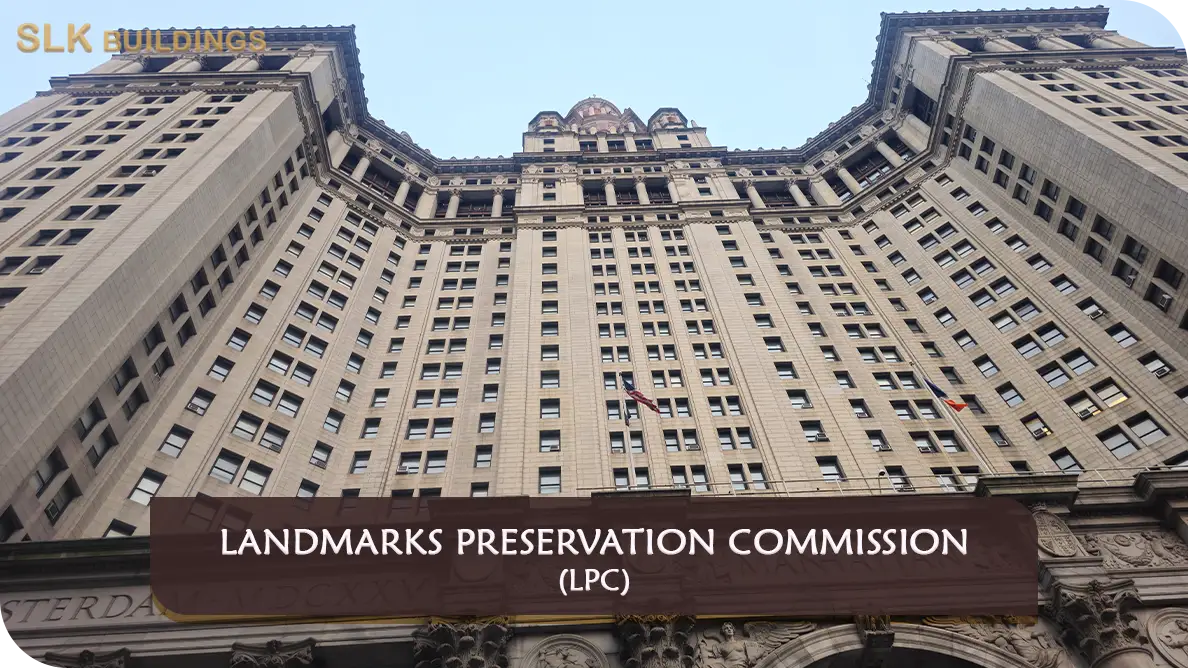
LPC violations and legalization involve work performed without the required historic preservation permit, work that differs from the issued approval, or other violations of the New York City Landmarks Law. The Landmarks Preservation Commission (LPC) investigates and enforces these requirements at designated properties, including conditions created by a prior owner.
For an owner receiving a Warning Letter or summons, two matters may need attention: the enforcement proceeding and the physical correction or legalization of the building condition. Paying a penalty or appearing at an Office of Administrative Trials and Hearings (OATH) hearing does not, by itself, make the unauthorized work compliant with LPC requirements.
For the full NYC LPC topic directory, including related permits, historic building alterations, research and compliance, visit the NYC LPC Permits and Historic Property Approvals resource center. The NYC Landmarks Preservation Commission Landing Page provides a broader introduction.
Legalization means seeking LPC approval after work was already installed. If the condition meets the applicable preservation standards, LPC may issue a retroactive permit. If the condition is unacceptable, the owner may need to modify, restore or remove the work under a separate LPC-approved corrective scope.
LPC may issue Warning Letters and summonses. Most LPC enforcement summonses are adjudicated at OATH, while a Certificate of Appropriateness may require a separate LPC Commission public hearing for the actual proposed repair or legalization design. These hearing types are distinct.
Research the exact violation language, property designation, prior permits and the condition as installed. Discuss the intended corrective approach with LPC enforcement staff before removing or replacing elements. Where a permit is necessary, submit the proposal through Portico and obtain approval before conducting corrective construction.
Once permitted corrective work is complete, an LPC Notice of Compliance is generally needed to close an open LPC violation. The OATH case, possible penalties and the agency’s record of corrected conditions may follow different procedural timelines. Maintain separate status tracking for each.

OATH adjudicates many summonses and civil penalties; LPC reviews the physical work and determines the appropriate preservation correction. DOB can separately impose construction or building-code restrictions, and an unresolved landmark violation may delay DOB permits. Do not treat an OATH payment as an LPC sign-off.
Legal representation, architect/engineer certification, qualified preservation design, contracting and SLK filing coordination have distinct responsibilities. The correct response depends on the actual summons, property condition, permit history and applicable agency instructions.

For effective coordination, separate the record into a property-condition file, an enforcement file and an application/correction file. Each has its own documents, decision points, responsible parties and closure test.
The property’s exact legal record is essential. Public map and permit tools help identify known conditions but are not substitutes for title due diligence, full agency records or advice from the appropriate professional.
SLK Buildings assists property owners, building managers, developers, business operators and project teams with LPC enforcement and permit research, violation response coordination and NOC closeout tracking. For an initial conversation, share the property address, available photographs, proposed work, existing LPC or DOB permit numbers, and any relevant agency correspondence. SLK can help organize the filing, coordination and next actions, while LPC and the other responsible agencies make their own determinations and licensed professionals carry out the work legally reserved to them.
Disclaimer: SLK Buildings is a private consulting and construction-management firm and is not affiliated with the New York City Landmarks Preservation Commission or any government agency. This information is provided for general educational purposes and does not constitute legal, architectural, engineering, historic preservation, or other licensed professional advice. Applicable LPC approvals, permit requirements, hearings, and compliance obligations depend on the property, proposed work, and current agency rules. Where licensed or qualified professionals are required, those services must be performed by appropriately licensed or qualified providers.
New York City Landmarks Preservation Commission (LPC) requirements can affect a proposed alteration even when the project appears minor. Owners and project teams may need to confirm landmark designation, identify protected features, gather existing-condition photographs, prepare drawings and material information, and obtain LPC approval before starting regulated work.
LPC requirements may intersect with DOB construction permits, DCP zoning or land-use approvals, DOT sidewalk and street permissions, and OATH enforcement proceedings. The correct path depends on the designated property, the proposed scope, the applicable permit category, and whether staff review or a Commission hearing is necessary.
SLK Buildings assists with LPC application coordination, permit expediting, Portico submissions, records research, related professional coordination, agency comments, alteration approvals, landmark violations, and associated multi-agency filings within its confirmed scope of services.
Whether a project is at the research stage, awaiting an LPC response, being revised for a preservation concern, or addressing unauthorized work, maintaining consistent records and clear next actions can help the team coordinate the required approvals.
SLK Buildings provides free educational content to help property owners, business operators, developers, architects, contractors, and project teams understand LPC designation, current permit categories, Portico filing, historic-district alterations, hearings, violations, professional roles, and related DOB and other agency requirements.
For those who prefer professional assistance, SLK Buildings is available to coordinate LPC records review, filing-path research, application preparation, Portico submissions, agency comments and follow-up, design-professional coordination, permit and violation tracking, and connected NYC agency obligations. Final determinations and applicable professional work remain with the appropriate agency and qualified providers.
Disclaimer: SLK Buildings is a private consulting and construction-management firm and is not affiliated with the New York City Landmarks Preservation Commission or any government agency. This information is provided for general educational purposes and does not constitute legal, architectural, engineering, historic preservation, or other licensed professional advice. Applicable LPC approvals, permit requirements, hearings, and compliance obligations depend on the property, proposed work, and current agency rules. Where licensed or qualified professionals are required, those services must be performed by appropriately licensed or qualified providers.
Yes. LPC advises that outstanding unauthorized changes can remain an issue for current owners even when they did not install them.
Potentially. LPC may retroactively approve a compliant condition or require corrective design, alteration or removal.
No. Physical compliance with LPC requirements and applicable sign-off must be tracked separately.
Do not assume so. LPC advises obtaining a permit for corrective work where required and consulting enforcement staff before work.
An approved corrective path followed by required completion evidence and an LPC Notice of Compliance can close the agency violation.