
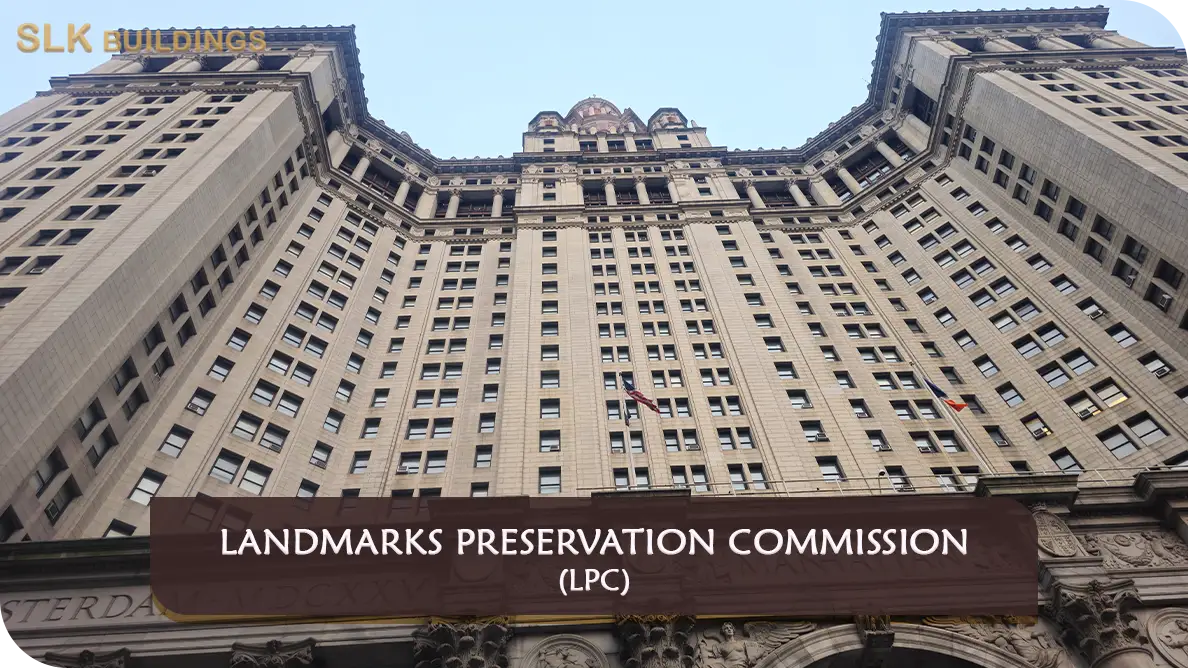
LPC Business Express is a focused service offered by the New York City Landmarks Preservation Commission (LPC) to help qualifying street-level businesses in designated buildings and historic districts navigate landmark review. It is particularly relevant to restaurants, shops, offices and other commercial tenants considering storefront or building changes.
The program offers a dedicated team, consultation and focused permit review. It is not permission to install a sign or remodel a historic storefront without LPC approval. An eligible business still files through Portico and must supply a complete description of the actual work.
For the full NYC LPC topic directory, including related permits, historic building alterations, research and compliance, visit the NYC LPC Permits and Historic Property Approvals resource center. The NYC Landmarks Preservation Commission Landing Page provides a broader introduction.
Business Express applies to specified work at qualifying storefronts and other street-level commercial spaces, which LPC describes as including basement/cellar and first- or second-floor commercial areas. Portico assesses eligibility and routes qualifying applications to the Business Express team.
The service can coordinate review of multiple ordinary commercial activities without becoming a separate class of historic building permit. Depending on the proposal, LPC may issue a CNE, PMW or another appropriate approval.
A business or its authorized project team should check the designation and describe each part of the proposed leasehold or storefront work. A Portico New Application will identify whether the work qualifies for Business Express. LPC may request photographs, dimensioned drawings, design details and separate signed and sealed DOB drawings when a DOB permit is also required.
A business should separate ordinary business licensing and operating approvals from the LPC process. Restaurant, signage, public-space, accessibility, mechanical, DOB and fire-safety requirements may involve different City agencies, and Business Express is not a replacement for those reviews.

A landlord may own the historic facade while a tenant controls the business fit-out. Lease, owner authorization and professional responsibilities should be clarified before ordering storefront components. A tenant’s construction vendor should not rely only on local sign or storefront permits.
LPC Business Express information should be coordinated with DOB, FDNY, DOT or other agency approvals that may apply to occupancy, fire protection, sidewalk cafe installations or construction in the right of way. LPC regulates the historic property aspect of the work.

The Business Express team can be useful before the final storefront design is ordered. Early consultation helps identify which dimensions, materials and visibility issues are likely to require detailed review.
For a building with frequent tenant turnover, an approved storefront or signage Master Plan may provide consistent standards for future commercial spaces. The next tenant still needs applicable LPC permit review.
SLK Buildings assists property owners, building managers, developers, business operators and project teams with Business Express eligibility and storefront, signage and tenant project application coordination. For an initial conversation, share the property address, available photographs, proposed work, existing LPC or DOB permit numbers, and any relevant agency correspondence. SLK can help organize the filing, coordination and next actions, while LPC and the other responsible agencies make their own determinations and licensed professionals carry out the work legally reserved to them.
Disclaimer: SLK Buildings is a private consulting and construction-management firm and is not affiliated with the New York City Landmarks Preservation Commission or any government agency. This information is provided for general educational purposes and does not constitute legal, architectural, engineering, historic preservation, or other licensed professional advice. Applicable LPC approvals, permit requirements, hearings, and compliance obligations depend on the property, proposed work, and current agency rules. Where licensed or qualified professionals are required, those services must be performed by appropriately licensed or qualified providers.
New York City Landmarks Preservation Commission (LPC) requirements can affect a proposed alteration even when the project appears minor. Owners and project teams may need to confirm landmark designation, identify protected features, gather existing-condition photographs, prepare drawings and material information, and obtain LPC approval before starting regulated work.
LPC requirements may intersect with DOB construction permits, DCP zoning or land-use approvals, DOT sidewalk and street permissions, and OATH enforcement proceedings. The correct path depends on the designated property, the proposed scope, the applicable permit category, and whether staff review or a Commission hearing is necessary.
SLK Buildings assists with LPC application coordination, permit expediting, Portico submissions, records research, related professional coordination, agency comments, alteration approvals, landmark violations, and associated multi-agency filings within its confirmed scope of services.
Whether a project is at the research stage, awaiting an LPC response, being revised for a preservation concern, or addressing unauthorized work, maintaining consistent records and clear next actions can help the team coordinate the required approvals.
SLK Buildings provides free educational content to help property owners, business operators, developers, architects, contractors, and project teams understand LPC designation, current permit categories, Portico filing, historic-district alterations, hearings, violations, professional roles, and related DOB and other agency requirements.
For those who prefer professional assistance, SLK Buildings is available to coordinate LPC records review, filing-path research, application preparation, Portico submissions, agency comments and follow-up, design-professional coordination, permit and violation tracking, and connected NYC agency obligations. Final determinations and applicable professional work remain with the appropriate agency and qualified providers.
Disclaimer: SLK Buildings is a private consulting and construction-management firm and is not affiliated with the New York City Landmarks Preservation Commission or any government agency. This information is provided for general educational purposes and does not constitute legal, architectural, engineering, historic preservation, or other licensed professional advice. Applicable LPC approvals, permit requirements, hearings, and compliance obligations depend on the property, proposed work, and current agency rules. Where licensed or qualified professionals are required, those services must be performed by appropriately licensed or qualified providers.
No. LPC limits the service to qualifying locations and work types. Portico determines the eligible review route.
Eligible signs, storefronts, awnings and related street-level work are among the listed program types, subject to LPC review.
Property ownership and project authorizations should be confirmed; a tenant does not gain authority to alter protected building features merely by leasing the space.
No. It concerns LPC preservation review. Other operating and agency approvals remain separate.
Qualifying work subject to an approved storefront or sign Master Plan is among the Business Express work types.