
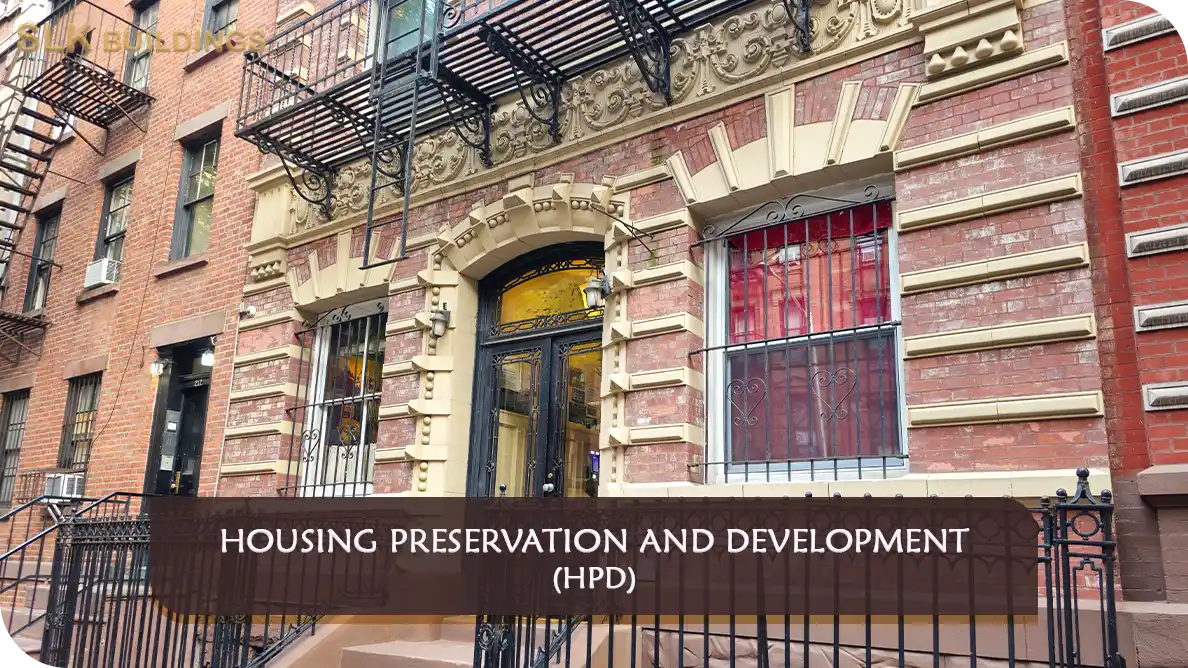
Violation certification is the formal method by which a qualified owner or responsible party tells NYC HPD that a cited housing condition has been corrected. Repairing the underlying problem and submitting the certification are two separate tasks.
The correct route depends on the violation, its age, and whether a special lead, mold, or pest certification package applies. False or premature certification can make an owner’s enforcement position worse rather than better.
For an overview of HPD services and related filings, visit the NYC HPD Housing Code and Property Compliance Resource Center. This page addresses the specific procedure shown above; confirm any notice details before acting.
Already know which HPD topic you need? Select a service below to go directly to its guide. If you are unsure where to begin, explore the NYC HPD Resource Center.
The Notice of Violation identifies the condition, correction deadline, certification deadline, and instructions. HPD offers paper certification for eligible matters and eCertification for many ordinary violations. Both require a truthful representation that the specific defect was fixed.
Only an eligible owner, managing agent, corporate officer, or otherwise authorized responsible party should certify in accordance with HPD requirements. Confirm that HPD property registration is valid before starting the submission.
Correct the actual cited condition, not merely the appearance of a defect. A leaking pipe causing mold, for example, may require both stopping water intrusion and following applicable safe mold-remediation methods. An improperly closing apartment door may require adjustment of its entire closing mechanism.
Keep date-stamped photographs, records of labor and materials, inspection results, and communications about access. Special violations may require documents from qualified contractors and agency forms beyond a standard owner statement. Before submitting violation certification, compare the completed repairs with the precise condition identified in the Notice of Violation.
The original NOV package usually includes the paper certification form. Check the notice for the proper signatures, notarization, addresses, and proof requirements. For eligible matters, HPD eCertification permits online submission and monitoring without the usual paper notarization.
HPD specifically excludes lead-based paint, mold, and pest violations from ordinary eCertification. Owners must review the condition-specific paper process rather than trying to force these cases into the wrong electronic workflow. Keep a copy of each violation certification submission, including the filing date, method, and confirmation details when available.
SLK Buildings can prepare organized violation matrices, help identify the appropriate HPD forms, reconcile completed work with each notice, and coordinate document collection. HPD alone determines certification acceptance, audit findings, and dismissal.

HPD may audit a certification by sending a housing inspector to verify that the condition is corrected. Tenants can also challenge a certification. If the condition remains, the notice can be placed into False Certification status and remain open.
After filing violation certification, retain the submission acknowledgment and monitor HPD Online for status updates. A pending, challenged, or rejected certification is not the same as a dismissed violation.
An older violation that was not certified on time may require a dismissal request inspection or, when eligible, reissuance rather than ordinary timely certification. These routes have different requirements and possible fees.
Registration defects and certain unpaid HPD-related DOF charges can block access to HPD clearance services. Resolve those administrative issues before submitting an ineligible or incomplete application.
For an accurate violation certification submission, organize the notice, repair records, and required documents before selecting the appropriate filing method. For this particular subject, assemble the following:
The applicable agency notice, property characteristics, and current official instructions control the outcome. Some owners need more than one filing: the underlying repair, the administrative submission, and the resulting official status may move on different schedules. Preserve dated evidence and do not interpret a pending application as approval.

To discuss building-specific documentation and coordination needs, contact SLK Buildings. Provide the building address, notice or filing numbers when available, and the current status of any urgent conditions.
Disclaimer: SLK Buildings is a private business and is not affiliated with the New York City Department of Housing Preservation and Development (HPD), the New York City Department of Buildings (DOB), or any other government agency. Information on this website is provided for general educational purposes and does not replace legal, architectural, engineering, environmental, or other licensed professional advice. Requirements, eligibility, deadlines, fees, violation statuses, approvals, and agency determinations depend on the applicable law, agency procedures, and the circumstances of each property. Where licensed or otherwise qualified professionals are required, their services must be obtained separately as appropriate. SLK Buildings may assist with research, documentation, and coordination within its agreed scope but does not issue government approvals or guarantee violation dismissal, fee reductions, processing times, or outcomes.
New York City Department of Housing Preservation and Development (HPD) requirements affect many residential properties. Owners and managers may need to confirm annual registration, investigate an HPD complaint, correct a cited housing condition, or submit documentation before a violation can be closed.
HPD requirements may overlap with DOB construction permits, DOHMH public health matters, FDNY fire safety, and DOF emergency-repair charges. The correct path depends on the building, the notice or order received, the proposed repair, and whether work by qualified or licensed professionals is required.
SLK Buildings assists with HPD records research, property registration coordination, violation review, correction and certification documentation, agency follow-up, and related DOB or other agency coordination within its agreed scope of services.
Whether a property is preparing an annual filing, responding to an HPD inspection, correcting a hazardous condition, or confirming that a submission was accepted, consistent records and clear next actions help owners and project teams coordinate their obligations.
SLK Buildings provides free educational content to help property owners, managing agents, landlords, contractors, and project teams understand HPD registration, housing-code inspections, violation classes, correction and certification, required notices, emergency repairs, and related DOB and other agency requirements.
For those who prefer professional assistance, SLK Buildings is available to coordinate HPD record review, registration information, correction documentation, repair and agency-response tracking, and necessary coordination with qualified contractors or design professionals. Final decisions and regulated work remain with the responsible agencies and appropriately qualified providers.
Disclaimer: SLK Buildings is a private business and is not affiliated with the New York City Department of Housing Preservation and Development (HPD), the New York City Department of Buildings (DOB), or any other government agency. Information on this website is provided for general educational purposes and does not replace legal, architectural, engineering, environmental, or other licensed professional advice. Requirements, eligibility, deadlines, fees, violation statuses, approvals, and agency determinations depend on the applicable law, agency procedures, and the circumstances of each property. Where licensed or otherwise qualified professionals are required, their services must be obtained separately as appropriate. SLK Buildings may assist with research, documentation, and coordination within its agreed scope but does not issue government approvals or guarantee violation dismissal, fee reductions, processing times, or outcomes.
No. HPD directs owners to specific certification forms and procedures for these conditions.
No. An invoice may support the record, but certification also requires actual correction and the approved agency method.
Possible reasons include processing status, a tenant challenge, an audit, a failed inspection, or the wrong certification procedure.