
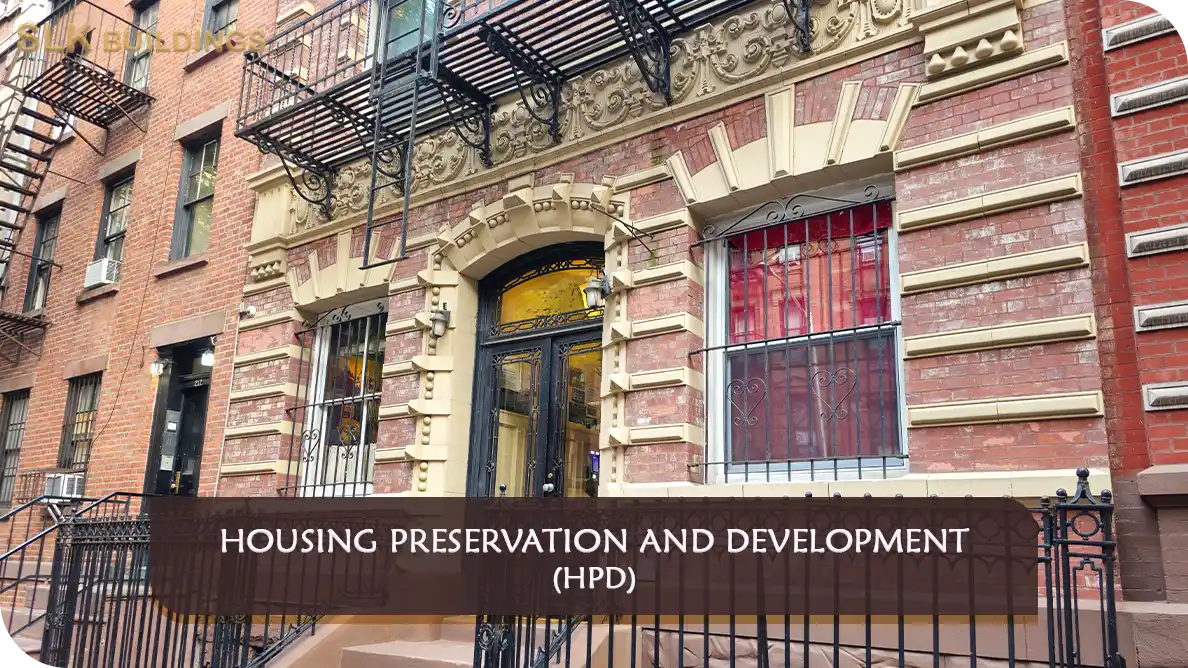
NYC HPD is the New York City Department of Housing Preservation and Development, the agency responsible for important housing preservation programs and enforcement of residential housing maintenance requirements. This resource center organizes common owner questions into practical topics rather than assuming every visitor knows the Housing Maintenance Code, a violation classification, or an annual filing process.
Use the pages below to identify the exact activity or record you need: registering a building, reviewing a complaint, correcting a Notice of Violation, handling lead or mold conditions, responding to emergency repairs, or coordinating construction-related work. Every topic also explains when an issue belongs partly or entirely to another agency.
For a general introduction to what the agency does and whom it regulates, return to the Housing Preservation and Development Landing Page. If you already have an HPD notice, use the stated violation or order number and the actual agency deadline when choosing a guide.
Already know which HPD topic you need? Select a service below to go directly to its guide. If you are unsure where to begin, explore the NYC HPD Resource Center.
HPD maintains and enforces housing standards under the NYC Housing Maintenance Code and applicable Multiple Dwelling Law provisions. Its Code Enforcement work primarily concerns safe, habitable residential conditions. HPD also oversees affordable housing and rental assistance programs, which have their own eligibility and administrative requirements. Different branches of HPD can therefore appear in the same property history without sharing one unified filing or review path.
A resident may complain about a lack of heat, and HPD may inspect. An owner may separately need annual property registration, a DOB permit for a major repair, or a specialized professional for lead or mold work. Repairing the condition, meeting notification duties, and closing an agency record require distinct evidence and actions.

HPD Property Registration explains when an owner must annually register, how to use the Property Registration Online System (PROS), why the signed form must still be mailed, and how the $13 annual fee is paid through DOF. It also explains the importance of accurate ownership and managing-agent information. This is the correct starting point for a newly purchased residential building, a changed management company, or an owner unsure whether HPD considers registration valid.
HPD Violations and Inspections describes how housing maintenance complaints, 311 referrals, and other HPD inspection activities can result in Notices of Violation. It explains the differences among Classes A, B, and C, why inspectors may check additional safety conditions beyond the complaint, and why the official NOV controls correction instructions. Use this page when you have a new complaint, an inspection finding, or an unfamiliar violation classification.
HPD Violation Certification focuses on what happens after a cited condition is fixed. It distinguishes the physical repair from the filing required to notify HPD, explains why timely submission matters, and describes where paper forms or eCertification may be suitable. Special lead-based paint, mold, and pest procedures receive separate treatment. Use this topic before signing a statement that a violation is corrected; HPD can audit the certification and challenge unsupported filings.
HPD Dismissal Requests and Reissuance covers available paths when a violation is old and the normal certification period has passed. An inspection-based dismissal request, eligible reissuance, or documentation review should not be represented as the same service. This page will clarify prerequisites, fees where applicable, and the changed July 2026 processing location for dismissal applications. It is relevant when records show old open violations even after repairs were completed.
HPD Online Records explains what appears in the public HPD property search, including open and historical complaints, NOVs, registration, orders, building charge reports, litigation references, and related identifiers. It also explains what a search cannot conclusively prove, such as current physical condition or that a separate DOB matter is closed. Owners, buyers, and managers can use the guide to prepare a property-specific review rather than relying on unverified summaries.
Housing Maintenance Code provides the legal and practical framework for residential habitability, essential services, public-area maintenance, building safety, and applicable owner duties. The page distinguishes ongoing maintenance standards from DOB construction approvals and from rent-regulation requirements administered elsewhere. It is the starting point when an owner wants to understand why a particular defect is regulated or how a recurring condition becomes an HPD compliance issue.
Heat and Hot Water explains HPD heat-season temperature thresholds, year-round hot water requirements, complaint inspections, and the consequences of prolonged service interruption. It addresses the difference between a building system problem and the evidence an inspector collects at the time of inspection. Use it for boiler, heating distribution, hot water, or recurring tenant complaint issues, and read the existing heat and hot water violations article for more condition-specific background.
Lead Paint Compliance addresses continuing responsibilities to inspect, provide tenant notices, manage turnover work, follow lead-safe practices, and retain legally required records. It is not a duplicate of the existing lead paint violations article; the new guide emphasizes prevention, annual owner procedures, and evidence needed before or after a violation. It is especially important where a child may be exposed to lead hazards.
Lead Paint Testing and Exemptions addresses X-ray fluorescence (XRF) testing by qualified, independent professionals and recordkeeping obligations associated with the August 2025 deadline. It also distinguishes a property-level or unit-specific exemption from an owner’s general assumptions based on building age or prior renovations. Use this guide when a property owner needs to confirm whether required lead testing was performed or whether a documented exemption applies.
Mold and Moisture Control explains how leaks, moisture pathways, ventilation issues, and recurring growth relate to Local Law 55 duties. It emphasizes diagnosing and correcting underlying defects instead of superficial cleaning. For certain mold situations, licensed independent assessors and remediators and associated DEP filings are required. This compliance-focused guide complements SLK’s existing mold and mildew violation article.
Pest Control and Prevention covers integrated pest management, annual inspections, sanitation, closing entry points, moisture repairs, and safe treatment. NYC’s indoor allergen rules focus on conditions that allow pests to survive, not simply a one-time extermination. Applicability and work methods differ by property and treatment. This guide is a compliance reference, while the existing rodent violation article remains a condition-specific article.
Bed Bug Annual Report addresses the recurring HPD reporting obligation for multiple dwellings, including the annual December filing period, the prior November-to-October reporting period, and required notice of building infestation history to tenants. Reporting is not the same as remediating an active infestation or clearing a bed bug violation. The existing bed bug violations article remains available for infestation-related information.
Window Guards and Child Safety explains annual tenant inquiries, required window protection for certain units where children reside, and how owner installation or repair obligations can arise even without a written tenant request. It also helps separate window-guard safety from DOB-regulated window replacement and facade alteration work. Use this page to prevent a safety violation and document required follow-up rather than waiting for an inspection.
HPD Fire Safety Requirements outlines HPD-enforced residential safety conditions, including self-closing doors, required detectors, and unobstructed egress considerations, while distinguishing separate FDNY Fire Code jurisdiction. Owners should not assume a correction in one agency’s database closes an unrelated matter with another agency. This guide is especially relevant when a maintenance project affects apartment entry doors, common hallways, smoke alarms, or carbon monoxide detection.
Required Notices and Signage brings together recurring tenant-distribution, posted-notice, and event-triggered duties, including lead inquiries, window guards, indoor allergens, emergency preparedness, and bed bug filing receipts. It explains that certain digital signage options began in February 2026 but do not replace every notice duty. Use this page as an owner’s notice planning reference, while checking HPD’s current forms and language requirements for each property.
Emergency Repair Program explains circumstances in which HPD may commission urgent corrective work, how the City tracks work orders, and why repair charges may later appear on a DOF bill or become a lien. It separates emergency work, actual violation removal, and contesting or paying assessed charges. Owners evaluating an ERP entry should examine the underlying order, HPD Online Building Charge Report, and any DOF statement rather than relying on a single balance.
Alternative Enforcement Program addresses the specialized program for severely distressed multiple dwellings with significant hazardous violations and other qualifying indicators. Selection may lead to orders, repeated inspections, required work, and fees. Not every building with a Class C violation is in AEP. Use this guide when HPD has formally selected a building or when the owner is reviewing conditions that could lead to enhanced enforcement.
Orders to Correct and Vacate explains how emergency and other HPD orders differ from routine NOVs, why immediate safety measures may be required, and how owner repairs, inspections, and possible rescission should be handled. An HPD order should also be distinguished from a DOB vacate order and any Housing Court action. The guide focuses on reading the actual order and separating urgent resident protection from later administrative closeout.
Underlying Conditions Program explains HPD’s response to recurring mold and leaks associated with building-wide systems or defects, and how selected owners may be directed to obtain professional assessment and perform corrective work. This program is not interchangeable with an ordinary mold cleaning visit. Use this guide when a property has received an underlying conditions order and needs to organize assessment, repair, and verification steps.
Heat Sensors Program describes requirements applying to buildings officially selected because of heat complaints and violations. It covers installing qualifying temperature sensors, giving tenants required information, maintaining readings and records, and understanding discharge procedures. The program should not be described as requiring every NYC landlord to install internet-connected sensors. Use this page when a selection notice or Heat Sensor Program requirement appears in the building’s record.
Certification of No Harassment explains when a designated building may need an HPD certificate before certain DOB permits, how eligibility and tenant-harassment review affect planning, and why buyers and development teams should check the property’s status early. This is a legally sensitive, date-dependent program: NYC Local Law 138 of 2026 changed the former pilot framework, with additional provisions taking effect in 2027. An actual application should follow current agency instructions and legal review.
Section 8 Inspections covers Housing Quality Standards (HQS) inspections for units assisted under HPD’s Section 8 program. A failed HQS inspection can involve correction periods and subsidy-payment implications that differ from standard Housing Maintenance Code violations. Owners, brokers, and managers should identify whether the inspection is connected to an HPD-administered rental subsidy before assuming the same certification procedure applies as for an HPD NOV.
HPD and DOB Coordination explains how an HPD maintenance condition can also require DOB permits, licensed drawings, contractor coordination, or building-code signoffs. Examples include structural repair, significant building-system work, and occupancy changes. It also helps distinguish correction of HPD housing violations from closing DOB objections or permits. Use this guide when the physical repair cannot safely or lawfully be treated as routine maintenance.

SLK Buildings can discuss HPD record review, registration-document organization, violation coordination, and project-specific agency interfaces. For a useful initial conversation, gather the complete property address, any HPD NOV or order numbers, your current registration status if known, and documents describing the condition or planned work. Contact SLK Buildings for assistance within the firm’s confirmed service scope.
Disclaimer: SLK Buildings is a private business and is not affiliated with the New York City Department of Housing Preservation and Development (HPD), the New York City Department of Buildings (DOB), or any other government agency. Information on this website is provided for general educational purposes and does not replace legal, architectural, engineering, environmental, or other licensed professional advice. Requirements, eligibility, deadlines, fees, violation statuses, approvals, and agency determinations depend on the applicable law, agency procedures, and the circumstances of each property. Where licensed or otherwise qualified professionals are required, their services must be obtained separately as appropriate. SLK Buildings may assist with research, documentation, and coordination within its agreed scope but does not issue government approvals or guarantee violation dismissal, fee reductions, processing times, or outcomes.
New York City Department of Housing Preservation and Development (HPD) requirements affect many residential properties. Owners and managers may need to confirm annual registration, investigate an HPD complaint, correct a cited housing condition, or submit documentation before a violation can be closed.
HPD requirements may overlap with DOB construction permits, DOHMH public health matters, FDNY fire safety, and DOF emergency-repair charges. The correct path depends on the building, the notice or order received, the proposed repair, and whether work by qualified or licensed professionals is required.
SLK Buildings assists with HPD records research, property registration coordination, violation review, correction and certification documentation, agency follow-up, and related DOB or other agency coordination within its agreed scope of services.
Whether a property is preparing an annual filing, responding to an HPD inspection, correcting a hazardous condition, or confirming that a submission was accepted, consistent records and clear next actions help owners and project teams coordinate their obligations.
SLK Buildings provides free educational content to help property owners, managing agents, landlords, contractors, and project teams understand HPD registration, housing-code inspections, violation classes, correction and certification, required notices, emergency repairs, and related DOB and other agency requirements.
For those who prefer professional assistance, SLK Buildings is available to coordinate HPD record review, registration information, correction documentation, repair and agency-response tracking, and necessary coordination with qualified contractors or design professionals. Final decisions and regulated work remain with the responsible agencies and appropriately qualified providers.
Disclaimer: SLK Buildings is a private business and is not affiliated with the New York City Department of Housing Preservation and Development (HPD), the New York City Department of Buildings (DOB), or any other government agency. Information on this website is provided for general educational purposes and does not replace legal, architectural, engineering, environmental, or other licensed professional advice. Requirements, eligibility, deadlines, fees, violation statuses, approvals, and agency determinations depend on the applicable law, agency procedures, and the circumstances of each property. Where licensed or otherwise qualified professionals are required, their services must be obtained separately as appropriate. SLK Buildings may assist with research, documentation, and coordination within its agreed scope but does not issue government approvals or guarantee violation dismissal, fee reductions, processing times, or outcomes.
Start with the NYC HPD Landing Page for an agency overview, then use this directory to choose the page corresponding to your actual notice, registration issue, or maintenance concern.
No. It shows recorded information, not every physical condition or other agency matter. Check the building address, inspect where appropriate, and review DOB or other records separately when relevant.
No. Covered properties need both the fee payment and a correctly completed and signed registration form accepted by HPD.
Read the NOV and confirm its class, cited defect, correction deadline, certification deadline, and any special paperwork instructions; do not work solely from a short portal summary.
Older, uncertified violations may require a dismissal request or eligible reissuance instead of a standard on-time certification. The date and current eligibility rules matter.
An HPD-ordered repair, the recorded status of the violation, and the bill or lien are distinct matters. Each needs its own status review.