
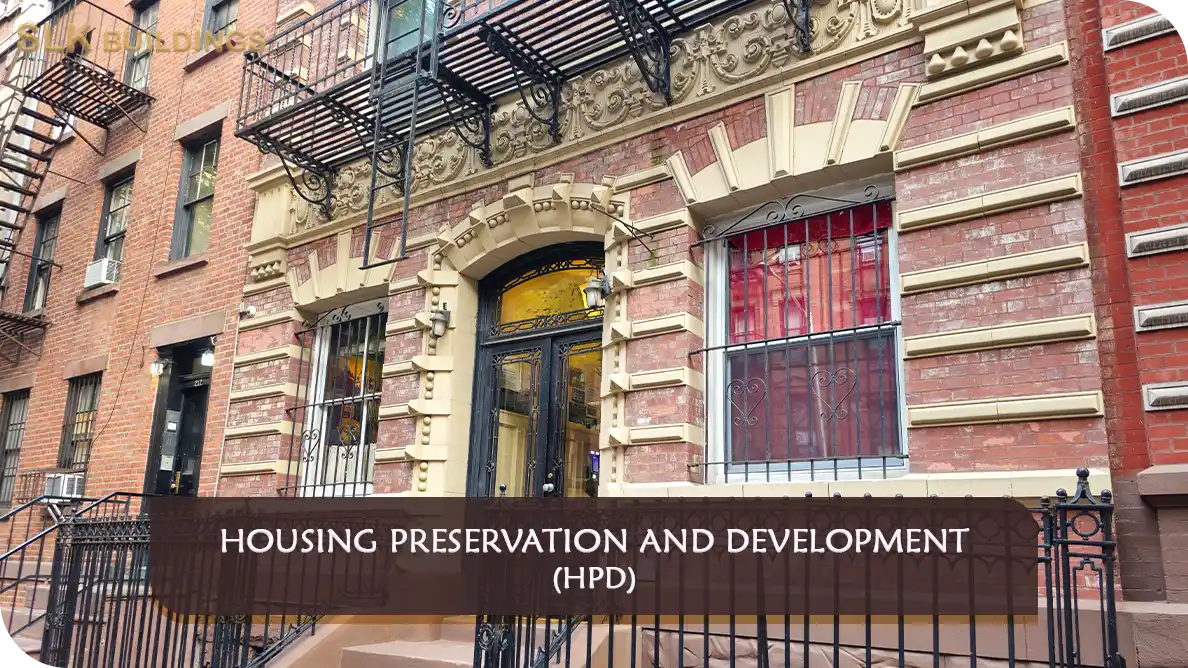
The housing maintenance code establishes many of the minimum health, safety, and habitability requirements for residential buildings in New York City. NYC HPD enforces significant portions of this legal framework, while other agencies retain authority over different codes and permits.
Owners, managing agents, and prospective purchasers benefit from understanding their baseline obligations before a complaint turns into an emergency violation or an expensive repair project.
Housing maintenance obligations apply independently of a building’s construction and rental-assistance records. For registration and enforcement requirements, consult the NYC HPD Housing Code and Property Compliance Resource Center
Already know which HPD topic you need? Select a service below to go directly to its guide. If you are unsure where to begin, explore the NYC HPD Resource Center.
The New York City Housing Maintenance Code is part of the NYC Administrative Code and addresses conditions such as essential services, sanitation, adequate maintenance, safe doors and windows, and certain indoor health hazards. The New York State Multiple Dwelling Law can also apply.
A code requirement can apply even when no inspector has visited or no violation appears online. The duty to maintain a property is not created by the citation; the notice is an enforcement tool.
Owners must address applicable requirements for heat, hot water, plumbing, safe electrical conditions, weather protection, and upkeep of dwellings and common areas. Serious interruptions can create immediately hazardous conditions and trigger emergency action.
Maintaining a habitable building requires regular observation and prompt handling of tenant reports. Waiting for 311 complaints often results in avoidable escalation.
Some subjects have dedicated statutory procedures beyond ordinary repair. Lead-based paint rules involve notices, risk assessments or testing, safe work, and records. Local Law 55 addresses moisture sources, mold, and pest entry points, while window-guard rules depend on age and requests.
Because the rules differ by unit count, construction date, occupant circumstances, and the condition involved, owners should verify applicability rather than treating every residential unit alike.
SLK Buildings can help owners establish an HPD compliance checklist, organize repair records, assess agency overlaps, and coordinate appropriate professionals for building-specific conditions.

HPD inspections can result in Class A, B, or C Notices of Violation. Civil penalties may be sought in Housing Court if correction or certification obligations are missed, and HPD may use enhanced enforcement or arrange emergency repairs.
The Housing Maintenance Code is distinct from DOB’s Construction Codes. Repair work may require both compliance with HPD housing requirements and DOB filings or inspections if the work involves regulated construction. A housing maintenance code violation does not replace any separate DOB permit or professional work required to repair the condition.
Review owner and managing-agent registration, schedule regular checks of vulnerable building systems, maintain a repair request log, preserve notices, and track the recurring annual disclosures.
Keep photographs and records for work that might later become the subject of a complaint. A documented preventive program is more reliable than responding to one notice at a time. A housing maintenance code checklist is most useful when owners track inspections, repair records, resident notices, and recurring deficiencies by unit.
To evaluate housing maintenance code obligations, collect current building conditions, resident complaints, inspection notices, and repair records.
The applicable agency notice, property characteristics, and current official instructions control the outcome. Some owners need more than one filing: the underlying repair, the administrative submission, and the resulting official status may move on different schedules. Preserve dated evidence and do not interpret a pending application as approval.

To discuss building-specific documentation and coordination needs, contact SLK Buildings. Provide the building address, notice or filing numbers when available, and the current status of any urgent conditions.
Disclaimer: SLK Buildings is a private business and is not affiliated with the New York City Department of Housing Preservation and Development (HPD), the New York City Department of Buildings (DOB), or any other government agency. Information on this website is provided for general educational purposes and does not replace legal, architectural, engineering, environmental, or other licensed professional advice. Requirements, eligibility, deadlines, fees, violation statuses, approvals, and agency determinations depend on the applicable law, agency procedures, and the circumstances of each property. Where licensed or otherwise qualified professionals are required, their services must be obtained separately as appropriate. SLK Buildings may assist with research, documentation, and coordination within its agreed scope but does not issue government approvals or guarantee violation dismissal, fee reductions, processing times, or outcomes.
New York City Department of Housing Preservation and Development (HPD) requirements affect many residential properties. Owners and managers may need to confirm annual registration, investigate an HPD complaint, correct a cited housing condition, or submit documentation before a violation can be closed.
HPD requirements may overlap with DOB construction permits, DOHMH public health matters, FDNY fire safety, and DOF emergency-repair charges. The correct path depends on the building, the notice or order received, the proposed repair, and whether work by qualified or licensed professionals is required.
SLK Buildings assists with HPD records research, property registration coordination, violation review, correction and certification documentation, agency follow-up, and related DOB or other agency coordination within its agreed scope of services.
Whether a property is preparing an annual filing, responding to an HPD inspection, correcting a hazardous condition, or confirming that a submission was accepted, consistent records and clear next actions help owners and project teams coordinate their obligations.
SLK Buildings provides free educational content to help property owners, managing agents, landlords, contractors, and project teams understand HPD registration, housing-code inspections, violation classes, correction and certification, required notices, emergency repairs, and related DOB and other agency requirements.
For those who prefer professional assistance, SLK Buildings is available to coordinate HPD record review, registration information, correction documentation, repair and agency-response tracking, and necessary coordination with qualified contractors or design professionals. Final decisions and regulated work remain with the responsible agencies and appropriately qualified providers.
Disclaimer: SLK Buildings is a private business and is not affiliated with the New York City Department of Housing Preservation and Development (HPD), the New York City Department of Buildings (DOB), or any other government agency. Information on this website is provided for general educational purposes and does not replace legal, architectural, engineering, environmental, or other licensed professional advice. Requirements, eligibility, deadlines, fees, violation statuses, approvals, and agency determinations depend on the applicable law, agency procedures, and the circumstances of each property. Where licensed or otherwise qualified professionals are required, their services must be obtained separately as appropriate. SLK Buildings may assist with research, documentation, and coordination within its agreed scope but does not issue government approvals or guarantee violation dismissal, fee reductions, processing times, or outcomes.
No. HPD primarily enforces maintenance and habitability standards, while DOB administers building construction and permit requirements.
Yes. The legal maintenance duties exist independently of a formal inspection or notice.
No. Unit count, construction date, occupancy and the specific hazard affect which rules apply.