
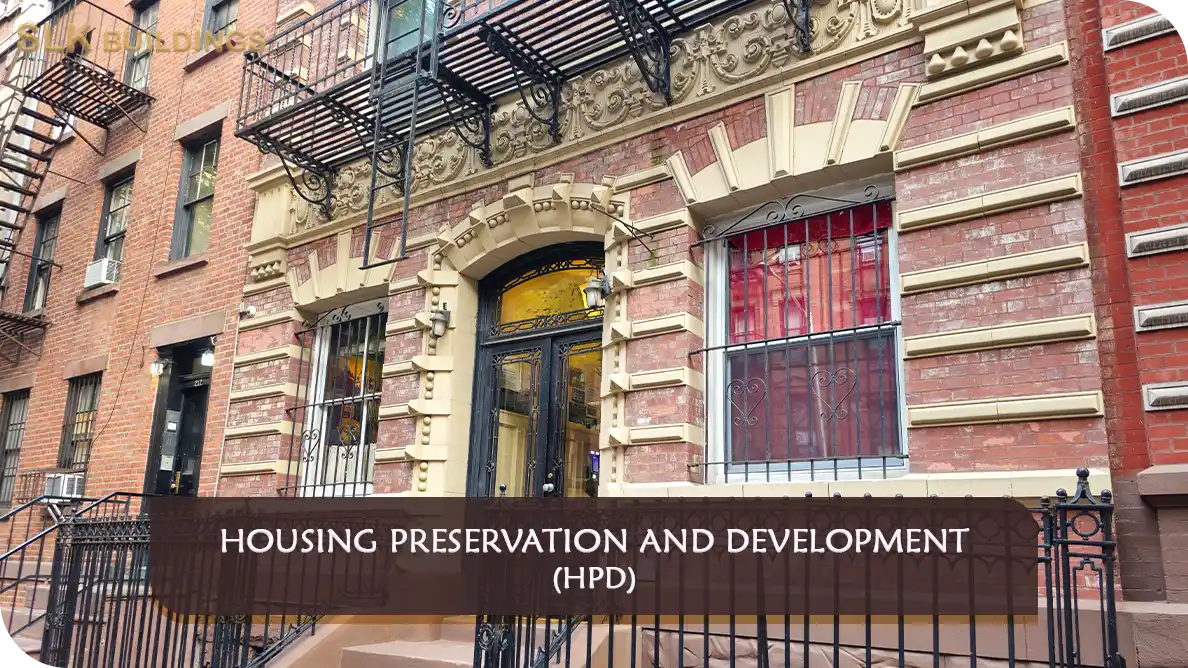
Lead paint compliance in New York City may require recurring owner notices, inspection records, safe correction methods, and special procedures when a child under six lives in or routinely visits a covered unit. The precise duties depend on building age, occupancy, and applicable lead laws.
HPD lead-paint requirements are not limited to a peeling-paint complaint. An owner may have inspection and recordkeeping duties even when no lead violation currently appears online.
Preventive inspection and recordkeeping duties remain important even when HPD has not cited a lead hazard. Other housing-safety and violation requirements appear in the NYC HPD Housing Code and Property Compliance Resource Center.
Already know which HPD topic you need? Select a service below to go directly to its guide. If you are unsure where to begin, explore the NYC HPD Resource Center.
For covered pre-1960 buildings, and certain 1960–1978 buildings where the owner has actual knowledge of lead paint, the city applies presumptions and testing obligations to painted surfaces. HPD oversees housing-side lead hazard rules; DOHMH also has a role in public health and lead poisoning prevention.
A negative test alone should not be assumed to be a completed HPD exemption. Owners need to follow the prescribed process and retain adequate evidence.
Owners of applicable properties must make annual inquiries concerning young children and keep the completed notice and follow-up records. Special inspections and safe correction methods can be triggered by peeling paint, deteriorated surfaces, or occupancy by a child in the protected age group.
Tenant turnover can create additional work requirements before a new household moves in. The owner should reconcile turnover records, inspection findings, any contractor reports, and proof that required work was completed safely. Lead paint compliance depends on completing required inquiries and preserving tenant responses, not simply distributing a generic annual notice.
Disturbing painted surfaces can release hazardous dust. Work must follow applicable lead-safe procedures, including containment, cleaning, and appropriately qualified labor or contractors. Owners should never recommend ordinary sanding or unprotected demolition as an acceptable lead-hazard remedy.
When a lead NOV is issued, follow the exact agency notice and the special certification form. Repair work, testing, abatement, and proof of clearance are separate activities with distinct qualification requirements. For lead paint compliance, confirm whether disturbing painted surfaces requires qualified workers, containment, and supporting clearance documentation.
SLK Buildings can build owner compliance logs, organize testing and turnover records, identify relevant HPD notices, and coordinate document collection from qualified lead professionals. SLK does not replace the required certified lead inspector or remediator.

Local Law 31 established one-time XRF testing obligations, with the main 2025 deadline now in the past. The testing and exemptions topic explains inspector independence, owner-occupied exceptions, and the records HPD expects.
Maintain notices, tenant responses, certified contractor credentials, testing results, work records, and any relevant HPD correspondence. HPD may request records even when no current violation is shown. A lead paint compliance file should connect testing reports to the correct apartment, room, date, and any approved exemption.
Lead-related Class C NOVs generally have a published 21-day correction period, but the specific notice controls. Standard online eCertification is not the proper filing route for lead violations.
If an agency finds a failed correction, the owner may face additional inspections, penalties, or other enforcement. Compliance should be demonstrated through actual safe work and the prescribed documents, not a generic photo alone.
For lead paint compliance, gather annual inquiries, work records, testing reports, and applicable exemption decisions before determining the next filing.
The applicable agency notice, property characteristics, and current official instructions control the outcome. Some owners need more than one filing: the underlying repair, the administrative submission, and the resulting official status may move on different schedules. Preserve dated evidence and do not interpret a pending application as approval.

To discuss building-specific documentation and coordination needs, contact SLK Buildings. Provide the building address, notice or filing numbers when available, and the current status of any urgent conditions.
Disclaimer: SLK Buildings is a private business and is not affiliated with the New York City Department of Housing Preservation and Development (HPD), the New York City Department of Buildings (DOB), or any other government agency. Information on this website is provided for general educational purposes and does not replace legal, architectural, engineering, environmental, or other licensed professional advice. Requirements, eligibility, deadlines, fees, violation statuses, approvals, and agency determinations depend on the applicable law, agency procedures, and the circumstances of each property. Where licensed or otherwise qualified professionals are required, their services must be obtained separately as appropriate. SLK Buildings may assist with research, documentation, and coordination within its agreed scope but does not issue government approvals or guarantee violation dismissal, fee reductions, processing times, or outcomes.
New York City Department of Housing Preservation and Development (HPD) requirements affect many residential properties. Owners and managers may need to confirm annual registration, investigate an HPD complaint, correct a cited housing condition, or submit documentation before a violation can be closed.
HPD requirements may overlap with DOB construction permits, DOHMH public health matters, FDNY fire safety, and DOF emergency-repair charges. The correct path depends on the building, the notice or order received, the proposed repair, and whether work by qualified or licensed professionals is required.
SLK Buildings assists with HPD records research, property registration coordination, violation review, correction and certification documentation, agency follow-up, and related DOB or other agency coordination within its agreed scope of services.
Whether a property is preparing an annual filing, responding to an HPD inspection, correcting a hazardous condition, or confirming that a submission was accepted, consistent records and clear next actions help owners and project teams coordinate their obligations.
SLK Buildings provides free educational content to help property owners, managing agents, landlords, contractors, and project teams understand HPD registration, housing-code inspections, violation classes, correction and certification, required notices, emergency repairs, and related DOB and other agency requirements.
For those who prefer professional assistance, SLK Buildings is available to coordinate HPD record review, registration information, correction documentation, repair and agency-response tracking, and necessary coordination with qualified contractors or design professionals. Final decisions and regulated work remain with the responsible agencies and appropriately qualified providers.
Disclaimer: SLK Buildings is a private business and is not affiliated with the New York City Department of Housing Preservation and Development (HPD), the New York City Department of Buildings (DOB), or any other government agency. Information on this website is provided for general educational purposes and does not replace legal, architectural, engineering, environmental, or other licensed professional advice. Requirements, eligibility, deadlines, fees, violation statuses, approvals, and agency determinations depend on the applicable law, agency procedures, and the circumstances of each property. Where licensed or otherwise qualified professionals are required, their services must be obtained separately as appropriate. SLK Buildings may assist with research, documentation, and coordination within its agreed scope but does not issue government approvals or guarantee violation dismissal, fee reductions, processing times, or outcomes.
No. Annual notices, one-time XRF testing, turnover duties, and recordkeeping may still apply.
No. HPD directs lead-based paint violations to separate correction forms and procedures.
Some 1960–1978 buildings are covered where the owner knows lead-based paint is present. Verify the precise applicability with HPD guidance.