
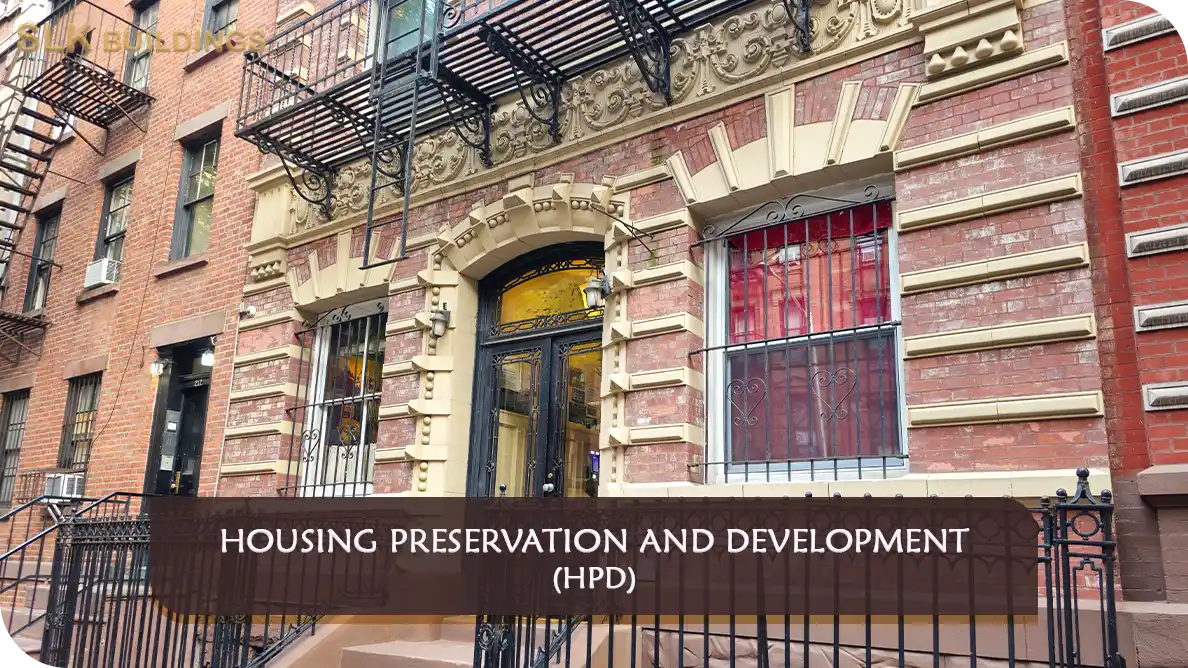
HPD online records provide public information about New York City residential buildings, including complaints, registration, violations, orders, and some charges. Checking these records is an important first step before planning work or responding to an HPD notice.
The database is a record system, not a substitute for a physical inspection, a title review, or an agency ruling that a property is fully compliant. Entries should be read in context and matched to the correct building identifiers.
Verify property identifiers and review the status of each relevant notice before relying on a public database entry. For registration and correction requirements, consult the NYC HPD Housing Code and Property Compliance Resource Center
Already know which HPD topic you need? Select a service below to go directly to its guide. If you are unsure where to begin, explore the NYC HPD Resource Center.
HPD Online allows searches by address and provides tabs or sections for registered owner information, complaints, Housing Maintenance Code violations, building charges, litigation, and vacate orders where applicable. The available information depends on the property and the record type.
A search may include old history as well as currently open matters. The presence of a historical violation is not proof that the condition remains; conversely, the absence of a listed violation does not guarantee that all units are safe.
Use the official borough, street number, and building address. Large complexes, condominium developments, alternate addresses, and buildings spanning lots may have confusing records. Confirm the borough, block, lot, and building identification when shown.
If a record appears absent, search alternate accepted address forms and confirm it is the same legal property. Never combine records belonging to different properties in a single compliance tracker. Use HPD online records with the verified borough and address so a nearby building’s violations are not mistaken for the subject property’s history.
Complaints reflect allegations or inspection activity, while violation records identify a cited condition and its status. Orders may direct broader or urgent actions and should not be treated as routine NOVs.
For each open matter, save its number, date, class, description, unit or location, agency status, and available documents. An owner preparing repairs needs the notice language, not only a screenshot of the dashboard. In HPD online records, examine each notice’s date, class, unit, and status instead of relying only on the total count of violations.
SLK Buildings can collect address-specific HPD extracts, maintain a dated issue register, reconcile official statuses with owner documentation, and coordinate additional DOB or DOF record checks.

Property registration status tells the owner whether HPD has an accepted registration, but it does not replace the signed-form process. The Charges tab may include ERP or enhanced-enforcement work orders before they are actually billed by DOF.
Some charges are transferred to the DOF property account. A building undergoing a transaction should review both HPD records and DOF billing, with qualified advisers assessing any title or lien implications.
Export or capture the current records with a date, assign responsibility by violation, and track documentation and follow-ups. For a renovation, compare HPD matters with DOB NOW, BIS where relevant, FDNY, and other agency sources.
Because statuses change, perform a new search before a filing, closing, or major owner decision. Record the check date so stale extracts are not mistaken for live data. Archive dated HPD online records before a transaction or major repair, then repeat the search before decisions that depend on current agency status.
Before relying on HPD online records, confirm the property identifiers and save the relevant complaint, violation, registration, and charge entries.
The applicable agency notice, property characteristics, and current official instructions control the outcome. Some owners need more than one filing: the underlying repair, the administrative submission, and the resulting official status may move on different schedules. Preserve dated evidence and do not interpret a pending application as approval.

To discuss building-specific documentation and coordination needs, contact SLK Buildings. Provide the building address, notice or filing numbers when available, and the current status of any urgent conditions.
Disclaimer: SLK Buildings is a private business and is not affiliated with the New York City Department of Housing Preservation and Development (HPD), the New York City Department of Buildings (DOB), or any other government agency. Information on this website is provided for general educational purposes and does not replace legal, architectural, engineering, environmental, or other licensed professional advice. Requirements, eligibility, deadlines, fees, violation statuses, approvals, and agency determinations depend on the applicable law, agency procedures, and the circumstances of each property. Where licensed or otherwise qualified professionals are required, their services must be obtained separately as appropriate. SLK Buildings may assist with research, documentation, and coordination within its agreed scope but does not issue government approvals or guarantee violation dismissal, fee reductions, processing times, or outcomes.
New York City Department of Housing Preservation and Development (HPD) requirements affect many residential properties. Owners and managers may need to confirm annual registration, investigate an HPD complaint, correct a cited housing condition, or submit documentation before a violation can be closed.
HPD requirements may overlap with DOB construction permits, DOHMH public health matters, FDNY fire safety, and DOF emergency-repair charges. The correct path depends on the building, the notice or order received, the proposed repair, and whether work by qualified or licensed professionals is required.
SLK Buildings assists with HPD records research, property registration coordination, violation review, correction and certification documentation, agency follow-up, and related DOB or other agency coordination within its agreed scope of services.
Whether a property is preparing an annual filing, responding to an HPD inspection, correcting a hazardous condition, or confirming that a submission was accepted, consistent records and clear next actions help owners and project teams coordinate their obligations.
SLK Buildings provides free educational content to help property owners, managing agents, landlords, contractors, and project teams understand HPD registration, housing-code inspections, violation classes, correction and certification, required notices, emergency repairs, and related DOB and other agency requirements.
For those who prefer professional assistance, SLK Buildings is available to coordinate HPD record review, registration information, correction documentation, repair and agency-response tracking, and necessary coordination with qualified contractors or design professionals. Final decisions and regulated work remain with the responsible agencies and appropriately qualified providers.
Disclaimer: SLK Buildings is a private business and is not affiliated with the New York City Department of Housing Preservation and Development (HPD), the New York City Department of Buildings (DOB), or any other government agency. Information on this website is provided for general educational purposes and does not replace legal, architectural, engineering, environmental, or other licensed professional advice. Requirements, eligibility, deadlines, fees, violation statuses, approvals, and agency determinations depend on the applicable law, agency procedures, and the circumstances of each property. Where licensed or otherwise qualified professionals are required, their services must be obtained separately as appropriate. SLK Buildings may assist with research, documentation, and coordination within its agreed scope but does not issue government approvals or guarantee violation dismissal, fee reductions, processing times, or outcomes.
No. DOB records must be reviewed separately, using the applicable DOB services.
No. Many HPD charges are billed and collected by DOF, so its property account may also need checking.
No. Database records do not replace a current physical evaluation.