
NYC Office of Special Enforcement
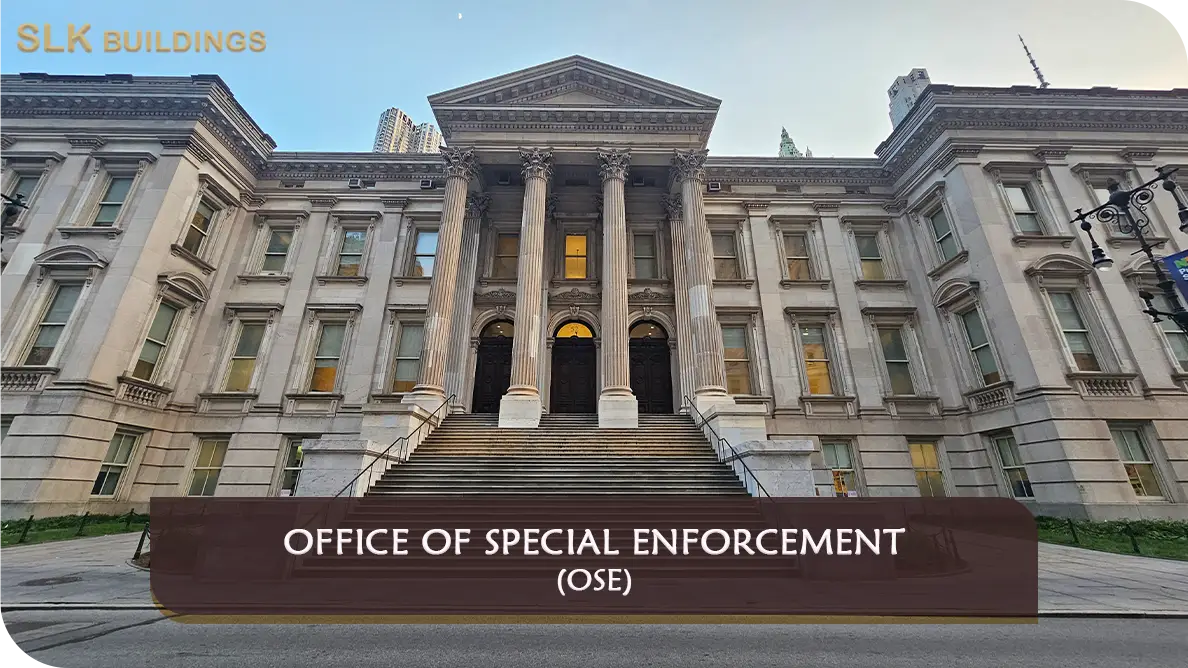
The NYC Office of Special Enforcement (OSE) administers New York City’s short-term rental registration program and coordinates enforcement involving illegal short-term rentals, occupancy conditions, and related safety or code issues. An OSE matter can involve more than one agency, so the registration or enforcement issue often needs to be reviewed together with DOB occupancy records, FDNY conditions, HPD requirements, OATH summonses, lease restrictions, and the specific use of the dwelling unit.
Overview
Local Law 18, also known as the Short-Term Rental Registration Law, requires covered short-term rental hosts to register with OSE and requires booking services to verify eligible registrations before processing covered transactions. The law did not create a general right to operate a short-term rental. Existing occupancy, housing, fire-safety, zoning, lease, and building restrictions still control whether a particular hosting arrangement is lawful.
For permanent residential housing, an entire apartment or home generally cannot be rented to visitors for fewer than 30 consecutive days. A lawful hosted short-term rental generally requires the permanent occupant to remain in the same dwelling unit, maintain a common household with the guests, host no more than two paying guests at a time, and use only areas that are legally approved for residential and sleeping purposes. Registration does not legalize an otherwise unlawful occupancy or cure unresolved building conditions.
OSE also performs enforcement and compliance functions beyond reviewing applications. Complaints, listing activity, inspections, warnings, summonses, registration revocation proceedings, and other enforcement steps can expose an underlying problem with the building or unit. For that reason, the first question is often not simply whether an OSE form can be filed, but whether the property record and actual use support the filing.
SLK Buildings assists property owners, business operators, and project teams with NYC OSE short term rental registration, inspection coordination, violation response, and compliance requirements.
When This Service Applies
OSE compliance assistance may be appropriate when a host, owner, property manager, board, or project team needs to understand whether a short-term rental arrangement can be registered, why an application is delayed or denied, whether a building can be added to the Prohibited Buildings List, or how an enforcement matter relates to the property’s legal occupancy.
- A short-term rental registration is being prepared, corrected, renewed, or reviewed.
- OSE has requested additional documentation or identified an eligibility issue.
- A listing includes a basement, cellar, attic, garage, accessory area, or other space whose legal use is uncertain.
- DOB, FDNY, HPD, or other open conditions may affect registration eligibility.
- A property owner or board wants to prohibit short-term rentals throughout the building and evaluate the Prohibited Buildings List process.
- There is uncertainty about whether a property is legally a Class B multiple dwelling or otherwise approved for transient occupancy.
- OSE has issued a warning, inspection notice, summons, Notice of Intent to Revoke, or other enforcement communication.
- A building owner has discovered unauthorized short-term rental activity by a tenant or occupant and needs to separate the OSE issue from the building-code and lease-enforcement issues.
Key Requirements and Common Issues
OSE registration is only one part of short-term rental compliance. A property can have a valid-looking listing but still fail because the host, unit, building, or sleeping area does not satisfy the underlying requirements. Common review points include:
- Permanent occupancy: the registrant must be the permanent occupant of the dwelling unit and must satisfy OSE documentation requirements.
- Hosted occupancy: for covered permanent residential housing, the host must remain in the same unit with the guests and may host no more than two paying guests at one time.
- Legal sleeping areas: spaces used by guests must be legally approved for residential and sleeping use. Unapproved basements, cellars, attics, garages, or converted areas can prevent registration and create separate DOB or safety issues.
- Building restrictions: leases, co-op rules, condominium rules, homeowners’ association requirements, and other occupancy agreements may prohibit short-term rentals even when a host would otherwise meet OSE requirements.
- Prohibited Buildings List: OSE must deny registration requests for buildings properly included on this list.
- Open agency conditions: certain unresolved building, housing, fire, Vacate Order, or Stop Work Order conditions can prevent approval or become part of an enforcement review.
- Class B occupancy: legal Class B multiple dwellings are treated differently because they are approved for transient occupancy. A Department of Finance tax classification beginning with the letter B does not establish Class B legal occupancy.
- Listing accuracy: the advertised space, number of guests, host presence, and actual operation should be consistent with the registered and legally approved use.

How SLK Buildings Helps
SLK Buildings approaches OSE matters from the property and agency-record side. We can review the address, unit, legal occupancy, open agency records, existing permits and violations, and the specific OSE notice or application issue before a filing or corrective scope is selected. This helps distinguish an OSE administrative problem from an underlying DOB, FDNY, HPD, occupancy, or building-condition problem that must be addressed first.
Depending on the issue, our work may include DOB record research, Certificate of Occupancy or Letter of No Objection review, identification of open violations and orders, coordination of corrective work, inspection preparation, document organization, and cross-agency follow-up. Where an OATH hearing or legal interpretation is required, the matter should be coordinated with the appropriate attorney or hearing representative while the building-side corrections proceed separately.
For owners dealing with unauthorized tenant activity, we can also help identify the building conditions and agency records that require attention so the owner is not relying solely on the tenant’s listing or registration status to understand the property exposure.
Compliance and Coordination Process
A practical OSE review begins with the exact objective and the exact agency record. The steps are not identical for every property, but a typical coordination sequence includes:
- Identify the OSE issue: registration, renewal, denial, documentation request, enforcement notice, revocation, owner restriction, or Class B question.
- Confirm the building and dwelling-unit identity, including the unit number used in OSE and DOB records.
- Review legal occupancy through the Certificate of Occupancy, Letter of No Objection, DOB records, and other applicable documentation.
- Check for open DOB, FDNY, HPD, Vacate Order, Stop Work Order, or other conditions that can affect eligibility or enforcement.
- Compare the actual hosting arrangement and listing to the legal occupancy and OSE requirements.
- Correct the underlying building or record issue when required, while separately protecting any OSE or OATH response deadlines.
- Submit the appropriate OSE application, response, renewal, owner request, or supporting documentation after the property-side review is complete.
This sequencing matters because an OSE submission cannot substitute for correcting an illegal sleeping area, unresolved occupancy issue, or other agency condition. At the same time, a building correction should not cause a host or owner to miss a separate OSE response or hearing deadline.

Related NYC Agencies and Requirements
OSE often acts as the coordinating or enforcing agency, while another City agency controls the underlying technical condition. DOB determines legal occupancy and administers construction-code requirements; FDNY addresses fire-safety conditions; HPD enforces many housing-maintenance requirements; and OATH adjudicates many City summonses. Lease restrictions, co-op or condominium rules, and other private agreements can create additional limits that are separate from City approval.
A successful compliance plan therefore starts by identifying which agency has authority over each issue. Resolving an OSE registration problem may require a DOB correction first, while an OATH hearing may proceed on its own schedule. Treating every issue as if it were controlled only by OSE can lead to incomplete submissions, repeated inspections, or unresolved violations.
Related NYC OSE Resources
- NYC OSE Compliance, Registration and Enforcement Services – the main SLK Buildings hub for OSE services and short-term rental compliance topics.
- NYC Local Law 18 Compliance – requirements for legal hosted short-term rentals and registration under Local Law 18.
- NYC Short Term Rental Registration – application preparation, host documentation, and registration coordination.
- NYC OSE Violations – enforcement, summonses, inspections, correction issues, and coordination with related agencies.
- NYC OSE Prohibited Buildings List – owner and building-side restrictions on short-term rental registration.
- NYC Class B Multiple Dwellings – legal occupancy review for buildings approved for transient use.
- NYC OATH Hearings Representation – hearing support for qualifying City summonses that proceed through OATH.
Contact SLK Buildings for NYC OSE Compliance Assistance
NYC OSE matters can involve registration requirements, legal occupancy, open violations, enforcement notices, and conditions controlled by other City agencies. SLK Buildings can help review the property record, identify the agencies and documents affecting the issue, and coordinate the next steps needed to move the matter forward.
Contact SLK Buildings for assistance with NYC OSE compliance, short-term rental registration issues, property record review, violation coordination, and related agency requirements.
SLK Buildings is a private consulting and construction-management firm and is not affiliated with the NYC Mayor’s Office of Special Enforcement or any government agency. This content provides general educational information and is not legal advice. Registration, occupancy, enforcement, correction, hearing, and violation requirements depend on the specific property, circumstances, and agency determination.
🚧 Seeking Professional Guidance on NYC Office of Special Enforcement Short-Term Rental Registration and Compliance
NYC Mayor’s Office of Special Enforcement (OSE) requirements can affect short-term rental hosts, property owners, tenants, building managers, and project teams throughout New York City. Local Law 18 established the City’s short-term rental registration system and requires booking services to verify that qualifying short-term rental transactions are associated with a valid registration or a lawful exemption.
Property owners and prospective hosts should review the legal occupancy of the building and dwelling unit, registration eligibility, lease or occupancy restrictions, the Prohibited Buildings List, and any open agency conditions before relying on a property for short-term rental use. Certain unresolved building or fire violations, Vacate Orders, and Stop Work Orders can prevent OSE from granting a registration until the underlying condition is resolved.
At SLK Buildings, we assist property owners, hosts, business operators, developers, contractors, architects, and project teams with NYC OSE short-term rental registration and renewal coordination, property record review, eligibility and compliance research, Prohibited Buildings List and Class B occupancy questions, violation response coordination, and related DOB, FDNY, HPD, or OATH matters when they affect an OSE issue.
Whether you are preparing a new registration, renewing an existing registration, reviewing a building’s eligibility, responding to an OSE enforcement issue, evaluating a Prohibited Buildings List matter, or addressing a building condition that affects registration, SLK Buildings can help organize the records, filings, agency coordination, and next steps needed to move the matter forward.
SLK Buildings Assists Property Owners and Project Teams with NYC OSE Requirements
- Local Law 18 short-term rental registration, eligibility review, application coordination, and registration renewal.
- Prohibited Buildings List, Class B multiple-dwelling review, building-owner compliance, and legal-occupancy research.
- OSE violation and enforcement coordination, registration revocation issues, and related DOB, FDNY, HPD, or OATH requirements when they affect the property or registration.
- SLK Buildings coordinates NYC OSE-related project requirements across Manhattan, the Bronx, Brooklyn, Queens, and Staten Island.
SLK Buildings provides free educational content to help property owners, hosts, business operators, developers, contractors, and project teams understand NYC OSE registration, enforcement, building eligibility, and short-term rental compliance requirements.
For those who prefer professional assistance, SLK Buildings is available to coordinate OSE registration and renewal documentation, property and occupancy research, agency follow-up, Prohibited Buildings List and Class B review, violation response, and related NYC agency requirements that may affect short-term rental eligibility or compliance.
SLK Buildings is a private consulting and construction-management firm and is not affiliated with the NYC Mayor’s Office of Special Enforcement or any government agency. This content provides general educational information and is not legal advice. Registration, occupancy, enforcement, correction, hearing, and violation requirements depend on the specific property, circumstances, and agency determination.
Frequently Asked Questions
Is every NYC rental under 30 days illegal?
No. Entire-unit rentals in permanent residential housing for fewer than 30 days are generally prohibited, but a qualifying permanent occupant may conduct a lawful hosted short-term rental when the host remains in the same unit, hosts no more than two paying guests, satisfies the registration requirements, and complies with all other applicable occupancy and safety rules.
Does an OSE registration prove the apartment is legal for every use?
No. Registration does not replace DOB occupancy approval and does not legalize an unapproved sleeping area, conversion, or other code condition. The underlying use of the space still has to be lawful.
Can a tenant’s short-term rental create problems for the owner?
Yes. OSE states that property owners are responsible for maintaining code-compliant properties and may receive violations connected to illegal short-term rental activity even when the activity is conducted by a tenant. Owner-side review should therefore include both the tenant activity and the building condition.
Can OSE issues involve DOB, FDNY, HPD, or OATH?
Yes. Short-term rental cases can intersect with legal occupancy, fire-safety conditions, housing-maintenance requirements, violations, orders, inspections, and administrative hearings. The correct response depends on which agency controls each condition.
Does a Department of Finance “B” classification mean the building is a Class B multiple dwelling?
No. Class B for OSE purposes refers to legal occupancy approved for transient use. A Department of Finance tax classification is different and should not be used by itself to determine OSE treatment.
Official Government References
- NYC Office of Special Enforcement – Registration Law
- NYC Office of Special Enforcement – Tips for Hosting a Legal Short-Term Rental
- NYC Office of Special Enforcement – Before You Apply
- NYC Office of Special Enforcement – Prohibited Buildings List
- NYC Office of Special Enforcement – Class B Multiple Dwellings List
- NYC311 – Short-Term Rental Registration