
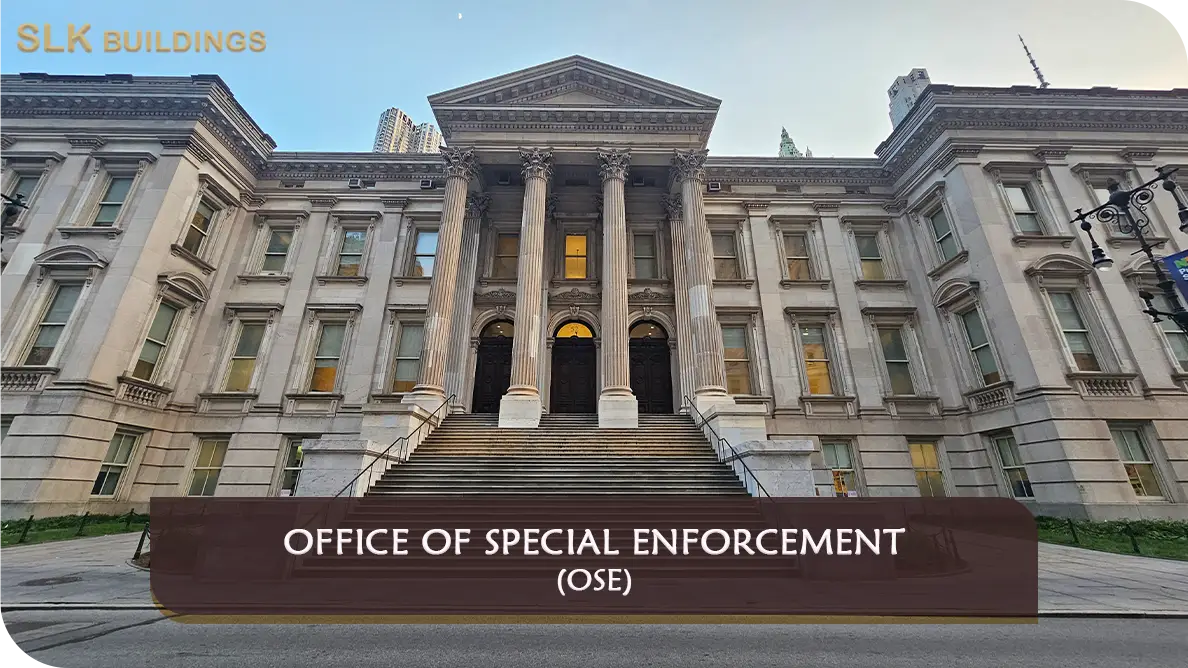
NYC short term rental registration is more than an online application. OSE reviews the host, permanent occupancy, building restrictions, legal use of the unit, supporting documents, and relevant agency records before a registration can be granted. A complete application can still be delayed or denied when the property record does not support the advertised use or when an unresolved order or violation affects eligibility.
Local Law 18 requires covered short-term rental hosts to register with the NYC Office of Special Enforcement and requires booking services to verify registration before processing covered transactions. Registration does not create a right to operate an otherwise unlawful short-term rental; the actual hosting arrangement must continue to comply with existing occupancy, housing, fire-safety, zoning, and building requirements.
OSE requires proof of identity and two proofs of permanent occupancy from different approved categories. Renters must also submit a qualifying lease. The address and unit information across the application and supporting documents should be consistent, because discrepancies can trigger additional review or prevent OSE from confirming permanent occupancy.

OSE currently requires one accepted proof of identity and two proofs of permanent occupancy from different approved categories. Examples of permanent-occupancy evidence include recent utility or bank statements, government correspondence, voter registration, vehicle registration, tax documents, insurance records, payroll documentation, and other qualifying records identified by OSE. The exact recency rules vary by document category.
For renters, the lease must show the unit address, the parties, signatures, and the lease term. A lease is not merely a supporting attachment: it may also reveal restrictions on short-term rentals. OSE notifies landlords about tenant applications, and building-level rules can independently affect whether the application may proceed.
Before submitting, the property record should be reviewed alongside the documents. OSE directs applicants to check DOB, HPD, and FDNY records for specified open conditions. If the space being offered differs from the legal occupancy or if a guest sleeping area is not approved, correcting the application alone will not resolve the underlying issue.
SLK Buildings can review the property and agency records that support a short-term rental registration, including DOB occupancy records, Certificates of Occupancy, Letters of No Objection, open violations and orders, and the relationship between the proposed guest areas and the legal use of the unit.
We can also help organize property-side documentation, identify inconsistencies before submission, coordinate correction of DOB, FDNY, HPD, or occupancy conditions, and separate those correction tasks from OSE application deadlines. The objective is to avoid repeated filings when the real obstacle is an unresolved building condition.

OSE administers the short-term rental registration and enforcement framework, but the underlying property condition may be controlled by another agency. DOB determines legal occupancy and administers construction-code and permit requirements; HPD enforces many housing-maintenance and illegal-occupancy conditions; FDNY controls fire-safety requirements; and OATH adjudicates many City summonses. Private leases, co-op or condominium rules, and other occupancy agreements can create additional restrictions that are separate from City approval.
A coordinated response identifies which agency controls each issue and keeps the deadlines separate. An OSE application cannot legalize an unapproved sleeping area, while a DOB correction does not automatically resolve an OSE warning, revocation matter, or OATH summons.
A short-term rental compliance issue is easier to manage when the property record, agency status, and actual use are reviewed together before the next filing, inspection, or hearing deadline.
Contact SLK Buildings for assistance reviewing the NYC OSE requirements, property records, open agency conditions, and coordination steps relevant to this specific matter.
SLK Buildings is a private consulting and construction-management firm and is not affiliated with the NYC Mayor’s Office of Special Enforcement or any government agency. This content provides general educational information and is not legal advice. Registration, occupancy, enforcement, correction, hearing, and violation requirements depend on the specific property, circumstances, and agency determination.
NYC Mayor’s Office of Special Enforcement (OSE) requirements can affect short-term rental hosts, property owners, tenants, building managers, and project teams throughout New York City. Local Law 18 established the City’s short-term rental registration system and requires booking services to verify that qualifying short-term rental transactions are associated with a valid registration or a lawful exemption.
Property owners and prospective hosts should review the legal occupancy of the building and dwelling unit, registration eligibility, lease or occupancy restrictions, the Prohibited Buildings List, and any open agency conditions before relying on a property for short-term rental use. Certain unresolved building or fire violations, Vacate Orders, and Stop Work Orders can prevent OSE from granting a registration until the underlying condition is resolved.
At SLK Buildings, we assist property owners, hosts, business operators, developers, contractors, architects, and project teams with NYC OSE short-term rental registration and renewal coordination, property record review, eligibility and compliance research, Prohibited Buildings List and Class B occupancy questions, violation response coordination, and related DOB, FDNY, HPD, or OATH matters when they affect an OSE issue.
Whether you are preparing a new registration, renewing an existing registration, reviewing a building’s eligibility, responding to an OSE enforcement issue, evaluating a Prohibited Buildings List matter, or addressing a building condition that affects registration, SLK Buildings can help organize the records, filings, agency coordination, and next steps needed to move the matter forward.
SLK Buildings provides free educational content to help property owners, hosts, business operators, developers, contractors, and project teams understand NYC OSE registration, enforcement, building eligibility, and short-term rental compliance requirements.
For those who prefer professional assistance, SLK Buildings is available to coordinate OSE registration and renewal documentation, property and occupancy research, agency follow-up, Prohibited Buildings List and Class B review, violation response, and related NYC agency requirements that may affect short-term rental eligibility or compliance.
SLK Buildings is a private consulting and construction-management firm and is not affiliated with the NYC Mayor’s Office of Special Enforcement or any government agency. This content provides general educational information and is not legal advice. Registration, occupancy, enforcement, correction, hearing, and violation requirements depend on the specific property, circumstances, and agency determination.
Does registration make an otherwise illegal short-term rental legal?
No. Registration is an administrative requirement; the actual use must still comply with applicable occupancy, housing, fire-safety, zoning, lease, and building rules.
How many proofs of permanent occupancy are required?
OSE currently requires two proofs of permanent occupancy from different approved categories, in addition to an accepted proof of identity.
Does a renter need to submit a lease?
Yes. OSE identifies a lease as a required document for renter applicants, and the lease must contain specified address, term, party, and signature information.
Can an open Stop Work Order affect registration?
Yes. OSE states that active Stop Work Orders and Vacate Orders must be resolved before a registration can be granted.
Can an unapproved basement be included in the listing?
No. OSE states that spaces shown in listings must be legally approved for residential and sleeping use; unapproved basements or cellars can prevent approval.