
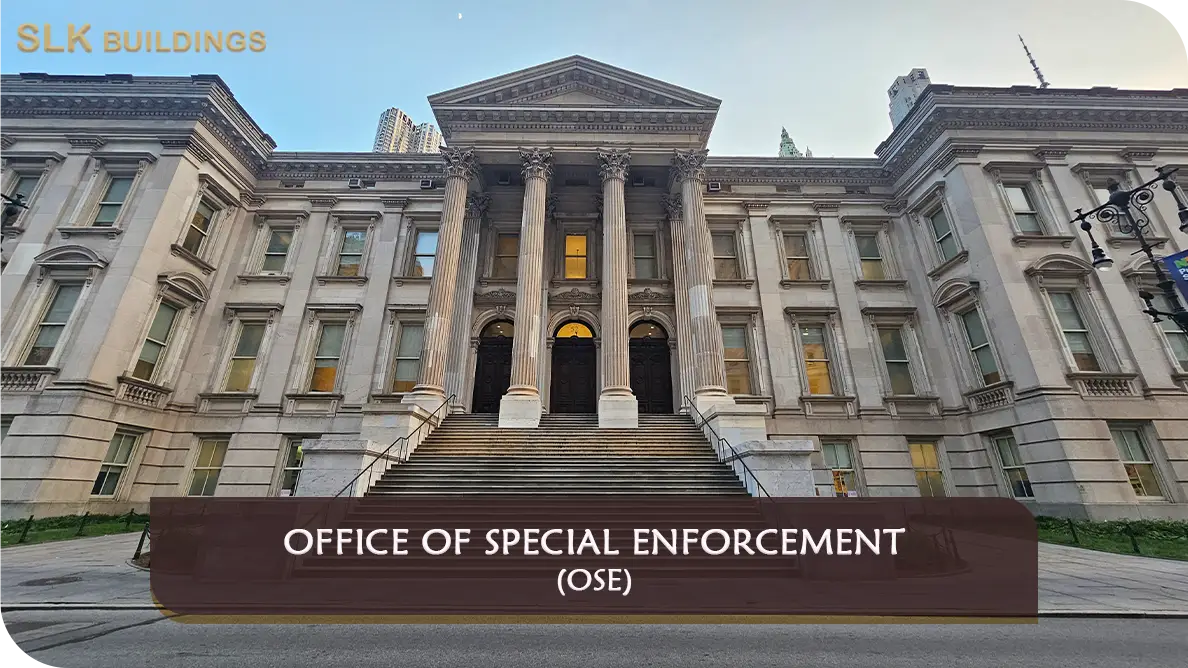
Short term rental application problems frequently come from a mismatch between the OSE submission and the underlying property record. Missing documents are only one category. An application can also stall because the unit number is inconsistent, the applicant cannot establish permanent occupancy, an open agency condition blocks approval, the building prohibits short-term rentals, or the listing shows space that is not legally approved for sleeping.
XXXXXX
OSE provides applicants with an opportunity to address correctable problems, but correction deadlines should be taken seriously. The most effective response is to identify whether the problem is documentary, eligibility-based, or tied to an underlying building condition before simply uploading another version of the same information.
Property-side corrections can take longer than an administrative response. A Vacate Order, Stop Work Order, work-without-permit violation, fire-code issue, or unlawful occupancy condition may require a separate agency process before OSE can grant the application.

Administrative corrections may include replacing an expired ID, supplying a second qualifying proof of occupancy, correcting an address inconsistency, or clarifying the exact dwelling unit. Those issues can often be addressed within the OSE process when the underlying eligibility is otherwise sound.
Building corrections are different. If OSE identifies an active Stop Work Order, Vacate Order, unsafe violation, illegal sleeping area, or other condition that prevents approval, the relevant agency process must be completed. This can involve permits, construction, inspections, certificates of correction, or occupancy documentation.
The response strategy should therefore run on two tracks when necessary: preserve the OSE application or response deadline, while separately resolving the agency condition that OSE cannot waive through document submission.
SLK Buildings can review OSE correspondence against DOB, HPD, FDNY, occupancy, and building records to determine what the agency is actually waiting for. This avoids treating every deficiency as a paperwork problem.
We can organize corrected property documents, coordinate permits or inspections where required, track violation and order resolution, and help prepare a consistent record for the next OSE submission. Legal arguments, hearing strategy, or disputes over rights under a lease should be coordinated with counsel.

OSE administers the short-term rental registration and enforcement framework, but the underlying property condition may be controlled by another agency. DOB determines legal occupancy and administers construction-code and permit requirements; HPD enforces many housing-maintenance and illegal-occupancy conditions; FDNY controls fire-safety requirements; and OATH adjudicates many City summonses. Private leases, co-op or condominium rules, and other occupancy agreements can create additional restrictions that are separate from City approval.
A coordinated response identifies which agency controls each issue and keeps the deadlines separate. An OSE application cannot legalize an unapproved sleeping area, while a DOB correction does not automatically resolve an OSE warning, revocation matter, or OATH summons.
A short-term rental compliance issue is easier to manage when the property record, agency status, and actual use are reviewed together before the next filing, inspection, or hearing deadline.
Contact SLK Buildings for assistance reviewing the NYC OSE requirements, property records, open agency conditions, and coordination steps relevant to this specific matter.
SLK Buildings is a private consulting and construction-management firm and is not affiliated with the NYC Mayor’s Office of Special Enforcement or any government agency. This content provides general educational information and is not legal advice. Registration, occupancy, enforcement, correction, hearing, and violation requirements depend on the specific property, circumstances, and agency determination.
NYC Mayor’s Office of Special Enforcement (OSE) requirements can affect short-term rental hosts, property owners, tenants, building managers, and project teams throughout New York City. Local Law 18 established the City’s short-term rental registration system and requires booking services to verify that qualifying short-term rental transactions are associated with a valid registration or a lawful exemption.
Property owners and prospective hosts should review the legal occupancy of the building and dwelling unit, registration eligibility, lease or occupancy restrictions, the Prohibited Buildings List, and any open agency conditions before relying on a property for short-term rental use. Certain unresolved building or fire violations, Vacate Orders, and Stop Work Orders can prevent OSE from granting a registration until the underlying condition is resolved.
At SLK Buildings, we assist property owners, hosts, business operators, developers, contractors, architects, and project teams with NYC OSE short-term rental registration and renewal coordination, property record review, eligibility and compliance research, Prohibited Buildings List and Class B occupancy questions, violation response coordination, and related DOB, FDNY, HPD, or OATH matters when they affect an OSE issue.
Whether you are preparing a new registration, renewing an existing registration, reviewing a building’s eligibility, responding to an OSE enforcement issue, evaluating a Prohibited Buildings List matter, or addressing a building condition that affects registration, SLK Buildings can help organize the records, filings, agency coordination, and next steps needed to move the matter forward.
SLK Buildings provides free educational content to help property owners, hosts, business operators, developers, contractors, and project teams understand NYC OSE registration, enforcement, building eligibility, and short-term rental compliance requirements.
For those who prefer professional assistance, SLK Buildings is available to coordinate OSE registration and renewal documentation, property and occupancy research, agency follow-up, Prohibited Buildings List and Class B review, violation response, and related NYC agency requirements that may affect short-term rental eligibility or compliance.
SLK Buildings is a private consulting and construction-management firm and is not affiliated with the NYC Mayor’s Office of Special Enforcement or any government agency. This content provides general educational information and is not legal advice. Registration, occupancy, enforcement, correction, hearing, and violation requirements depend on the specific property, circumstances, and agency determination.
Should I just resubmit the same application if it is delayed?
Usually not without first identifying the reason for the delay. Repeatedly submitting inconsistent or incomplete information can extend the review.
Can SLK correct an OSE denial caused by a Stop Work Order?
SLK can coordinate the property-side work needed to resolve the underlying order, but OSE controls the registration decision.
What if the problem is an unapproved basement sleeping area?
The occupancy issue must be addressed through the appropriate building-agency process; changing the registration paperwork does not legalize an unapproved sleeping area.
Can a landlord restriction cause an application problem?
Yes. OSE advises applicants to review leases and building rules, and a building may also be included on the Prohibited Buildings List when applicable.
Should OSE deadlines be ignored while a DOB correction is pending?
No. Agency deadlines should be tracked separately. The OSE response may need to acknowledge that a property-side correction is underway.