
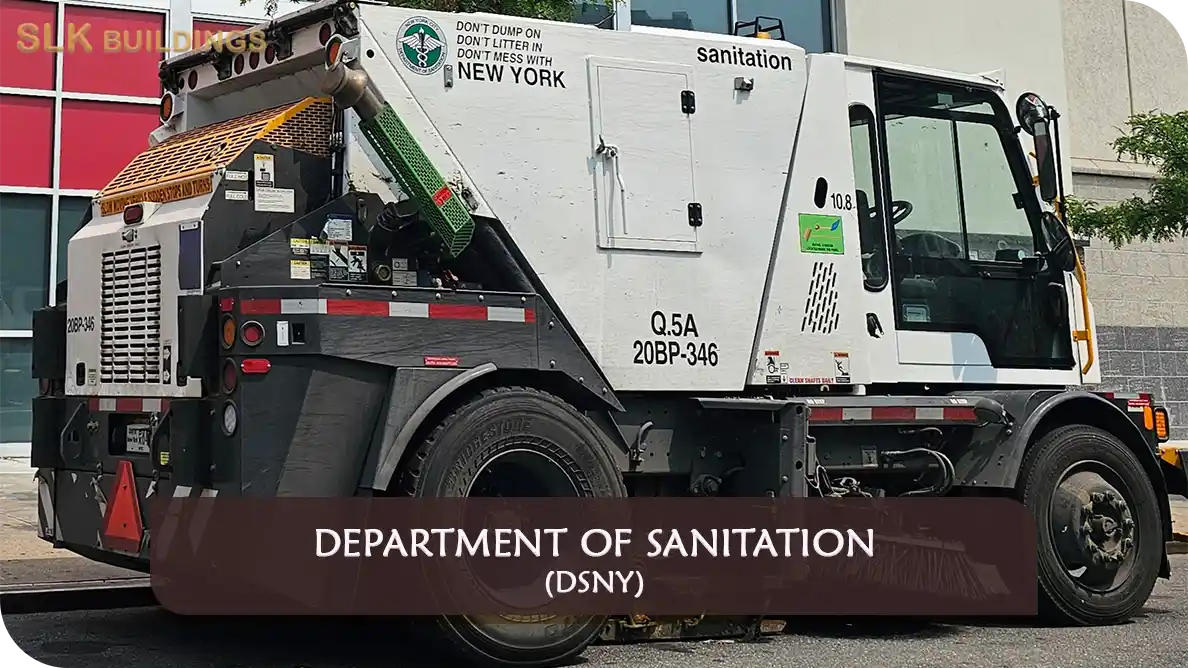
Confirm the bin location, owner authorization and reporting responsibilities before installation.
NYC textile collection bin registration should be addressed before a publicly accessible outdoor collection bin is installed on private property. Owners and managers should identify who owns the bin, who authorizes its placement and who will maintain the registration, servicing and reporting records.
DSNY requires owners of publicly accessible collection bins on private property to register them and report the weight collected annually. The program covers donated clothing, textiles and other materials. The bin must have written permission from the property owner or the owner’s designated agent.
The enacted law defines the covered bin as an outdoor container available for members of the public to deposit items for collection by its owner. Its definition excludes containers placed by government agencies or their contractors or licensees. The actual access and operating arrangement therefore matter; do not apply the registration label to every receptacle simply because it accepts clothing.
Check that the proposed footprint is on private property. A paved area beside a storefront or parking entrance should not be assumed private because the building maintains it. Review available site records and resolve uncertain boundaries with the appropriate professional before selecting a location.
DSNY prohibits these publicly accessible donation bins on public sidewalks, roadways, City-owned property and City-maintained property. Registration is not permission to place one in those areas. NYC311 provides a complaint route for improperly placed bins and explains that removal can result in charges and penalties.
A useful registration file starts with a consistent set of facts. The law identifies the bin’s location, collected material and owner contact information as minimum registration information. It also requires the bin owner’s name, address and telephone number to be displayed clearly on the front and at least one other side; a post-office box is not an acceptable address for that display.
The host arrangement should also explain access for servicing, overflow response, damaged-bin handling and removal when the arrangement ends. Those practical terms help prevent a donated-item program from becoming a recurring frontage problem. They should be reviewed by the people authorized to commit the owner and operator.
Annual reporting is due by August 1. The report covers material collected from July 1 of the preceding year through June 30 of the reporting year. DSNY requires reporting for the collected weight and prohibits false or misleading reports or failure to submit the required report.
Build the recordkeeping process around that reporting period from the start. For example, the report due August 1, 2027 covers July 1, 2026 through June 30, 2027. Ask the bin owner how collection weights will be recorded, connected to the individual location and reconciled before submission. Do not invent a weight when supporting data is missing; resolve the measurement and reporting question with the responsible operator and DSNY.
Create a reminder before the deadline so the operator can reconcile the records and management can verify completion. Keep the final report and confirmation with the registration. If several bins are being tracked, use a separate location record for each rather than assuming one combined figure adequately identifies every collection point.
For an authorized bin on private property, the law assigns clean and neat maintenance responsibility to both the bin owner and the property owner. An agreement with the operator should therefore be supported by a management inspection routine, especially where donors may leave bags outside a full bin.
Name a person who can request collection or repair and a backup for absences. Keep a record of overflow, damage, missed service and the action taken. Repeated problems may show that the location, servicing frequency or public instructions need to change. Review a relocation or change in operator before assuming the original records still describe the installation.
DSNY also offers a separate Textile Recycling Collection service for eligible buildings, including apartment buildings with at least ten units, offices, specified commercial industries, schools and nonprofits. Its current program works with NYSID and Helpsy, and a site visit helps determine bin size, quantity and placement. Use the current enrollment route for that service rather than treating it as the same application as public outdoor-bin registration.
SLK Buildings can help coordinate the property information, written authorization, application records and reporting calendar. We can also connect questions about location or related building work to the appropriate project professionals. The bin owner remains responsible for accurate operational information and required submissions, while the property team needs a clear record of the installation and continuing obligations.

DSNY places the registration duty on the bin owner. The private-property location also requires written authorization from the property owner or designated agent. Keep both parties clearly identified in the file.
No. Publicly accessible donation bins cannot be placed on public sidewalks or the other prohibited public-property locations. Registration does not change that restriction.
It is due by August 1 for the preceding July 1 through June 30 collection period. Arrange reliable weight records during the year so the report can be completed accurately.
Yes. The enacted law assigns clean and neat upkeep to both the bin owner and the private-property owner for an authorized installation. Record who will inspect and respond to service problems.
No. DSNY’s current building textile-collection service has its own eligibility and enrollment process. Confirm the intended access and service arrangement before choosing an application.
Yes. SLK can help organize location details, owner authorization and the submission record, then establish reporting follow-up. The operator supplies accurate collection data and performs bin servicing and material collection.

Share the proposed location, bin operator information and available owner authorization. SLK Buildings can help organize the application records and reporting responsibilities. Call 212-888-3888 or email info@slkbuildings.com.
New York City Department of Sanitation requirements can affect how residential and commercial properties store, separate, set out, collect, and manage waste. Property owners and businesses may also encounter sanitation violations, summonses, waste management plans, container requirements, registrations, and specialized permits. Determining the correct next step often depends on the property type, building use, waste stream, collection arrangement, and specific DSNY requirement.
At SLK Buildings, we help NYC property owners, managers, developers, and business owners navigate NYC Department of Sanitation requirements, organize the necessary documentation, and coordinate applicable filings and agency procedures. Our work can include sanitation violation support, waste management plans, collection-service coordination, commercial waste compliance, permit and registration preparation, and coordination with other agencies and qualified professionals when required.
Whether you are responding to a sanitation violation, planning waste management for a new or altered building, reviewing commercial waste requirements, or determining whether a DSNY permit or registration applies, SLK Buildings can help you understand the requirements, organize the documentation, and coordinate the next steps toward compliance.
SLK Buildings assists Property Owners, Managers, Developers, and Businesses with NYC Department of Sanitation matters, including:
For a complete overview of SLK Buildings’ NYC Sanitation services, permits, compliance topics, and related resources, visit our NYC Department of Sanitation Services.
SLK Buildings provides free educational content to help property owners, managers, developers, and businesses understand their options. For those who prefer professional assistance, we are available to help coordinate the applicable documentation, filings, agency requirements, and compliance process.