
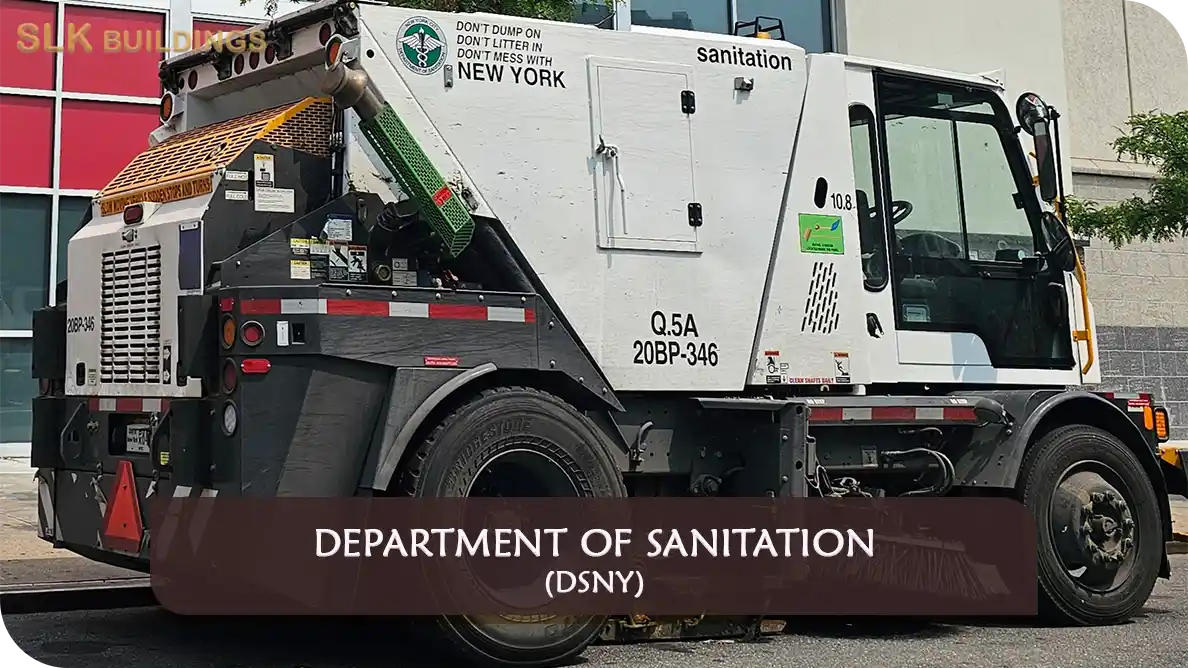
Match your business containers to waste volume, collection arrangements and the space available at the property.
NYC commercial trash bin requirements affect the way a business stores waste throughout the day and presents it for collection. A container choice should account for the amount generated, the carter’s pickup arrangement and the route from storage to the curb. For property owners, the same review should include how several tenants use shared waste areas.
Since March 1, 2024, businesses setting trash at the curb must use bins with secure lids. DSNY’s requirement covers trash, food and food-soiled paper. It does not apply in the same way to businesses whose waste is collected from a loading dock.
Commercial containerization does not make recycling optional or remove a covered business’s separate organics duties. Determine the collection streams first, then choose suitable containers for each. Do not combine trash and recyclables because one bin has unused space.
A restaurant, office and retail shop in the same building can produce different amounts and types of material. Ask each tenant how its waste is collected and identify the bins assigned to that service. Where the owner contracts centrally, the building instructions should match the carter’s actual collection method and the tenant’s responsibilities.
DSNY directs businesses to maintain enough bins for waste generated in a 72-hour period. The containers must remain covered with securely fitting lids, and the surrounding area must stay orderly.
Review busy periods as well as normal days. An operating plan based only on a quiet weekday may leave insufficient space after a full weekend or event. Record the number of filled containers by stream and compare that with the storage available. If lids regularly cannot close, address the capacity or service arrangement instead of treating overflow as an occasional exception.
Confirm the carter can service the proposed container before purchasing it. Check its size, handling method and the route to the pickup point. The people who move bins should be part of that discussion because they can identify tight turns, stairs and doors that are easy to overlook in a procurement decision.
Commercial lidded bins may go out from one hour before closing when collection is scheduled before reopening. The after-8-PM route requires pickup later that day or the next day. Containers must be returned by reopening. DSNY also gives specific handling instructions for metal dumpsters.
The current setout rule includes a separate allowance for securely tied designated recyclable paper in the before-closing arrangement. Confirm the collection and material conditions rather than assuming that every bag or bundle follows the same exception.
Write the timing into the staff handover instructions. Identify who sets containers out and who returns them when pickup happens overnight. For a building with several closing times, use tenant-specific instructions or a clearly assigned central routine. A general request to “put the garbage out at closing” leaves too much ambiguity when the last person to leave is different every day.
DSNY directs businesses to store bins inside or in a rear yard where possible. If other space is unavailable, storage within three feet of the building line is subject to keeping the area orderly and pedestrian travel clear. A sidewalk enclosure falls under DOT regulation.
Review the storage position independently from the collection position. Containers may need to move between them, and the passage used to make that move should remain usable when adjacent businesses are open. Include doors, entrances and daily deliveries in the review. Do not assume a bin left near a wall is acceptable merely because the building frontage is wide.
A routine commercial bin arrangement does not establish permission for a container or permanent enclosure in the street. If the proposal involves public-space occupation or a structure, identify the applicable DOT process separately. DSNY’s own business guidance expressly points owners to DOT for sidewalk enclosures.
Keep drawings, dimensions and agency correspondence organized by the actual proposal. Distinguish a movable collection bin, a fixed enclosure and a construction debris container. That distinction helps the project team ask the right agency question and avoids ordering equipment for a location that has not been reviewed.
Revisit the arrangement when a tenant changes use, operating hours or collection service. Check labels, capacity and staff instructions at the same time. If a sanitation summons is issued, preserve the notice and condition records while correcting the practical issue. A new container alone will not resolve a timing or responsibility problem.
SLK Buildings helps owners and businesses organize the applicable bin and setout requirements, identify related agency questions and coordinate supporting property information. We can help track a proposed enclosure review or a compliance response alongside the collection arrangement, with clear responsibilities for the owner, tenant and carter.

Commercial curbside rules require suitable bins with secure lids. The official NYC Bin mandate applies to covered residential and special-use properties receiving City collection; do not automatically transfer that branding requirement to ordinary commercial service.
A business covered by commercial organics requirements must keep its designated organics separate. Review coverage first; a secure lid does not replace the separation obligation.
DSNY identifies an exception from these curbside container and setout requirements for loading-dock collection. The building still needs a compliant waste handling and collection arrangement.
Record the volume and pickup pattern, then review container capacity, storage and collection service with the responsible parties. Confirm that any change works physically at the property and is communicated to the staff using it.
Do not assume that. The allowed limited storage arrangement depends on space availability and unobstructed pedestrian access. A proposed enclosure requires separate DOT review where applicable.
Document who contracts for each service, which tenants use the containers and who handles setout, return and upkeep. Put those assignments into the operating instructions so a change in staff does not leave them unclear.

Share your address, business use and current collection arrangement. SLK Buildings can help organize bin, storage and agency requirements and identify the next action for the property.
New York City Department of Sanitation requirements can affect how residential and commercial properties store, separate, set out, collect, and manage waste. Property owners and businesses may also encounter sanitation violations, summonses, waste management plans, container requirements, registrations, and specialized permits. Determining the correct next step often depends on the property type, building use, waste stream, collection arrangement, and specific DSNY requirement.
At SLK Buildings, we help NYC property owners, managers, developers, and business owners navigate NYC Department of Sanitation requirements, organize the necessary documentation, and coordinate applicable filings and agency procedures. Our work can include sanitation violation support, waste management plans, collection-service coordination, commercial waste compliance, permit and registration preparation, and coordination with other agencies and qualified professionals when required.
Whether you are responding to a sanitation violation, planning waste management for a new or altered building, reviewing commercial waste requirements, or determining whether a DSNY permit or registration applies, SLK Buildings can help you understand the requirements, organize the documentation, and coordinate the next steps toward compliance.
SLK Buildings assists Property Owners, Managers, Developers, and Businesses with NYC Department of Sanitation matters, including:
For a complete overview of SLK Buildings’ NYC Sanitation services, permits, compliance topics, and related resources, visit our NYC Department of Sanitation Services.
SLK Buildings provides free educational content to help property owners, managers, developers, and businesses understand their options. For those who prefer professional assistance, we are available to help coordinate the applicable documentation, filings, agency requirements, and compliance process.