
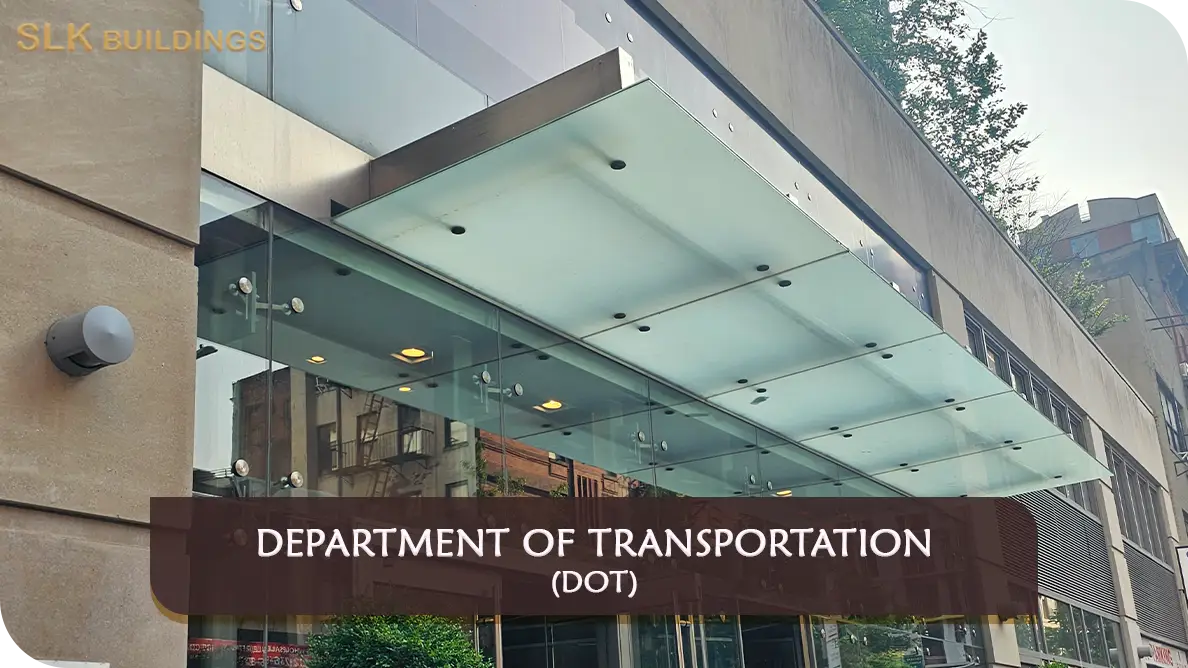
Understanding NYC DOT Notices, Construction Summonses, and Corrective Work
NYC DOT violations can involve sidewalk defects, construction activity, street openings, restoration, or failure to follow a permit’s conditions. The document you receive determines the next steps. A routine sidewalk defect notice is different from a construction summons, and a corrective-action request is not the same as an order to stop or change the work.
For property owners, contractors, and development teams, the first task is to identify the notice accurately. SLK Buildings assists with reviewing the available records, coordinating required permit filings, organizing corrective-work documentation, and tracking the agency follow-up appropriate to the matter.
DOT regulates work on City sidewalks and streets. Its Highway Inspection and Quality Assurance division, known as HIQA, inspects work sites for compliance with permit conditions, applicable rules, and restoration requirements. Enforcement can concern both the way work is performed and the condition left afterward.
The phrase “DOT violation” is often used broadly. Before deciding how to respond, separate the physical condition, any permit issue, and any summons or administrative proceeding. Resolving one does not necessarily establish that the other records have been closed.
This notice identifies a defective sidewalk adjoining a property. DOT states that the routine notice carries no fine. It nevertheless requires attention: repairs may be necessary, and DOT can arrange work and bill the owner when the applicable repair period passes without correction.
After required repairs, use the dismissal-inspection process. The contractor finishing the work is not the same as DOT accepting the repairs and closing the violation. A disputed notice has a separate re-inspection route.
Learn More: NYC DOT Sidewalk Violations
HIQA may issue a Corrective Action Request, or CAR, for problems such as inadequate restoration, damaged street hardware, or a cave-in. Its guidance distinguishes ordinary CARs from Priority CARs, also called Notices of Immediate Corrective Action, for conditions needing immediate attention. Follow the actual notice and applicable instructions.
A construction-related summons alleges a violation of an applicable requirement and can carry a monetary penalty. DOT’s penalty schedule covers violations adjudicated at OATH/ECB. Read the cited provision, respondent information, hearing details, and response instructions rather than treating the document like a routine sidewalk defect notice.
DOT’s enforcement guidance also provides for orders directing work to cease or remedial action to occur. Do not assume an existing permit overrides an order. The permitted scope and the order must be reviewed together before decisions about the affected activity are made.
Construction-related lane or roadway occupation must match the authorization issued for the activity. The relevant records may include the work permit, approved dates, location, and stipulations. A full roadway closure also has a specific request procedure. A complaint about blocked access does not itself establish which permit or rule applies; inspect the actual condition and records.
Learn More: NYC DOT Street Closure Violations
Related Service: NYC DOT Street Closure Permits
Street excavations, equipment placement, and temporary construction use of sidewalks or roadways have their own permit requirements. A building permit is not a substitute for the DOT authorization applicable to street activity. Review the precise work described on the permit before comparing it with what occurred on site.
Learn More: NYC DOT Construction and Utility Violations
HIQA inspections can continue through construction completion and the applicable guarantee period. Retain completion photographs, permit records, and restoration documentation instead of assuming that demobilization ends every obligation.
SLK Buildings coordinates the practical work needed to move a DOT compliance matter forward. Depending on the assignment, this can include organizing notices and permit records, identifying missing documents, preparing applicable filings, coordinating with contractors and design professionals, tracking agency comments, and arranging inspection follow-up.
The engagement should identify the matter being addressed and the expected deliverables. Questions involving contested liability, significant penalties, or legal strategy may require an attorney alongside the permit and project-coordination team.
Related Resource: NYC DOT Permits, Violations and Approvals

Keep every page of the notice, the inspection report, photographs, related permits, and correspondence. Record the address, document number, named respondent, date received, and any response or hearing date. Treat these as separate fields rather than relying on an informal description of the problem.
Determine whether the document requires immediate action, a scheduled response, an inspection, or another procedure. Identify who will assess the condition, who is responsible for the physical work, and who will prepare the filing or response. Urgent safety concerns should be escalated promptly to the responsible professionals and authorities.
Review what is alleged against the actual condition and the available authorization. For example, the issue may concern missing authorization, work beyond the approved footprint, or incomplete restoration. This comparison should inform the corrective plan rather than a generic instruction to apply for any available permit.
Where corrective construction is required, determine the applicable permits before proceeding. Keep the owner, contractor, and design team aligned on the approved scope. Obtaining a later permit should not be described as automatically erasing an earlier violation; DOT explicitly states that reissued construction permits do not apply retroactively.
Related Service: NYC DOT Permit Expediting
OATH is the City’s independent administrative law court and hears summonses issued by DOT and other agencies. Its hearing and response procedures are separate from arranging site repairs. Use the instructions applicable to the summons and obtain appropriate hearing or legal assistance when the matter requires it.
For a routine sidewalk defect notice, follow DOT’s repair, inspection, or re-inspection procedures instead of assuming every DOT matter requires an OATH hearing.
Track corrective work, inspection results, agency correspondence, and any hearing decision separately. Request the relevant confirmation for the particular matter. A useful closeout record explains what was completed, what the agency accepted, and whether any additional item remains outstanding.
Three questions help keep the process clear: has the physical condition been addressed, is the work properly authorized, and has the required administrative response been completed?
A payment record is not proof of a successful repair inspection. A repair invoice is not a hearing decision. An issued permit describes authorization for its scope and dates, not a blanket release from separate enforcement. Maintain the records for each requirement and seek clarification when the notice or agency response is unclear.
For sidewalk matters specifically, distinguish a no-fine defect notice from a bill for City-performed repair work. They serve different purposes, even when they relate to the same property.

Received a DOT notice, construction summons, or corrective-action request? Contact SLK Buildings with the property details and complete document so we can discuss the permit, documentation, and agency-coordination work needed for your matter.
Our focus is a clear record of the required actions, the responsible parties, and the outstanding items. Agency decisions and any separate hearing outcome remain subject to the applicable process.
SLK Buildings is a private firm and is not affiliated with NYC DOT or any government agency. Agency approval, professional design responsibilities, licensed trade work, and project-specific requirements remain part of the applicable review process.
NYC Department of Transportation requirements can affect sidewalk work, street openings, construction activity, curb cuts, temporary street occupancy, roadway closures, vaults, canopies, revocable consents, outdoor dining, and other work involving New York City streets and sidewalks.
Property owners, developers, contractors, architects, and businesses should identify the applicable NYC DOT permits and approvals before work begins. Missing permits, incomplete filings, permit holds, conflicting agency requirements, or noncompliant work can delay a project and may lead to inspections, corrective-action requirements, summonses, or other enforcement measures.
At SLK Buildings, we assist property owners, developers, contractors, architects, and businesses with NYC DOT permit filing, document preparation, agency coordination, permit follow-up, and compliance-related requirements. Depending on the project, this may include sidewalk permits, street opening permits, construction activity permits, curb cut permits, roadway closures, permittee registration, permit renewals and reissuance, permit holds and releases, revocable consents, vaults, canopies, and other DOT approvals.
Whether you are planning work in the public right-of-way, responding to a permit issue, coordinating multiple City agencies, or addressing a DOT inspection or violation, SLK Buildings can help organize the filing process, identify outstanding requirements, coordinate supporting documentation, and keep the project moving toward approval and compliance.
SLK Buildings Assists Property Owners and Project Teams with NYC DOT Requirements
SLK Buildings provides free educational content to help property owners, developers, contractors, and businesses understand NYC DOT permits, approvals, violations, and compliance requirements.
For those who prefer professional assistance, SLK Buildings is available to coordinate permit filings, supporting documentation, agency follow-up, and other NYC DOT-related project requirements.
Explore the Complete NYC DOT Permit, Violation, and Approval Resource Center
No. A routine sidewalk defect notice carries no fine. Construction summonses are different and can involve penalties under DOT’s applicable schedule. Identify the document before deciding which response applies.
No. The notice can still require repairs. The City may perform work and bill the owner when the applicable requirements are not met.
No. OATH handles summonses, while sidewalk defect notices have DOT repair and inspection procedures. The document itself is the starting point for determining the correct route.
A permit may be needed for lawful corrective work, but it should not be treated as automatic resolution of an earlier allegation. Reissued construction permits are not retroactive.
Send the complete notice, property address, relevant permits, photographs, agency correspondence, and the earliest known deadline. Include the owner, contractor, and design-team contacts where available.
Yes. SLK coordinates permit applications and related agency follow-up within the agreed scope. Where technical design, physical repairs, or legal representation are needed, those responsibilities must also be assigned to the appropriate participants.