
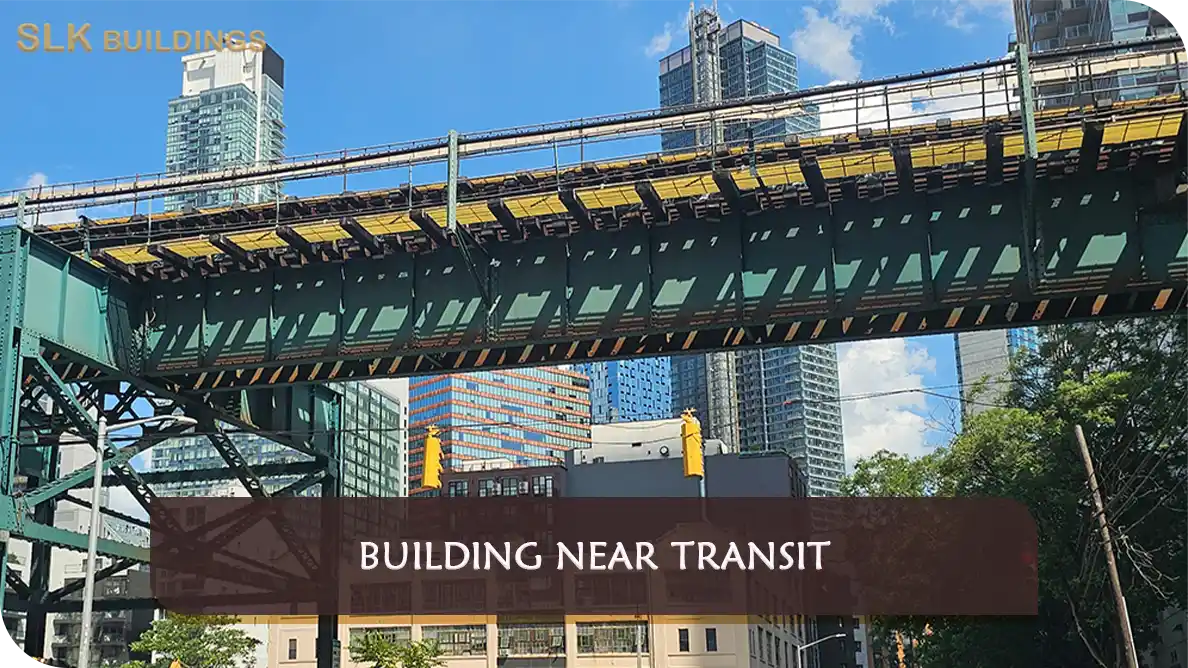
Crane Operations Near MTA require EPP review when equipment surcharge loads are within 200 feet of an MTA structure or when the equipment can foul MTA property, tracks, or other transit assets. Current EPP General Notes apply the crane section to mobile cranes, crawler cranes, mini cranes, concrete pumps, knuckle booms, derricks, tower cranes, and other equipment with comparable loads or reach conditions.
If you are new to this topic, begin with the Building Near Transit overview and the NYC BNT Requirements and MTA EPP Reviews resource center. For the basic proximity rule, the MTA 200 Foot Review guide explains when MTA Adjacency review may be required.
SLK Buildings assists property owners, developers, architects, engineers, contractors, and project teams with Crane Operations Near MTA, MTA EPP submissions, agency coordination, and related compliance requirements.
A building contractor plans a mobile crane on the street above a shallow subway roof. The boom will never touch the subway, but the crane outriggers could apply large ground loads. The design team may need to evaluate those loads against the transit roof. At an elevated rail line, the same operation may also raise boom reach and flagging issues.
The May 2026 EPP General Notes address cranes and other heavy equipment within 200 feet, as well as equipment whose fouling zone reaches a transit structure. Load calculations, clearances and operational restrictions are specific to the crane configuration and structure. The notes separately address tower-crane weathervaning and flags or General Orders where applicable.
The precise requirements for crane operations near mta depend on the actual construction activities, the location of MTA infrastructure and any written direction from EPP. The following examples explain common issues, not an automatic approval checklist.
MTA crane approval concerns review of crane operations that could load, reach or otherwise affect MTA infrastructure.
Crane near subway work may create ground surcharge loads over underground structures even when the boom does not approach the tracks.
A tower crane near MTA infrastructure may raise special boom-swing, weathervaning and clearance requirements.
An MTA fouling zone is an area the equipment can reach or interfere with, potentially involving tracks or other operating property.
An initial submission is easier to review when the property information, current plans and technical attachments tell the same story. Gather the materials actually relevant to the scope; EPP may request additional supporting items.

EPP Adjacency is the MTA review pathway for applicable private construction near its property. EPIC is the online portal that manages archive requests, applications, reviewer correspondence, and separate insurance and safety workstreams. A project can involve more than one of these actions.
The reviewed documentation may need crane locations, load charts, outrigger or track loading, boom operating envelopes, structural surcharge calculations and lifting sequence. Coordination with NYC DOB, NYC DOT and MTA may be required for different aspects of the same operation. The project team should not treat a routine DOB crane filing as evidence that the MTA has accepted transit impacts.
Under the May 2026 EPP General Notes, proposed engineering drawings receive a written disposition such as No Impact, Approved or Approved as Noted. Approved work with impacts can also require an executed legal agreement, accepted insurance, applicable MTA Safety documentation and a Notice to Proceed. The particular letter and instructions determine the project’s next actions.
For crane operations near mta, check whether the approved drawings or contractor methods will change once work starts. A revision may need a formal Addendum and new MTA review. Any applicable DOB permit, DOT street or sidewalk authorization, and zoning requirements remain separate from the MTA determination.
MTA EPP determines the transit-related disposition and conditions. NYC DOB separately regulates applicable building permits and code obligations. The owner hires qualified New York State licensed architects, engineers, surveyors and contractors for design, field investigation, calculations, technical certifications and construction means and methods.
SLK Buildings coordinates the administrative side of crane operations near mta: organizing the project records, aligning the submission checklist, routing comments to responsible parties and tracking outstanding EPP requirements. We do not issue agency approvals or replace the professionals who must prepare and sign technical work.
SLK Buildings can coordinate the crane submission, track EPP and operations comments, and connect the crane engineering package with safety, inspection, NTP, and schedule requirements. The crane engineer, operator, contractor, and qualified safety personnel remain responsible for equipment selection and safe operation.

Property owners can prevent unnecessary rework by distinguishing what EPP has actually reviewed from the work the contractor intends to perform. A preliminary drawing, archive reference, paid application and issued approval are different things. Early communication with the correct technical professional is usually more useful than guessing whether an exception applies.
For crane operations near mta, also preserve a written record of the next agency decision needed, who will provide it and how the owner will know it has been satisfied. Ask the design team to flag changes in field conditions promptly rather than allowing a conflict to remain hidden in a contractor daily report.
SLK Buildings assists property owners, business operators, developers, contractors and project teams with Crane Operations Near MTA, MTA EPP submissions, archive-record coordination, reviewer comments, and compliance tracking. To begin, share the project address, scope, current drawing set, any EPP application or archive request number, and the construction milestone being planned.
We help coordinate records and communications so the project team can identify its next action. Technical design, surveying, legal interpretation, insurance acceptance, construction safety and final agency determinations remain with the responsible professionals and government reviewers.
Disclaimer: SLK Buildings is a private consulting and construction-management firm, not affiliated with MTA, NYCT, NYC DOB, or another government agency. Information is general and does not replace project-specific legal, engineering, architectural, or other licensed professional advice.
Construction within 200 feet of MTA property can require EPP Adjacency review alongside NYC DOB permits. Owners, developers, and project professionals need to identify nearby transit assets and the construction activities that might affect them.
Before selecting an approval path, confirm the project scope, survey, available MTA archive drawings, EPIC application requirements, and licensed-professional responsibilities. MTA may issue an impact or no-impact disposition and set construction-stage conditions.
SLK Buildings coordinates archive requests, Adjacency applications, agency comments, supporting records, and construction-stage tracking. We support the owner and qualified project team without replacing licensed design or MTA decisions.
Whether reviewing the 200-foot threshold, planning excavation, addressing comments, or coordinating safety and insurance, we help organize outstanding actions alongside separate DOB requirements.
SLK Buildings provides free educational content explaining MTA EPP review, drawings, written determinations, and construction requirements for owners and project teams.
For professional assistance, SLK Buildings coordinates applications, archive requests, reviewer comments, and approval tracking. Licensed professionals remain responsible for technical design, certification, and field work.
Disclaimer: SLK Buildings is a private consulting and construction-management firm, not affiliated with MTA, NYCT, NYC DOB, or another government agency. Information is general and does not replace project-specific legal, engineering, architectural, or other licensed professional advice.
Current General Notes identify mobile cranes, crawler cranes, mini cranes, concrete pumps, knuckle booms, derricks, tower cranes, and other equipment where surcharge or fouling conditions affect MTA structures.
In the current EPP crane section, it includes equipment whose boom or operating envelope can reach toward and within the MTA structure or open/elevated track zone.
Current General Notes do not permit weathervaning over open MTA/NYCT tracks and set project-specific conditions for adjacent tower cranes.
Yes when surcharge or lateral loads can affect MTA structures. The responsible engineer should provide the required analysis and drawings.
Yes. Current EPP General Notes state that certain fouling crane operations are allowed only under NYCT flagging or General Order conditions.
The MTA proximity and fouling guidance must be considered along with the exact load and operating location. A qualified reviewer should evaluate the site-specific situation.
Use the NYC BNT parent resource center to compare all 17 topics, or return to the Building Near Transit landing page for a beginner overview of the agencies and construction stages.