
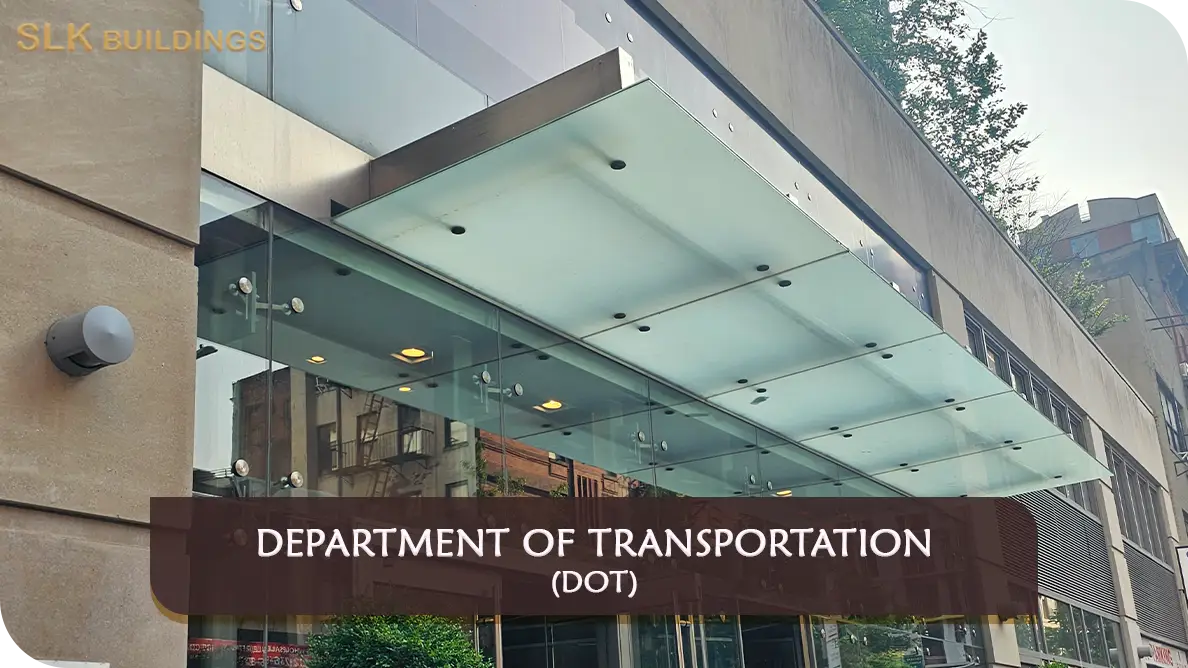
Canopy Authorization, Installation Permits, Inspections, and Maintenance Renewals
NYC DOT canopy permits address qualifying canopies over public sidewalks, including initial authorization, installation, and continuing maintenance. A canopy project should not be treated as only a fabrication order: the location, property-owner consent, supporting poles, public passage, and ongoing permit record all need to be considered.
SLK Buildings coordinates the application documents, professional and installer inputs, required permit steps, and inspection or renewal follow-up. We help keep the authorization history and future obligations connected to the property and responsible applicant.
An awning, building sign, marquee, sidewalk shed, and sidewalk canopy should not be assumed to share one approval route. Start with the proposed structure, how it is attached or supported, and where it projects. The relevant agency requirements follow the actual design, not the name a vendor uses in a quotation.
DOT’s canopy guidance requires owner approval for attachment to the property and design consistent with its applicable construction details. It also identifies street restrictions and maintenance requirements. The responsible professional or installer should review the specific location before the owner commits to fabrication.
The canopy application procedure begins with HIQA review of the proposed location and supporting information. This is the stage for establishing whether the proposed placement is acceptable under the applicable requirements. It should not be confused with an issued installation permit.
After the relevant authorization, obtain the permits needed for installation. DOT’s current permit guidance states that a street-opening permit is also needed for installation of supporting poles. Coordinate that activity with any temporary sidewalk or roadway occupation required by the operation.
The published procedure includes inspection of the installed canopy and release of the associated maintenance-permit hold when the inspection is satisfactory. A completed installation invoice does not establish that the permit process is finished.
Provide the property address, owner authorization, proposed canopy dimensions, location information, drawings, photographs, and installer or permittee details. Include prior permits when replacing or modifying an existing canopy. Identify any changes from the previously approved structure.
A useful drawing set should let the reviewing team understand the canopy’s relationship to the building, sidewalk, curb, entrances, and affected street features. The responsible professional or installer must confirm the design requirements; administrative coordination is not a substitute for that technical work.
Before filing, resolve inconsistent applicant names and ownership information. Establish who can sign the documents and who will respond to design questions. Keeping these responsibilities clear can prevent an application from being passed among the owner, tenant, installer, and managing agent without a decision.
Identify the work area, equipment, support installation, and temporary pedestrian arrangements. Permits for the canopy do not necessarily authorize every construction activity needed to erect it. Match equipment placement and temporary occupation to the applicable permits and stipulations.
Give the installer the current approvals and issued conditions before work begins. Where a field condition changes the proposed pole position or canopy dimensions, refer the issue back for review rather than allowing an informal substitution to become the finished structure.
Related Service: NYC DOT Construction Activity Permits
SLK coordinates application preparation, supporting records, agency responses, inspection follow-up, and renewal tracking. The engagement can begin with a new installation or a review of an existing canopy’s permit history.
Send the property address, photographs, proposed or existing drawings, owner and tenant information, installer details, and any prior permit numbers. Indicate whether the immediate need is authorization, installation, renewal, a change of applicant, or response to a notice.
Related Resource: NYC DOT Permits, Violations and Approvals

DOT distinguishes the installation period from the maintenance permit. Its current permit page describes a 30-day installation permit and an annual maintenance permit. Renewal should be addressed at least one month before expiration under the canopy guidance. Confirm the actual permit dates and current filing instructions for the property.
Use a property-management record with the permit number, expiration date, responsible contact, insurance or other supporting obligations, and next renewal action. A tenant turnover or change of managing agent should not erase that history.
DOT’s canopy rules state that permits are not transferable between people or locations. A new owner, different operator, relocation, or substantial replacement should prompt a review of the required application rather than reuse of an unrelated permit.
The structure must remain maintained in accordance with applicable requirements. Ask the responsible professional or installer to assess damage or proposed modifications. Do not assume that adding signs, decorative attachments, or equipment to a canopy is allowed; DOT’s guidance restricts attachments.
A restaurant canopy is not itself outdoor-dining approval, and a building’s construction permit is not the entire canopy authorization record. Where the project also involves sidewalk repairs, a revocable consent, or an outdoor-dining setup, identify each program separately and coordinate the documents accordingly.
Related Service: Dining Out NYC Permits and Cafe Approvals
For an existing installation with missing records, begin with document retrieval and condition review. The presence of a canopy in an old photograph does not establish the validity of a current maintenance permit or approval for a proposed replacement.

SLK XXXXXX
NYC Department of Transportation requirements can affect sidewalk work, street openings, construction activity, curb cuts, temporary street occupancy, roadway closures, vaults, canopies, revocable consents, outdoor dining, and other work involving New York City streets and sidewalks.
Property owners, developers, contractors, architects, and businesses should identify the applicable NYC DOT permits and approvals before work begins. Missing permits, incomplete filings, permit holds, conflicting agency requirements, or noncompliant work can delay a project and may lead to inspections, corrective-action requirements, summonses, or other enforcement measures.
At SLK Buildings, we assist property owners, developers, contractors, architects, and businesses with NYC DOT permit filing, document preparation, agency coordination, permit follow-up, and compliance-related requirements. Depending on the project, this may include sidewalk permits, street opening permits, construction activity permits, curb cut permits, roadway closures, permittee registration, permit renewals and reissuance, permit holds and releases, revocable consents, vaults, canopies, and other DOT approvals.
Whether you are planning work in the public right-of-way, responding to a permit issue, coordinating multiple City agencies, or addressing a DOT inspection or violation, SLK Buildings can help organize the filing process, identify outstanding requirements, coordinate supporting documentation, and keep the project moving toward approval and compliance.
SLK Buildings Assists Property Owners and Project Teams with NYC DOT Requirements
SLK Buildings provides free educational content to help property owners, developers, contractors, and businesses understand NYC DOT permits, approvals, violations, and compliance requirements.
For those who prefer professional assistance, SLK Buildings is available to coordinate permit filings, supporting documentation, agency follow-up, and other NYC DOT-related project requirements.
Explore the Complete NYC DOT Permit, Violation, and Approval Resource Center
No. Determine the actual structure and applicable approval route. DOT’s canopy authorization should not be treated as permission for unrelated signage or attachments.
DOT’s permit guidance identifies a street-opening permit for installing the poles supporting the canopy.
Not necessarily. The published process includes inspection and the maintenance-permit step.
No. Track the expiration date and follow the applicable renewal instructions in advance.
No. DOT states that canopy permits are not transferable from their original location or between people.