
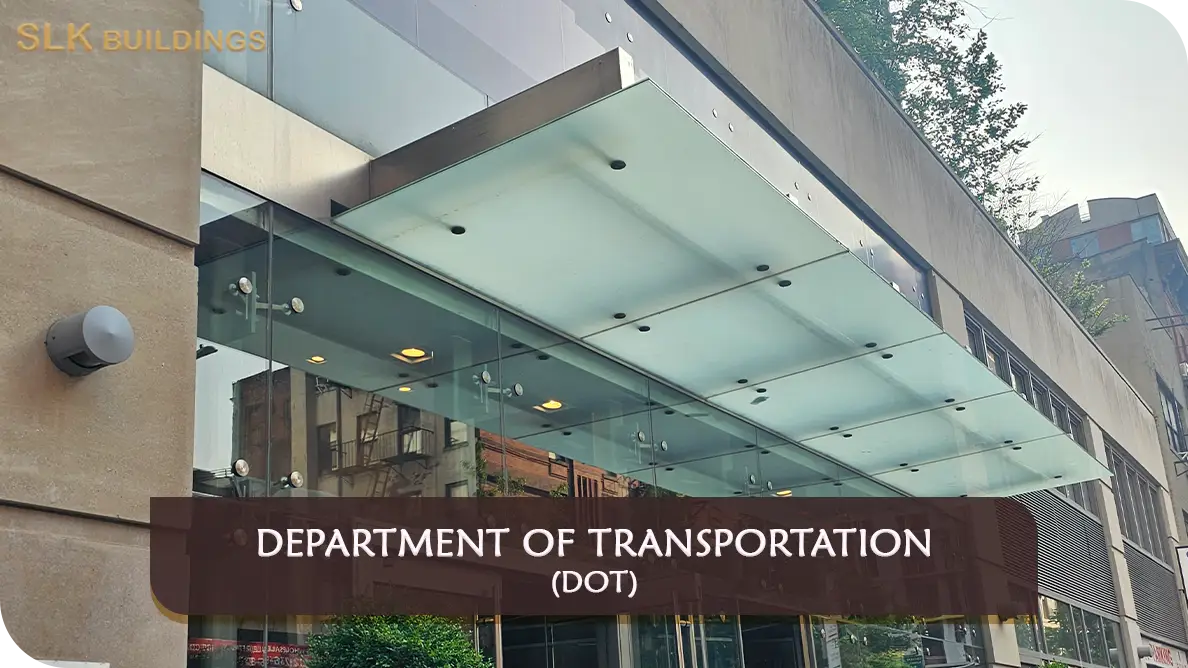
Applications for Private Improvements on, Over, or Under City Street Space
NYC DOT revocable consents authorize certain private improvements on, over, or under City streets and sidewalks. The arrangement grants a revocable right to use the affected public property; it does not transfer ownership of that space to the adjoining owner. A proposed entrance feature, access ramp, cellar-door arrangement, or other eligible improvement therefore needs to be evaluated in relation to the public right-of-way.
SLK Buildings coordinates the petition records, professional-plan inputs, related agency reviews, and follow-up needed for the application. The first task is identifying the actual structure and the correct authorization route, not treating every projection as the same permit.
Begin with a survey, current photographs, plans, and the proposed dimensions. Distinguish private property from City street space. An improvement can be associated with a privately owned building while extending into the public right-of-way. The property boundary and the physical edge of a paved area are not necessarily interchangeable.
Record the structure’s purpose and whether it is new, existing, being changed, or being removed. Existing paperwork is especially important for a property acquisition or alteration. An old installation should not be assumed to have an active consent merely because it has been present for years.
DOT’s eligible-improvement list includes accessibility lifts and ramps, cellar doors with stairs, entrance details, planters, certain posts or bollards, loading docks, and flood-mitigation systems. Eligibility identifies a potential application category; it is not automatic approval of the proposed dimensions or location.
Some structures have their own specialized permit or approval process. For example, vaults, canopies, and outdoor dining need their specific program review. Determine the structure and governing route before copying documentation from a superficially similar project.
Related Service: NYC DOT Vault Permits
DOT’s initial submission requirements include the petition, property and entity records, tax-identification documentation, and specified supporting forms. Later stages include additional agreement, insurance, and security-deposit documents as applicable. Use the current checklist for the actual submission stage.
For coordination, verify that the applicant’s name and property details agree across the documents. Identify who is authorized to sign and who can supply missing ownership or corporate records. Discrepancies should be resolved deliberately, not covered by using different spellings in different forms.
DOT requires a plan prepared by a New York State licensed professional engineer or registered architect. The drawings must support the proposed structure and the relevant review criteria. SLK can coordinate inputs and comments, while technical design and certification remain with the responsible professional.
Include previous consents, approved plans, recorded changes, and related permits where available. A useful comparison shows what is authorized, what exists, and what is proposed. That is particularly important when an owner intends to enlarge or modify an existing feature.
SLK coordinates the petition checklist, available property records, professional-plan inputs, agency comments, and related permit tasks. The engagement can also include organizing renewal, modification, assignment, or rescission documentation for an existing consent.
Send the property address, survey or relevant plan, photographs, description of the proposed structure, ownership or lease information, and any existing consent. Identify a pending transaction or construction milestone at intake so the team can distinguish application tasks from private deadlines.
Related Resource: NYC DOT Permits, Violations and Approvals

DOT circulates a complete petition to the relevant agencies. Public Design Commission, Landmarks Preservation Commission, or other review may be required depending on the structure and location. The process also includes applicable public-hearing and agreement steps. An acknowledgement of filing is not the executed consent.
Plan for review and potential revisions without promising a fixed approval date. Keep a log showing the submission, agency comment, responsible responder, and disposition. Where a revised plan affects another approval, coordinate the change across the entire project file.
A consent addresses the right to construct and maintain the eligible improvement in public space. It does not replace every permit needed to perform the installation. DOT’s common permit requirements call for the relevant agreement when work is associated with a revocable consent, concession, or franchise.
The project may also require building, street-opening, sidewalk, or construction-activity authorization. Identify the work sequence and responsible contractor before treating the completed agreement as permission to mobilize immediately.
Related Service: NYC DOT Permit Expediting
Review the term, annual obligations, insurance conditions, and renewal requirements in the actual agreement. DOT provides a renewal petition route. Keep reminders and supporting records with the property file rather than relying on a single employee’s email archive.
DOT provides separate forms for modifying an improvement or transferring an existing consent. A property sale, new tenant, or change of business entity should prompt review of the agreement. Prior written DOT approval is required for assignment or transfer; it should not be assumed to occur automatically with the transaction.
Where an improvement will be removed or its use ended, determine the required rescission and construction steps. Removing the visible structure does not by itself establish that every agreement obligation or agency record has ended.

Contact SLK Buildings with the proposed improvement or existing agreement. We can help organize the petition, professional coordination, and related permit follow-up for the property.
SLK Buildings is a private firm and is not affiliated with NYC DOT or any government agency. Agency approval, professional design responsibilities, licensed trade work, and project-specific requirements remain part of the applicable review process.
NYC Department of Transportation requirements can affect sidewalk work, street openings, construction activity, curb cuts, temporary street occupancy, roadway closures, vaults, canopies, revocable consents, outdoor dining, and other work involving New York City streets and sidewalks.
Property owners, developers, contractors, architects, and businesses should identify the applicable NYC DOT permits and approvals before work begins. Missing permits, incomplete filings, permit holds, conflicting agency requirements, or noncompliant work can delay a project and may lead to inspections, corrective-action requirements, summonses, or other enforcement measures.
At SLK Buildings, we assist property owners, developers, contractors, architects, and businesses with NYC DOT permit filing, document preparation, agency coordination, permit follow-up, and compliance-related requirements. Depending on the project, this may include sidewalk permits, street opening permits, construction activity permits, curb cut permits, roadway closures, permittee registration, permit renewals and reissuance, permit holds and releases, revocable consents, vaults, canopies, and other DOT approvals.
Whether you are planning work in the public right-of-way, responding to a permit issue, coordinating multiple City agencies, or addressing a DOT inspection or violation, SLK Buildings can help organize the filing process, identify outstanding requirements, coordinate supporting documentation, and keep the project moving toward approval and compliance.
SLK Buildings Assists Property Owners and Project Teams with NYC DOT Requirements
SLK Buildings provides free educational content to help property owners, developers, contractors, and businesses understand NYC DOT permits, approvals, violations, and compliance requirements.
For those who prefer professional assistance, SLK Buildings is available to coordinate permit filings, supporting documentation, agency follow-up, and other NYC DOT-related project requirements.
Explore the Complete NYC DOT Permit, Violation, and Approval Resource Center
No. It provides a revocable right for an eligible improvement in City street space, subject to the agreement and applicable requirements.
No. The structure, design, location, documentation, and relevant agency reviews still need to be evaluated.
No. The required installation permits and related approvals must be considered separately.
Do not assume that. DOT requires prior written approval for assignment or transfer and provides a specific petition route.
Yes. SLK can coordinate the filing and agency records while the responsible professional prepares and certifies the technical plan.