
NYC Sanitation Violations and Compliance
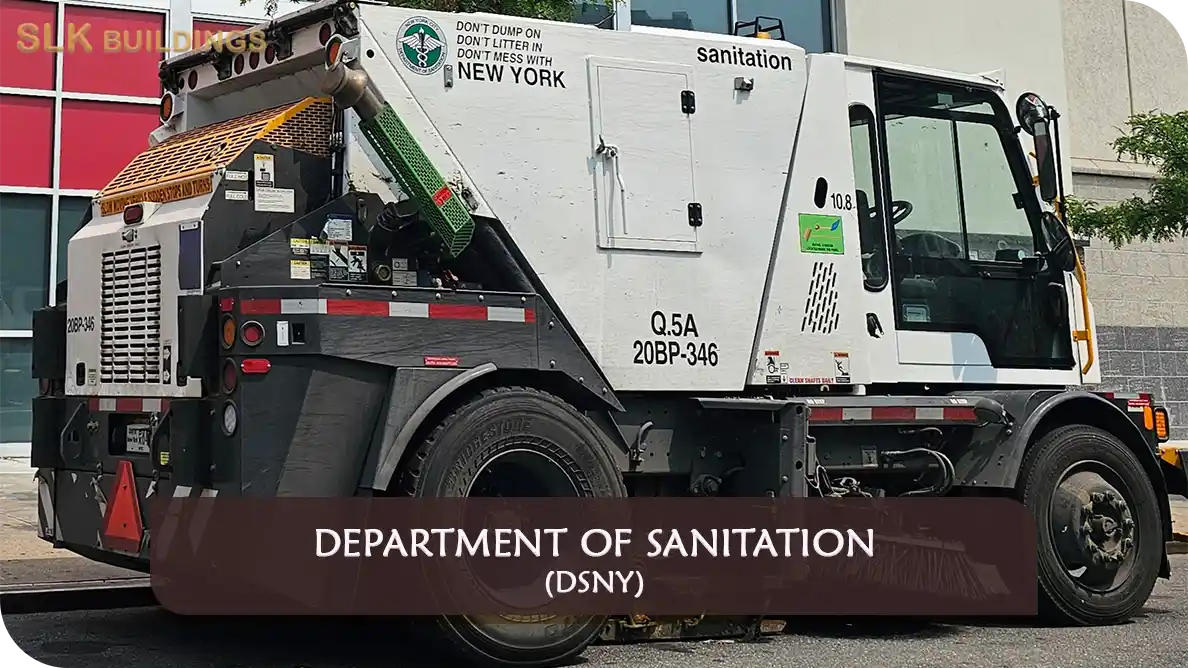
Understand the charge, organize the response, and address the condition behind the summons.
A sanitation ticket deserves a close reading before anyone decides how to respond. The address, named respondent, alleged condition and hearing information determine what needs attention. For a building owner, the practical task has two parts: address the property condition and manage the specific summons. SLK Buildings helps owners and managers organize those steps, connect the right records and coordinate the work needed to bring recurring sanitation problems under control.
What Can Lead to a Sanitation Violation
DSNY regulates how residential waste is separated, contained and placed for collection. Incorrect collection days, unsuitable containers, overflowing waste and failures to separate required materials can lead to enforcement. The rule that applies depends on the waste stream, property and collection arrangement. A residential building and its ground-floor business may need different operating procedures.
Dirty sidewalks and gutters create another common compliance issue. Owners must maintain the adjoining area, including specified parts of the gutter. A complaint about someone else leaving litter does not transfer that cleaning responsibility to the City. Illegal dumping, snow clearance and specialized waste activities require their own review.
Find Your NYC Sanitation Topic
Choose the subject closest to your question.
Start With the Actual Summons
Create one record for each summons instead of collecting several tickets under a general property note. At minimum, record:
- The complete summons number and exact name of the respondent.
- The issuing agency, cited provision, date, time and location of the alleged condition.
- The description of what the enforcement officer observed.
- The hearing date, response instructions and any appearance requirement.
- Existing photographs, service records, collection arrangements and correspondence relevant to that event.
OATH provides case information and copies of many summonses through its Summons Finder. Search by summons number where possible; names and addresses can produce similar-looking records. If the particular record is unavailable, use the Clerk’s Office route described by OATH instead of assuming there is no case.
SLK Buildings assists property owners with NYC Department of Sanitation compliance filings, violation resolution, waste management plans, permits, and agency approvals.
Document the Condition and Arrange Correction
Inspect the cited location promptly. Take clear photographs that show the building context as well as the specific problem. Record who observed the condition and when. Keep the original files, then prepare a short dated explanation connecting each photograph to the allegation. A picture taken after cleanup can document correction, but it may not show what existed when the ticket was issued.
Match the corrective step to the cause. Replacing a damaged lid may address one incident; repeated overflow may require a different capacity or collection arrangement. Repeated litter may call for a revised inspection schedule. Ask the responsible building staff or service provider to identify what changed and preserve the completion record. Avoid using a generic checklist that cannot explain the actual event.
Respond Through the Correct Agency Process
OATH independently hears sanitation civil summonses that are returnable to its Hearings Division. DSNY is the issuing and enforcement agency. Use the forum and instructions on the notice rather than treating the matter as a parking-ticket dispute or sending a hearing defense only to the sanitation collection office.
A response is required on or before the scheduled hearing date. Depending on the summons, the available route may involve a hearing, permitted payment, or an expressly offered agency settlement or cure. Correction alone should not be treated as cancellation of a hearing. Confirm any claimed cure or settlement through its actual instructions and retain the acknowledgment.
How SLK Buildings Helps
SLK Buildings can review the available sanitation records, prepare a property-specific action list and coordinate supporting documents with owners, managers and relevant service providers. Where correction involves a building alteration or another agency approval, we can help identify that separate filing path and coordinate required professionals. For a hearing matter, we help organize technical and property records and coordinate with the respondent’s authorized representative or counsel as appropriate.
The goal is a clear record of what was alleged, what the property team did, what the agency decided and what remains outstanding. That approach is especially useful when several tenants, staff members or vendors share responsibility for the daily operation of a building.

Keep Payment and Property Follow Up Clear
Where prehearing payment is allowed, paying without a hearing admits the charge and waives the hearing right. OATH penalties are set by law; hearing officers do not have unrestricted discretion to reduce them. Unpaid penalties can progress to judgment and collection activity. Review the specific case before choosing a financial response.
For the management file, record the hearing outcome, payment evidence where applicable, completed operational changes and any remaining agency request. These records answer different questions. A contractor invoice shows a service was billed; a dated inspection can show the resulting condition; an agency decision records the summons outcome. Keeping them together makes future property reviews more useful.
Learn More About NYC Sanitation Requirements
Violations and property compliance
Residential building applications and compliance
Commercial building waste
Construction waste coordination
Permits and regulated waste operations
Frequently Asked Questions
Does DSNY issue sanitation summonses?
Yes. DSNY is an enforcement agency whose civil summonses may be heard by OATH. Confirm the issuing agency and hearing forum on the actual notice; the word sanitation alone does not identify every applicable process.
Will cleaning the property automatically dismiss the ticket?
Do not assume so. A correction and a summons response are separate tasks. Follow any specific agency cure or settlement instructions and confirm the hearing status instead of relying only on a cleanup photograph.
How can I find a copy of my sanitation summons?
Use OATH’s Summons Finder for available records. If the record does not appear, contact the OATH Clerk’s Office for assistance. Keep any mailed notice while the online record is being located.
What if the name or address on the summons is wrong?
Preserve the notice and gather the ownership, occupancy or address records relevant to the discrepancy. OATH says a named respondent must still respond rather than ignore a summons because ownership is disputed.
Should I send DOB correction forms for a DSNY ticket?
Start with the cited DSNY requirement and the instructions for that summons. Do not select forms simply because another property violation used them. SLK can help organize the records and identify the relevant agency route.
Can SLK help with recurring sanitation problems?
Yes. We can help document the pattern, review the building’s responsibilities and coordinate an action list with management and relevant providers. Physical cleaning, collection and regulated professional work remain assigned to the appropriate providers.

Contact SLK Buildings About a Sanitation Violation
Send the complete summons, property address, relevant photographs and any hearing correspondence. SLK Buildings can help organize the issue, identify the next agency step and coordinate a practical compliance plan. Call 212-888-3888 or email info@slkbuildings.com.
🚧 Seeking Professional Guidance on NYC Department of Sanitation (DSNY)
New York City Department of Sanitation requirements can affect how residential and commercial properties store, separate, set out, collect, and manage waste. Property owners and businesses may also encounter sanitation violations, summonses, waste management plans, container requirements, registrations, and specialized permits. Determining the correct next step often depends on the property type, building use, waste stream, collection arrangement, and specific DSNY requirement.
At SLK Buildings, we help NYC property owners, managers, developers, and business owners navigate NYC Department of Sanitation requirements, organize the necessary documentation, and coordinate applicable filings and agency procedures. Our work can include sanitation violation support, waste management plans, collection-service coordination, commercial waste compliance, permit and registration preparation, and coordination with other agencies and qualified professionals when required.
Whether you are responding to a sanitation violation, planning waste management for a new or altered building, reviewing commercial waste requirements, or determining whether a DSNY permit or registration applies, SLK Buildings can help you understand the requirements, organize the documentation, and coordinate the next steps toward compliance.
SLK Buildings assists Property Owners, Managers, Developers, and Businesses with NYC Department of Sanitation matters, including:
- NYC Sanitation violations and compliance – including documentation, corrective-action coordination, and related agency response requirements.
- DSNY waste management plans and building waste-management requirements.
- NYC Sanitation permits and approvals, registrations, and applicable filing coordination.
- SLK Buildings works across Manhattan, Bronx, Brooklyn, Queens, and Staten Island.
For a complete overview of SLK Buildings’ NYC Sanitation services, permits, compliance topics, and related resources, visit our NYC Department of Sanitation Services.
SLK Buildings provides free educational content to help property owners, managers, developers, and businesses understand their options. For those who prefer professional assistance, we are available to help coordinate the applicable documentation, filings, agency requirements, and compliance process.