
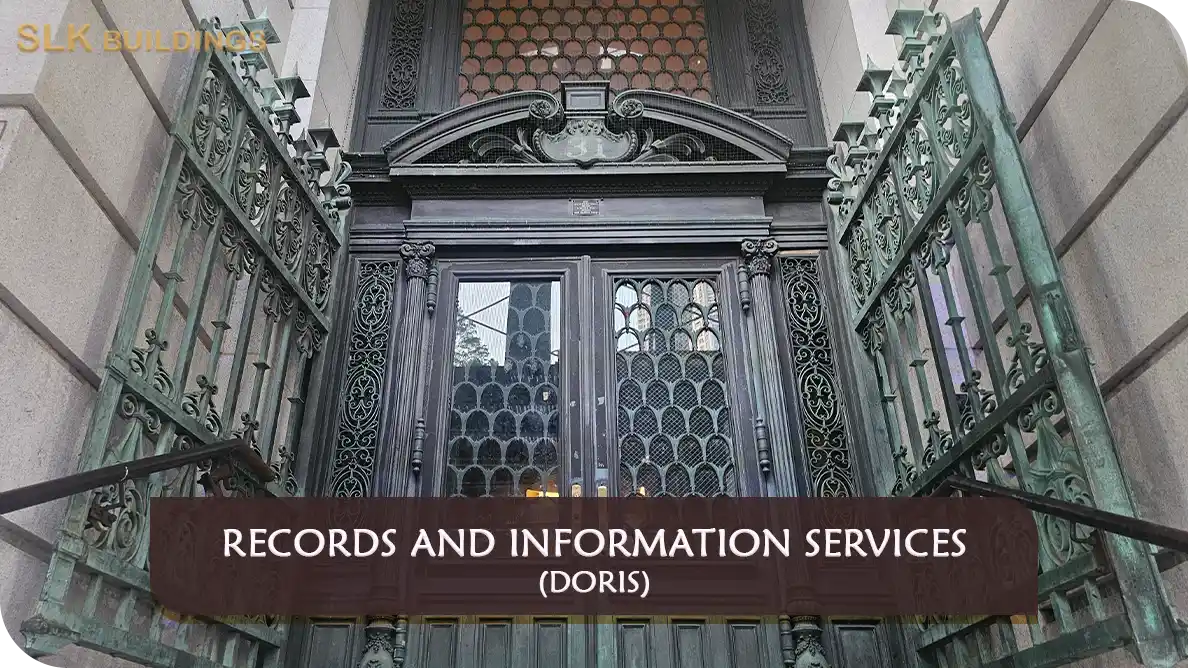
Research the applications and correspondence behind historical building work.
NYC block and lot records can help a project team investigate the paperwork behind earlier construction or alterations. Within DORIS’s Municipal Archives, the historical Manhattan block-and-lot folders contain application material associated with particular properties. These files can add context when a plan, application number or earlier description leaves an unanswered question. A successful search begins by identifying the property, the relevant period and the part of the filing history that needs review.
The records discussed here are DORIS’s historical DOB application and permit folders for Lower Manhattan. The agency describes this collection in relation to buildings from the Battery to 34th Street, primarily through the 1970s. The phrase block and lot can also identify a property in other City systems; it does not mean that every record indexed by those numbers is held by DORIS. Current DOB files and other agencies’ records have their own custodians and access routes.
DORIS describes files containing New Building and Alteration applications, specifications, amendments, correspondence and inspection material. A folder can help explain the sequence behind a drawing or application reference. Some historical files also include records associated with particular installations or other application types. The contents vary; the presence of a folder does not establish that every document related to the building survived or that all later work is included.
For example, a team might find a proposed alteration, an examiner’s objection and a subsequent amendment. Those documents need to be read in sequence. Quoting only the original proposal could describe a design that changed before approval. The useful task is to reconstruct what the surviving file supports and identify the point where further evidence is needed.

Begin with the current borough, block and lot, then check whether the historical address and parcel references align. A building may be associated with former street numbers, a corner address or earlier parcel descriptions. DORIS’s building-research examples show why older maps and assessment records can be necessary to connect a present property with earlier identifiers. Treat each uncertain match as a research question that needs evidence.
NYC Property Cards and Certified Copies
Historical assessment information and copy-format considerations, often relevant to LNO documentation.
Historical permit folders and related paperwork used to trace applications and changes.
Historical application summaries and identifiers that can guide a more targeted file search.
NYC Historical Property Assessment Records
Historical assessment ledgers and related records that can add dated ownership, valuation or building-description clues.
Earlier building images that can support facade, restoration and building-history research.
Selected archival drawings and plan collections, including Lower Manhattan holdings with defined coverage limits.
NYC Historical Maps and Atlases
Earlier streets, parcels and mapped building footprints used to compare changes over time.
Combine DORIS, DOB and other sources into a dated chronology that identifies findings, conflicts and remaining questions.
NYC Letter of No Objection Records Research
Organize historical evidence that may support a separate DOB LNO review; DOB remains the decision-making agency.
NYC Historic Building Research for LPC Applications
Use tax photographs, plans, designation material and other historical evidence to support restoration and LPC project preparation.
NYC DORIS Records Requests and Archive Access
Choose the correct custodian, request route, appointment or reproduction process for the material needed.
NYC Municipal Library Research for Building Projects
Research City-government publications and historical reports that can add context to a building question.
Once material is located, create a chronology that identifies each document by application number, date and purpose. Separate an application from an amendment, a drawing from a letter, and a recorded inspection from a final determination. Preserve both pages of a document when supplied and retain the original file order in the working copy. These steps help a reviewer see the difference between a documented fact and a conclusion drawn from several records.
Record contradictions directly. If one document describes a feature differently from another, note the dates and references instead of silently choosing a preferred version. Where a stamp, signature or handwritten remark is unclear, mark the uncertainty. The research result should show the source of each important observation and the remaining record needed to resolve the question.
DORIS explains that some historical building files were disposed of following demolition, affecting what survives in the collection. It also notes that the permit folders generally do not contain building-violation documents. Consequently, neither an empty search nor a located folder should be treated as a complete answer about the property’s compliance history. Review current complaints, violations and application status through the appropriate DOB sources when those issues are part of the project.
Use DORIS’s current research-request process to identify the archival material and confirm access arrangements. Reference staff may need to clarify the request or direct the visit to the location where the records are held. Reproduction options depend on the material and applicable restrictions. Keep the request, staff response and supplied records together so the scope of the completed search remains clear.
SLK Buildings can discuss documentation and research coordination appropriate to your project. A practical scope can identify which historical application needs investigation, how the records will be indexed and which questions should be referred to the project professional or agency. The result should help the owner understand the evidence located and the next action needed, without turning an incomplete archive into a claim of complete approval history.
If your building project depends on historical records or an unresolved documentation question, contact SLK Buildings to discuss the research and coordination that may be appropriate. Share the property address, relevant identifiers, records already available and the decision the information needs to support.
Contact SLK Buildings to Discuss Your Project
212-888-3888 | info@slkbuildings.com
Disclosure: SLK Buildings is a private consulting and construction-management firm and is not affiliated with NYC DORIS, NYC DOB, NYC LPC, or any government agency. Record availability and agency determinations remain with the responsible public agency.

Given the complexity of locating and interpreting historical New York City property records, property owners, developers, and design professionals may benefit from qualified assistance when researching records maintained by the NYC Department of Records and Information Services (DORIS). Identifying the appropriate records early can help clarify a property’s history and determine what additional documentation may be needed for a building project.
At SLK Buildings, we’ve spent over 25 years helping NYC homeowners, property owners, developers, and businesses navigate agency requirements, research building records, organize supporting documentation, and coordinate project filings. Our team can assist with research involving NYC property cards, historical tax photographs, historical building plans, docket books, maps, and other municipal records that may provide useful evidence about a property’s history.
Whether you’re researching a building’s historical use, preparing supporting documentation for a Letter of No Objection, documenting historic conditions for an LPC project, or trying to understand earlier building records, SLK Buildings can help organize the research and identify the records relevant to your project.
SLK Buildings assists Home Owners, Property Owners, Developers, and Design Professionals with NYC DORIS building and property records research:
SLK Buildings provides free educational content to help property owners understand their research options.
For those who prefer professional assistance, we’re available to coordinate records research, organize supporting documentation, and help determine how historical records may relate to the applicable NYC agency process.
Disclosure: SLK Buildings is a private consulting and construction-management firm and is not affiliated with NYC DORIS or any government agency. Historical records can support research and documentation, but the responsible agency makes any required determination or approval.
The specific historical application-folder collection discussed here concerns Lower Manhattan from the Battery to 34th Street. Other boroughs, locations and periods require a separate holdings check. A borough, block and lot identifier alone does not establish that DORIS has the desired folder.
No. The folder may contain application paperwork and correspondence, while a plan is a drawing sheet. Docket books provide another form of record, summarizing applications. These sources can complement one another, but the request should identify which material the project needs.
Do not expect that result. DORIS says these historical permit files generally do not include building-violation documents. If the task concerns violations or present compliance, use the relevant DOB sources and follow up with the agency as the circumstances require.
Preserve both references and investigate how they relate. Older maps, assessment records or neighboring addresses may help establish the connection. Document the evidence supporting the match so later reviewers can see why a historical file was associated with the present property.
No. Files can be absent from a particular search because of coverage, surviving holdings, identification or access limitations. Record what was searched and the result. Further research may involve docket books, plans, other agency records or clarification from the Archives.
Include the located documents, property and application identifiers, a dated chronology, source references and a clear list of gaps. Explain which project question the material addresses and where a further professional assessment or agency decision is still needed.