NYC Expands ADU Financing and Launches New Tools for Basement, Garage, Attic, and Backyard Apartments
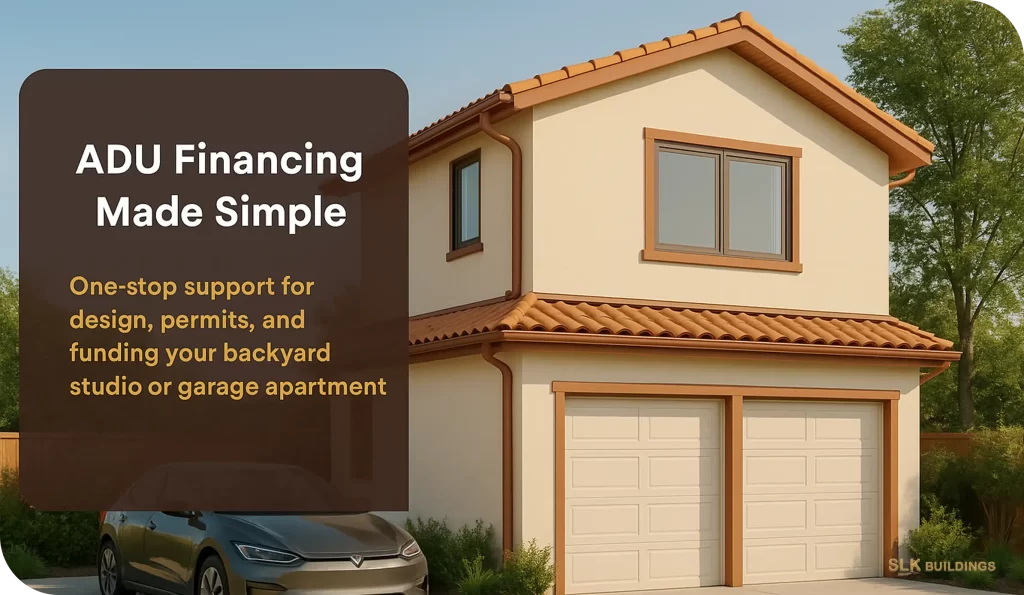
ADU Financing for Basement, Garage, Attic, and Backyard Apartments
March 18, 2026 — New York City is taking another major step toward making accessory dwelling units, or ADUs, more realistic for homeowners. Today’s coverage reports that the city has rolled out new ADU tools, including a live ADU for You resource hub, a library of pre-approved plans, a budgeting tool, and financing support that can reach up to $395,000 for eligible homeowners through the Plus One ADU Program. Official city pages currently show that the ADU resource site is live and that the Plus One intake is open now.
For homeowners in New York City, this matters because ADUs can take several forms. HPD lists common ADU types as basement apartments, attic conversions, attached additions, converted garages, and detached backyard units. The city describes an ADU as a small, independent residential unit on the same lot as the primary home, created either inside the existing house or as a separate structure. HPD also notes that ADUs may help families house relatives, create rental income, and support long-term homeowner stability.
The biggest practical headline is financing. The Plus One ADU Program provides financial and technical support through low- or no-interest loans or construction financing grants, with administration support from Restored Homes HDFC. Earlier city announcements tied the pilot to funding of up to $395,000 for qualified homeowners, and official HPD materials now confirm that the intake process is open, starting with an interest survey and then a site feasibility review for eligible applicants.
That said, the new city tools do not mean automatic approval. DOB makes clear that a pre-approved ADU plan is only site-agnostic. A homeowner still needs a Registered Design Professional to review the lot, prepare the site-specific filing, and address zoning analysis, utility connections, and other project-specific conditions. In other words, the city may have reduced some of the friction, but it has not eliminated the need for real zoning, code, and filing work.
Homeowners should also understand that eligibility is narrower than the headlines make it sound. According to HPD, eligible applicants generally must be owner-occupants, may earn up to 165% of Area Median Income with preference for those at 120% AMI or below, and must be current on their mortgage and free of municipal arrears or in an active payment plan. Eligible properties are generally detached, semi-detached, or semi-attached one- and two-family homes that can support an ADU under current zoning and code rules. HPD also says eligible homes must be outside the Special Coastal Risk District, and basement conversions must meet ceiling-height requirements and avoid certain mapped flood-risk areas.
There are other important technical limits too. The city’s ADU guide explains that, in New York City, only one ADU is allowed on a property designated as a single- or two-family home. The same guide also warns that basement, cellar, and rear-yard ADUs are not allowed in designated flood hazard zones, and that some detached rear-yard ADUs are restricted by zoning district or historic district status. It also notes that some two-family situations may trigger Multiple Dwelling Law issues, which is exactly why early professional review matters.
For NYC homeowners, today’s announcement is real progress — especially because financing has been one of the biggest barriers to legal ADU construction. But the smart takeaway is not “money is available, so build now.” The smarter takeaway is: check the lot, check the flood status, confirm whether the space is a basement or cellar, review existing violations, and map out the DOB filing path before spending heavily on design or construction. The city’s new tools may open the door, but each property still has to prove it can walk through it legally.
At SLK Buildings, we see this as a meaningful opportunity for homeowners who want to create legal space for family, generate rental income, or increase property value — but only when the project is evaluated correctly from the start. A rushed ADU concept can get expensive fast. A properly reviewed ADU strategy can save time, reduce redesign, and avoid filing dead ends.
Thinking about building or legalizing an ADU in NYC?
SLK Buildings helps homeowners review zoning, code, flood restrictions, filing requirements, and feasibility before they commit to construction.