

CEQR Environmental Review for NYC BSA Applications

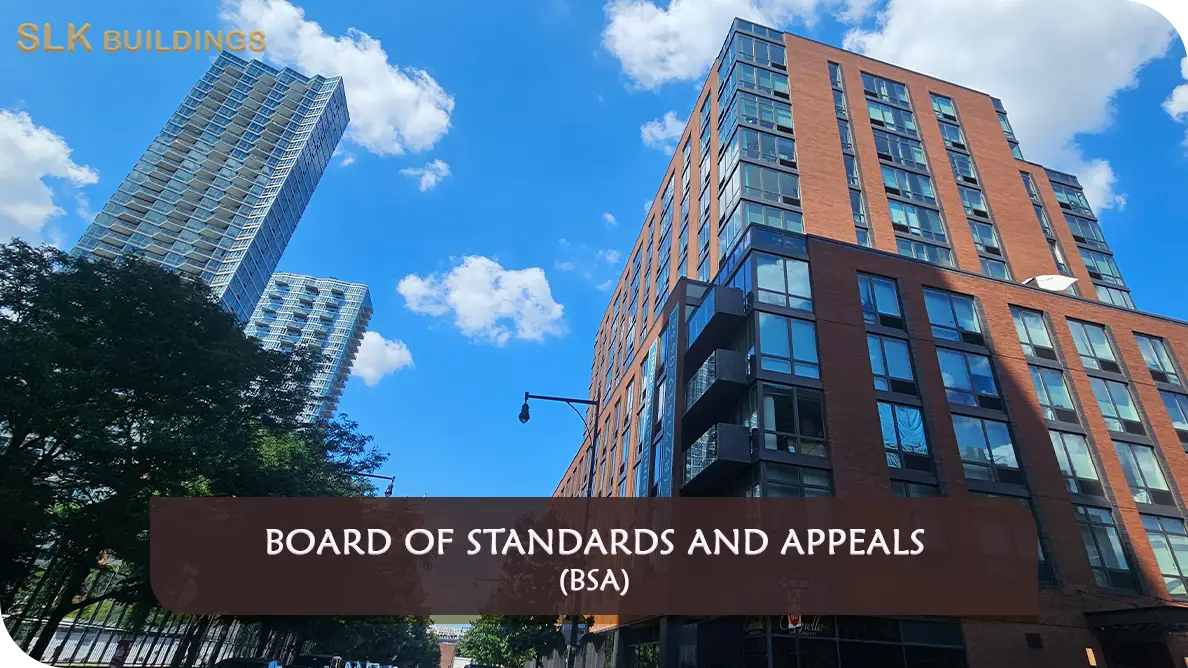
Board of Standards and Appeals approved project building

CEQR environmental review can be required when the New York City Board of Standards and Appeals (BSA) considers a discretionary action, such as a qualifying variance or special permit. CEQR stands for City Environmental Quality Review and evaluates potential environmental impacts before agency decisions.

This process is not a BSA environmental violation hearing. Environmental enforcement may involve DEP, DEC, DOB or other agencies, while CEQR is a project-review framework with its own analyses and public record.

For the complete agency guide, see the NYC BSA Applications and Appeals Resource Center. New to this agency? Start at the NYC Board of Standards and Appeals Landing Page.

SLK Buildings assists with NYC BSA applications, zoning relief, appeals, records, and compliance.

What CEQR Environmental Review Means for BSA Applicants

Environmental review helps identify whether a proposed governmental action could create significant adverse effects and whether modifications or mitigation should be considered. The lead agency coordinates the applicable review and required determinations before the discretionary action proceeds.

A BSA case may involve building alterations, land-use changes or development with potential effects on transportation, noise, shadows, historic resources, air quality or other topics. Whether a particular analysis is needed depends on the classification and facts.

Type II, Type I and Unlisted Actions

BSA §1-08 requires the applicable CEQR checklist. Certain actions classified as Type II are exempt from substantive environmental review, while Type I or Unlisted actions require an Environmental Assessment Statement (EAS) under the current rules.

CEQR environmental review begins by identifying the governmental action, not by assuming every BSA application needs the same environmental document. Confirming a supported Type II classification differs from preparing an Environmental Assessment Statement for an action requiring further analysis.

Do not assume every small building project is exempt or every variance automatically requires a full Environmental Impact Statement (EIS). A qualified environmental consultant should assess the applicable classification and information needs.

Preparing the Environmental Record

Identify the proposed action and reasonable alternatives

Describe what BSA is being asked to approve, how the project differs from current conditions, and any potential complying alternative.

Confirm the lead agency and CEQR number

Where an EAS is submitted, the BSA process assigns or references a CEQR number distinct from the BSA calendar number; submissions should use both identifiers as required.

Complete the checklist and technical studies

Use current forms and the CEQR Technical Manual as appropriate. Studies must be factual, coordinated with plans and prepared by qualified professionals when necessary.

Track interagency review and public documents

Monitor questions from BSA staff and involved agencies, required notices, document revisions and final environmental determinations.

How SLK Buildings Helps With CEQR Environmental Review

For CEQR environmental review, SLK Buildings can help organize an application record and coordinate communications among environmental consultants, design professionals and BSA. Environmental impact analysis and required specialized certifications must be prepared by qualified providers.

  • Collect project and property records, identify missing documents and maintain a coherent filing history.
  • Coordinate document exchanges, comments and outstanding tasks with licensed or authorized project professionals.
  • Help compare agency requirements and next steps without suggesting that SLK makes BSA determinations or performs regulated professional services.

How CEQR Interacts With BSA Hearings

Environmental findings may inform the Board’s decision on a discretionary application, and project design can change as a result of identified impacts. Additional agency consultation may be necessary before the hearing record is complete.

CEQR environmental review and the zoning merits of a BSA application are connected but distinct questions. Changes to a project footprint, use or access arrangement may affect the environmental analysis and can require coordination among the lead agency, design professionals and Board hearing schedule.

CEQR completion does not guarantee that zoning hardship or special-permit findings have been satisfied. Conversely, an otherwise persuasive zoning proposal may require more environmental analysis before BSA can decide.

Practical Coordination for Property Owners

The project team should maintain consistency among zoning studies, site plans, environmental documents, traffic or noise exhibits and community presentations. Scope changes late in the process may affect the environmental review record.

SLK can help coordinate document exchange and outstanding tasks with environmental and design professionals. Technical environmental opinions, regulatory determinations and professional certifications must come from appropriately qualified parties.

Records and Questions to Prepare Before Filing

For CEQR environmental review, identify the proposed discretionary action, any lead-agency determination and the environmental forms already prepared. The appropriate CEQR classification and technical submissions should be checked against current BSA instructions.

  • CEQR action classification and current BSA checklist
  • Lead agency identification, BSA case number and CEQR number if assigned
  • Project scope and alternative analyses consistent with filed plans
  • Required EAS and studies by qualified specialists where applicable
  • Status of environmental findings, public documents and agency comments

Important Practical Considerations

Each BSA application is site- and fact-specific. Review the controlling legal provision and all current rules before deciding the procedure, deadline, professional scope or project commitments. An existing DOB objection, BSA resolution or tentative design concept is not itself evidence that the requested relief will be granted.

Future tenants, lenders and contractors may rely on the result. Keep written advice, application records, approved plans and resolution conditions together, and escalate significant legal exposure or uncertain eligibility before making binding project promises.

Contact SLK Buildings About NYC BSA CEQR Environmental Review

For coordination assistance, contact SLK Buildings with the property address, borough-block-lot where available, agency notices, relevant drawings and any prior BSA resolution. A focused initial document review helps identify the responsible agency and appropriate next step.

Disclaimer: SLK Buildings is a private consulting and construction-management firm, unaffiliated with the New York City Board of Standards and Appeals (BSA) or any government agency. Content is educational, not legal, architectural, engineering, zoning, environmental, or other licensed professional advice. BSA jurisdiction, eligibility, deadlines, hearings, approvals, and compliance depend on each case and current law and agency rules. SLK Buildings does not guarantee application acceptance, agency interpretations, variances, special permits, appeal outcomes, or DOB permits. Required professional seals, certifications, representation, and other licensed services must be provided by appropriately licensed or authorized professionals.

🚧 Seeking Professional Guidance on NYC BSA Variances, Appeals, and Compliance

The New York City Board of Standards and Appeals (BSA) considers qualifying zoning variances, special permits, appeals of certain final agency decisions, and matters involving earlier BSA grants. Owners should identify the property, specific issue, and applicable approval category before filing.
BSA matters may intersect with DOB permits, DCP zoning and land-use procedures, CEQR environmental review, and community-board input. BSA approval does not replace DOB permits, and open violations or preliminary objections do not automatically qualify for BSA appeals.


SLK Buildings assists with BSA records research, application coordination, zoning and code consulting support, agency follow-up, professional submissions, review of prior resolutions, and related multi-agency filings within its confirmed scope of services.
Whether considering relief, preparing for a hearing, or reviewing an existing grant, accurate records and clear next steps help coordinate the required approvals.

SLK Buildings Assists with NYC BSA Requirements

SLK Buildings provides free educational content on BSA variances, special permits, appeals, filing requirements, hearings, and resolution conditions. These resources help property owners, business operators, developers, architects, contractors, and project teams distinguish BSA matters from related DOB, DCP, and other agency responsibilities.

For those who prefer professional assistance, SLK Buildings is available to coordinate BSA records review, filing-path research, application documentation, agency comments and follow-up, hearing-related materials, design-professional coordination, prior grant research, and connected NYC agency obligations. Final determinations and regulated professional work remain with the appropriate agency and qualified providers.

Disclaimer: SLK Buildings is a private consulting and construction-management firm, unaffiliated with the New York City Board of Standards and Appeals (BSA) or any government agency. Content is educational, not legal, architectural, engineering, zoning, environmental, or other licensed professional advice. BSA jurisdiction, eligibility, deadlines, hearings, approvals, and compliance depend on each case and current law and agency rules. SLK Buildings does not guarantee application acceptance, agency interpretations, variances, special permits, appeal outcomes, or DOB permits. Required professional seals, certifications, representation, and other licensed services must be provided by appropriately licensed or authorized professionals.

Frequently Asked Questions

Does every BSA application need an EAS?

No. The CEQR classification determines whether an EAS is required; qualifying Type II actions may be exempt from substantive review.

Is CEQR a permit?

No. It is an environmental assessment and decision-support process, not an independent construction permit.

Is CEQR the same as an environmental violation?

No. Environmental enforcement and BSA discretionary environmental review have different functions.

Can the project change during environmental review?

Yes, but changes may require revised or additional analysis and updated BSA submissions.

Does completing CEQR guarantee BSA approval?

No. BSA must still make the applicable legal findings for the requested relief.