
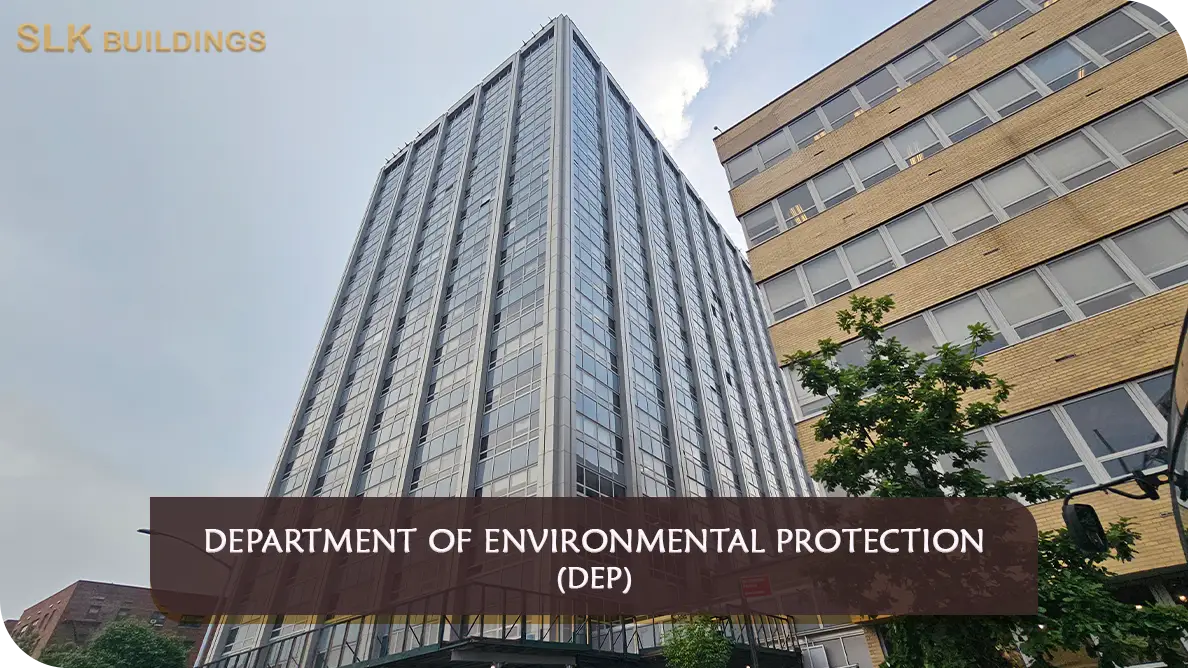
NYC DEP construction noise rules apply to construction activity throughout the city. Any person or business performing covered construction must adopt and implement the required noise mitigation measures, and the responsible party must keep the applicable plan available at the work site.
Construction scheduling also involves DOB and DOT. DEP regulates the noise-mitigation requirements, while DOB or DOT may issue the construction or after-hours authorization for the underlying work. A project that needs after-hours activity should coordinate those approvals rather than treating the noise plan and the work-hours permit as the same document.
For the complete DEP topic hierarchy, see NYC DEP Permits, Filings and Compliance.
DEP’s current guidance identifies normal construction hours as 7:00 a.m. to 6:00 p.m. on weekdays for purposes of the construction-noise program. Covered construction activity must have a Construction Noise Mitigation Plan, and the plan should reflect the equipment, activities, barriers, receptors, and mitigation measures used at the site.
When strict compliance with the standard mitigation rules is not possible, the project can require an Alternative Noise Mitigation Plan, commonly called an ANMP. DEP must approve the ANMP before the covered activity proceeds under that alternative plan. The correct form depends on the type, timing, and circumstances of the work.

A DEP noise plan does not itself grant permission to perform construction outside normal authorized hours. After-hours work can require separate authorization from DOB or DOT depending on the work location and permit. DEP’s noise requirements still apply to the activity, so the work-hours authorization and noise plan should be coordinated together.
DEP’s updated rule effective April 21, 2026 adds monitoring requirements for certain new-building projects involving ANMPs. DEP states that the rule applies to qualifying new buildings of at least 200,000 square feet, within 50 feet of a residential receptor, where an ANMP is filed for 30 or more days. The rule requires approved monitoring equipment facing the nearest applicable receptor and continued monitoring until the project reaches the conditions identified in the rule.
Existing ANMPs approved before the effective date can become subject to the new rule when they are renewed after April 21, 2026. Project teams should use the current DEP monitoring guidance when planning long-duration after-hours construction.

SLK Buildings assists property owners, developers, business operators, design professionals, contractors, and project teams with construction noise research, filing preparation, agency coordination, comments, approvals, compliance, and related NYC agency requirements within the confirmed service scope.
Disclaimer: SLK Buildings is a private consulting and construction-management firm and is not affiliated with NYC DEP or any government agency. This content is educational and is not engineering, architectural, legal, environmental, plumbing, or other professional advice. Applicability, design, licensed work, technical calculations, filing eligibility, inspections, and compliance requirements must be confirmed for the specific project by the appropriate qualified professionals and agencies.
NYC Department of Environmental Protection (DEP) requirements can affect property owners, developers, business operators, design professionals, contractors, and project teams when work involves water or sewer connections, hydrants, backflow protection, stormwater, wastewater, asbestos, air emissions, construction noise, drilling, records, violations, or other environmental requirements administered by DEP.
Before relying on a filing path, the project team should confirm the regulated activity, existing infrastructure and property records, required DEP program, current portal or submission method, licensed professional or trade requirements, inspections, testing, and related DOB, DOT, NYS DEC, FDNY, or OATH coordination.
At SLK Buildings, we assist with NYC DEP permit expediting, agency filings, Site Connection Proposals, sewer and water coordination, hydrant work, backflow, stormwater, drainage, wastewater, asbestos, air, noise, drilling and excavation coordination, records research, violations, hearings, and related multi-agency project requirements within the confirmed service scope.
Whether you are beginning a new DEP application, responding to agency comments, researching existing water or sewer conditions, coordinating licensed professionals and contractors, correcting a compliance issue, or carrying a DEP approval into related construction permitting, SLK Buildings can help organize the records, filings, coordination, and next actions needed to move the project forward.
SLK Buildings provides free educational content to help property owners, developers, business operators, design professionals, contractors, and project teams understand NYC DEP permitting, filing systems, water and sewer approvals, stormwater, environmental compliance, inspections, records, and related agency requirements.
For those who prefer professional assistance, SLK Buildings is available to coordinate DEP application strategy, filing preparation, portal submissions, agency comments, records research, licensed-professional and contractor coordination, approval tracking, violation response, and related NYC agency requirements that may affect the property or project.
Disclaimer: SLK Buildings is a private consulting and construction-management firm and is not affiliated with NYC DEP or any government agency. This content is educational and is not legal, engineering, architectural, environmental, or other professional advice. Permit, filing, design, testing, inspection, and professional-signature requirements depend on the specific property, project, regulated activity, and current agency rules.
DEP states that covered construction activity must adopt and implement a Construction Noise Mitigation Plan, subject to the applicable rules and minimal-noise provisions.
An Alternative Noise Mitigation Plan is a DEP-approved plan used when strict compliance with the standard construction-noise mitigation rules is not possible.
Not generally. DOB or DOT may issue the applicable after-hours work authorization, while DEP regulates the noise plan and mitigation requirements.
DEP implemented new monitoring requirements for certain large new-building projects near residential receptors when qualifying ANMP conditions are met.
Yes. SLK can coordinate the DEP noise filing and related DOB or DOT authorizations within its service scope.